Plants
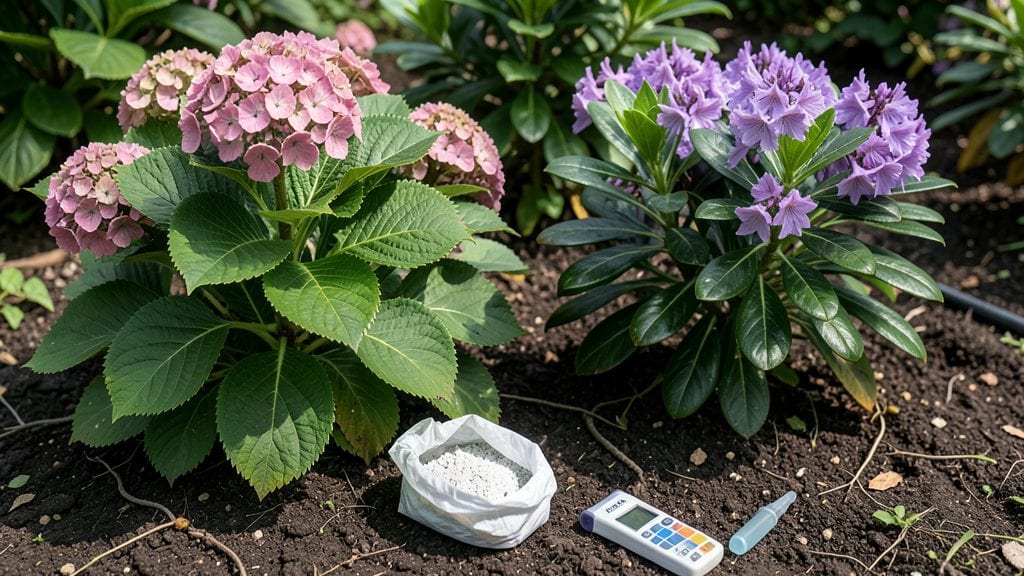
Garden plants that need lime to thrive include azaleas, blueberries, hydrangeas, rhododendrons, and potatoes, since they prefer slightly alkaline soil with a pH between 6.0 and 7.0. Lime helps neutralize acidity, preventing nutrient deficiencies like magnesium or calcium loss, but it should be used carefully—too much can damage acid-loving plants.
Lime works by releasing calcium and magnesium ions that gradually raise soil pH, creating the ideal environment for these plants to access essential nutrients. 🌱 For example, blueberries need soil pH around 4.5–5.5 naturally, but when grown in lime-amended soil, they can thrive in slightly higher pH conditions when paired with proper fertilization.
The key is testing your soil first—most garden centers offer affordable test kits that reveal exactly how much lime your plants need.
Many gardeners avoid lime because they worry about overdoing it, but the truth is that most plants benefit from occasional pH adjustments. I’ve found that a light application in early spring—before planting—gives roots time to adjust, while heavy-handed applications can lead to nutrient lockout or even plant stress.
For container gardens, use dolomitic lime sparingly, as it’s easier to overcorrect in small spaces.
💡 In This Article
- How Lime Adjusts Soil pH for Acid-Sensitive Plants
- Best Lime Types and Application Tips for Garden Soil
How lime adjusts soil pH for acid-sensitive plants
When you add lime to acidic soil, it triggers a chemical reaction that gradually raises the pH level. The most common types—calcium carbonate and dolomitic lime—dissolve slowly in the soil, releasing calcium (Ca²⁺) and magnesium (Mg²⁺) ions.
These positively charged ions react with hydrogen ions (H⁺) in the soil, which are what make it acidic. The reaction neutralizes the acidity by converting H⁺ into water (H₂O) and carbon dioxide (CO₂), effectively reducing the soil's acidity over time. 🌿
There are two main types of lime, each with different release rates. Calcium carbonate lime (also called agricultural lime) is fast-acting, raising pH within weeks, while dolomitic lime contains magnesium and works more slowly, taking months to fully integrate.
For example, a 1-pound application per 100 square feet of calcium carbonate can raise soil pH by about 0.5 units in a season, while dolomitic lime may take up to 3-4 months for the same effect.
Soil testing kits measure pH using a colorimetric scale—most home kits use a pH 0-14 scale, with 7.0 being neutral.
The ideal pH range for lime-dependent plants varies slightly. Hydrangeas and azaleas prefer pH 5.5-6.5, while potatoes and broccoli thrive in pH 6.0-7.0. Too much lime can push the pH too high, locking out essential nutrients like iron and manganese.
For instance, blueberries (pH 4.5-5.5) will suffer if the soil becomes too alkaline, even if lime was intended for nearby vegetables. This is why precise application is critical—most experts recommend splitting lime into two applications per year rather than one heavy dose.
Here’s how the process works in real soil: When lime granules dissolve, they form a slightly alkaline slurry that coats soil particles. Over time, this slurry reacts with organic acids in the soil, like humic acid and fulvic acid, which are byproducts of decomposed plant matter.
The reaction produces carbon dioxide gas, which escapes into the air, while the remaining ions integrate into the soil structure. This is why lime works best in well-draining soil—poor drainage can trap CO₂ and slow the pH adjustment process. 🌱
Testing soil pH before applying lime is non-negotiable. Most $10 home test kits use a color comparison chart—you mix soil with distilled water, then compare the liquid’s color to a chart.
For precise results, send a sample to a lab (costs $20-$30), which will also test for nutrient deficiencies like calcium or magnesium.
For example, if your soil tests at pH 5.0 and you’re planting hydrangeas (ideal pH 5.5-6.5), you’ll need about 5-10 pounds of lime per 100 square feet, depending on your soil type.
One common mistake is assuming all plants need lime. Acid-loving species like blueberries, rhododendrons, and gardenias actually require acidic soil (pH 4.5-5.5) and will suffer if limed.
The key is to target lime only to areas where alkaline-loving plants will grow, or use container gardening to isolate pH needs. For instance, you can grow potatoes in one raised bed with lime and blueberries in another without cross-contamination. 💡