Planting
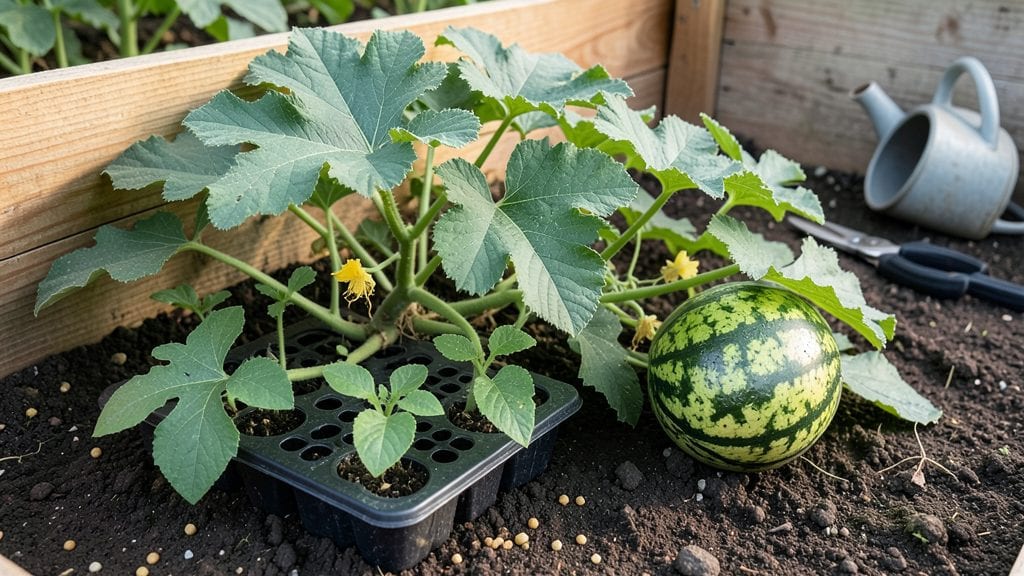
Your watermelon garden spacing determines whether you’ll harvest juicy 20-pound monsters or bitter, undersized fruit — and the difference comes down to how much room those sprawling vines need to thrive.
Picture this: You’ve planted your 🍉 seeds after the last frost in Zone 6, only to watch them struggle by mid-summer. The problem? Too many plants fighting for the same patch of soil, or rows so wide they leave half your garden empty.
I’ve made that mistake twice, and the fix is simpler than you’d think.
Watermelons aren’t just picky about dirt—they demand space to stretch. A single vine can sprawl 15 to 25 feet, and cramming them together steals sunlight, water, and nutrients from the fruit.
But here’s the kicker: spacing isn’t one-size-fits-all. Whether you’re growing bush varieties or classic vining types, the right layout can double your harvest with minimal effort.
In this guide, I’ll break down the exact spacing rules for your garden, from row distances to vine training tricks, so you can skip the guesswork and grow watermelons like a pro.
Optimal watermelon garden spacing by variety: rows, vines & trellis tips
Watermelon vines spread aggressively—some varieties stretch 20 feet or more! Proper garden spacing determines whether you harvest juicy giant melons or stunted, disease-prone fruit.
The key lies in matching your variety type to its ideal layout. Slicing watermelons need room to grow massive fruit, while mini varieties thrive in tighter clusters. Let’s break down the science behind spacing for rows, vines, and trellises to maximize your harvest.
Spacing isn’t just about preventing vine tangles—it directly impacts fruit size, disease risk, and harvest efficiency. Crowded plants compete for nutrients and sunlight, leading to smaller melons and higher susceptibility to powdery mildew. Meanwhile, over-spaced plants waste garden real estate and reduce yields.
The solution? A variety-specific approach that balances vine growth habits with your garden’s layout. Whether you’re growing heirloom behemoths or compact bush types, precision spacing is your secret weapon.
🌱
For slicing watermelons, aim for 4-6 feet between plants and 6-8 feet between rows.
This gives vines enough room to sprawl while keeping fruit size optimal. Heirloom varieties, like Moon & Stars, demand even more space—6-8 feet between plants and 8-10 feet between rows—to support their massive vines and 10-20 pound melons.
Skimping on space here leads to stunted growth and poor pollination, reducing your harvest by half.
If your garden is small, consider trellising for slicing and heirloom types. Training vines vertically can cut horizontal space needs by 50% while improving airflow and disease prevention. Use a strong trellis or fence and prune side shoots to direct energy into fruit production.
Just avoid trellising mini or bush varieties—their compact growth makes it unnecessary and can damage fragile vines.
🪴
Proper row orientation also matters. Plant rows north-to-south in the Northern Hemisphere to maximize sun exposure and minimize shading. This is especially critical for heirloom watermelons, which need full sun for 8+ hours daily.
In smaller gardens, interplant with shallow-rooted crops like bush beans or radishes in the early season before watermelon vines take over. This multi-use approach boosts your garden’s productivity without sacrificing watermelon yields.
One common mistake is assuming all watermelons need the same spacing. Mini varieties, like Sugar Baby, thrive in 2-3 feet of space and only need 3-4 feet between rows. Their compact vines make them
Common watermelon spacing mistakes that shrink your harvest
Even with perfect soil and seeds, poor watermelon spacing can turn your dream harvest into disappointment. I’ve seen overcrowded vines produce tiny, bitter fruit while over-spaced plants waste precious garden space. The key is balancing airflow, sunlight, and root competition—but most gardeners miss these critical spacing rules.
Let’s fix that. I’ll reveal the 5 most common spacing mistakes that stunt growth, invite diseases like powdery mildew, and even block bee pollination. You’ll learn how to spot these issues in your own garden—and how to adjust spacing for a bumper crop.
⚠️ callout-warning
Watermelons need 6-12 inches between plants (depending on variety). When you pack them too close, vines compete for nutrients, leading to:
- Stunted fruit (half the expected size)
- Powdery mildew (from poor airflow)
- Poor pollination (bees avoid crowded flowers)
Fix it now: Thin seedlings to 3-4 feet apart and space rows 6 feet apart for full-sized varieties.
Mistake #1: Ignoring vine spread is the biggest oversight. Many gardeners assume bush varieties need the same space as vining types. But a standard watermelon vine can sprawl 15-25 feet! Planting them too close forces vines to tangle, blocking sunlight and trapping moisture—perfect conditions for fungal diseases.
Mistake #2: Uneven rows create chaos. Crooked rows make it hard to mulch properly or weed efficiently. Straight rows spaced 6 feet apart ensure even sunlight exposure and easier access for harvesting. Pro tip: Use a garden flag or string line to mark rows before planting.
Mistake #3: Skipping trellis spacing for vining varieties. If you’re growing watermelons vertically, leave 3-4 feet between plants on the trellis. Too close, and vines strangle each other, reducing fruit size. Too far, and you waste space—watermelons need support but not isolation.
Mistake #4: Planting near tall crops like corn or sunflowers. Watermelons need full sun (6-10 hours daily), and tall neighbors cast harmful shade. Instead, pair them with low-growing companions like radishes or lettuce that won’t compete for light.
Mistake #5: Not adjusting for soil fertility. Rich soil lets plants spread wider, while poor soil forces them to cluster tightly. Test your soil first!
If it’s nutrient-dense, space plants 4 feet apart; if it’s lean, reduce spacing to 3 feet to encourage root competition (which actually improves flavor).
🌱 Fix-It Checklist for Your Garden: ☑️ Measure your mature vine spread (use variety tags as a guide). ☑️ Thin seedlings to 3-4 feet apart if already planted too close. ☑️ Straighten rows with a 6-foot spacing between them. ☑️ Add mulch (straw or black plastic) to retain moisture and suppress weeds. ☑️ Prune excess side shoots to focus energy on 2-3 main vines per plant.