
Planting
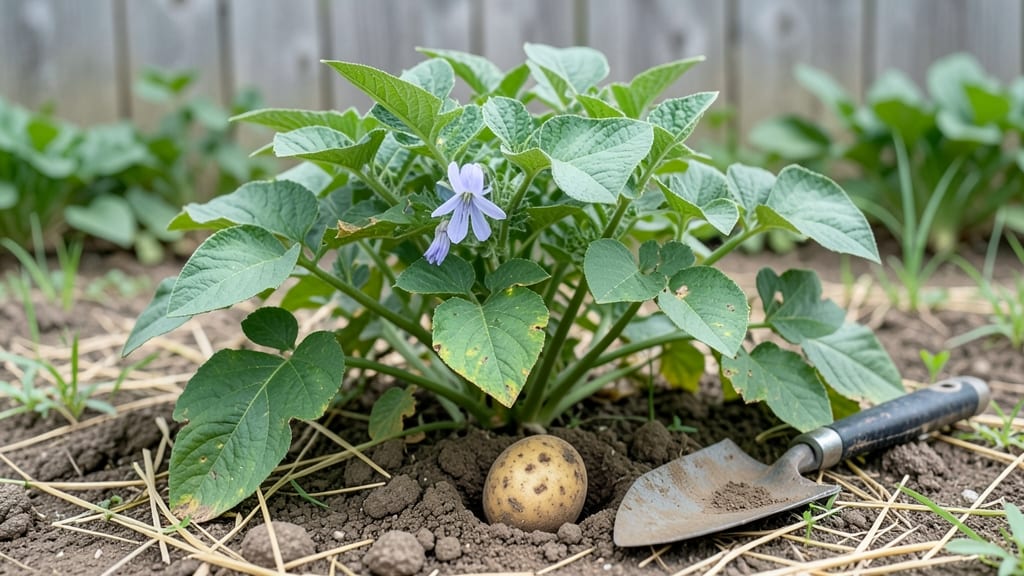
Potato spacing in garden should be 12 inches apart in rows and 30–36 inches between rows for optimal yield, airflow, and disease prevention. Plant seeds 2–4 inches deep, adjusting spacing for larger seed potatoes.
Proper spacing isn’t just about fitting more plants—it’s about giving each tuber room to develop strong roots and foliage without competing for nutrients. 🌱 Overcrowding creates damp, shaded conditions that invite blight and rot, while too much space wastes garden real estate.
I’ve found that early-maturing varieties can handle slightly tighter rows (10 inches apart), but late-season potatoes need the full 12 inches to avoid stunted growth.
For raised beds or containers, reduce row spacing to 8–10 inches but keep between-row gaps at 30 inches—this prevents soil compaction and makes harvesting easier.
If you’re using seed potatoes instead of seeds, dig trenches 3–4 inches deep and place them 12 inches apart, then cover with soil as they sprout to encourage tuber formation.
💡 In This Article
- How Spacing Affects Potato Growth and Disease Resistance
- Best Potato Spacing Techniques for Different Garden Layouts
How spacing affects potato growth and disease resistance
Here's what's actually happening in the soil when you space potatoes correctly: each plant develops a sprawling underground network of roots and tubers that need room to expand. Potatoes store energy in tubers, which form along the underground stems (stolons) at nodes spaced about 3-5 inches apart.
When plants are too close, these tubers compete for nutrients and water, resulting in smaller, misshapen harvests.
The ideal 12-inch row spacing allows tubers to develop freely, with the plant's foliage creating a natural canopy that shades the soil—reducing moisture evaporation while preventing fungal spores from splashing up onto leaves during rain.
The airflow created by proper spacing is your first line of defense against diseases like late blight and scab.
Fungal spores thrive in stagnant, humid conditions, which is exactly what happens when potato plants grow too densely. 30-36 inches between rows creates circulation that keeps foliage dry, while the 12-inch in-row spacing prevents leaves from touching.
I've seen blight spread through crowded plantings within days, but properly spaced potatoes stay healthier even in wet seasons. The science here is simple: dry leaves equal fewer infection sites for pathogens.
Early-maturing varieties like 'Yukon Gold' or 'Red Pontiac' can tolerate slightly tighter spacing (10 inches in rows) because they mature quickly before diseases become problematic. Their harvest window is short—typically 70-90 days—so they don't need as much space to reach full size.
Late-season varieties like 'Russet Burbank' or 'Kennebec', however, need the full 12 inches because they continue growing for 100-120 days, developing larger tubers that require more underground real estate. The difference comes down to how long the plant has to compete for resources.
What most people don't realize is how soil competition plays out. When potatoes are crowded, their root systems intertwine, creating a nutrient vacuum where each plant steals from its neighbors. This leads to stunted growth and smaller tubers—sometimes as much as 30% less yield in extreme cases.
The root zone of a properly spaced potato extends about 12-18 inches in all directions, which is why you'll see recommendations for wider row spacing in heavier soils where roots can't spread as easily.
In sandy soils, you can sometimes reduce between-row spacing to 24 inches because the roots naturally spread wider.
Consider this visual: imagine a potato plant's foliage as an umbrella. When plants are spaced correctly, those umbrellas don't overlap, allowing sunlight to reach the soil surface. This sunlight kills fungal spores and promotes beneficial soil microbes.
In contrast, crowded plants create a dense canopy that blocks light, turns the soil into a damp breeding ground, and makes harvesting difficult because you can't easily reach the tubers without disturbing the entire plant. The result?
More rot, more disease, and a lot more work for you at harvest time. 🌿
For those using seed potatoes versus true seeds, the spacing differences matter too. Seed potatoes (whole or cut pieces) need 12 inches because they develop multiple tubers from the same starting point.
True potato seeds (from flowers) produce smaller plants that can handle 6-8 inches apart, but they take longer to mature. The key is matching your spacing to how the plant will grow—not just how big it gets, but how aggressively it spreads underground.
This is why organic growers often use wider spacing: they're not just growing potatoes, they're growing a whole ecosystem that needs room to thrive.