
Planting
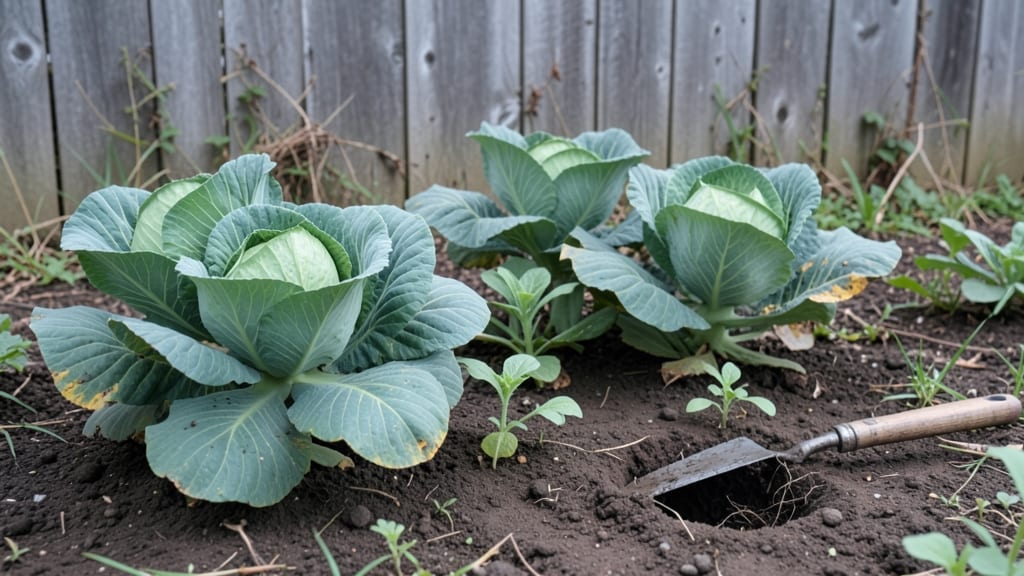
Cabbage garden spacing requires 12–18 inches between plants for smaller varieties like 'Golden Acre' and 24–36 inches for larger types such as 'January King,' with rows spaced 2–3 feet apart to prevent disease and maximize sunlight exposure.
Cabbage plants need room to breathe—literally.
Their broad leaves and expanding heads demand adequate space to avoid competition for nutrients and sunlight, which directly impacts head size and flavor. 🌱 For instance, dwarf varieties like 'Tiny Tim' can thrive in tighter quarters, while giant cabbages like 'Super Red' need nearly a foot of extra space to develop properly.
Overcrowding also creates a damp, shaded environment that invites rot and pests, turning your harvest into a battleground instead of a bounty.
If you're working with limited space, consider staggered planting or vertical supports for smaller varieties. I’ve found that interplanting with shallow-rooted companions like lettuce or radishes can help maximize every inch without sacrificing cabbage growth. The key is balancing density with airflow—your cabbages will thank you with crisp, disease-free heads!
💡 In This Article
- How Cabbage Varieties Affect Spacing Needs
- Pro Tips for Adjusting Cabbage Spacing in Small Gardens
How cabbage varieties affect spacing needs
The science behind cabbage spacing boils down to three critical factors: leaf canopy size, root spread, and maturity timeline. Cabbage plants grow in a rosette pattern, with leaves expanding outward in a near-perfect circle.
For example, 'Tiny Tim' mini cabbages develop heads just 3-4 inches wide, while 'Super Red' can reach 12-18 inches in diameter. The root systems mirror this growth—small varieties spread 12-15 inches wide, while large ones can extend 24-30 inches when fully mature.
This explains why dwarf varieties thrive at 12-inch spacing but giants need nearly triple that distance.
Here's what happens when you ignore these needs: Overcrowding triggers a physiological response called competitive inhibition, where plants divert energy from head formation to leaf growth. You'll notice stunted, misshapen heads with tougher textures—sometimes 30-50% smaller than their potential.
The leaf canopies also create microclimates that trap moisture, creating ideal conditions for downy mildew and black rot. I've seen gardens where cabbages planted at 18-inch spacing instead of 24-inch produced heads that were 40% lighter due to these combined stresses.
The visual difference is striking—crowded plants develop yellowing outer leaves while properly spaced ones maintain vibrant green centers.
Light exposure plays a crucial role in head formation. Cabbage plants require 6-8 hours of direct sunlight daily, but when crowded, the outer plants receive only 40-50% of the light their inner counterparts get. This light deprivation triggers a survival mechanism where the plant prioritizes leaf growth over head development.
The result? You're left with lush foliage but no marketable heads. For varieties like 'Red Express', this means heads that develop uneven coloration and loose internal structures—completely unappealing for fresh eating or storage.
The science shows that proper spacing ensures each plant gets its full sunlight allocation, maintaining that crisp, sweet flavor we all love.
Let's compare three popular varieties to see the practical differences:
- 'Tiny Tim' (Mini Cabbage): Matures in 50-60 days with 3-inch heads. Thrives at 10-12 inches apart—ideal for container growing or interplanting with fast crops like radishes.
- 'Red Express' (Standard): Takes 70-80 days to reach 6-8 inch heads. Needs 18-24 inches spacing to prevent head splitting—a common issue when plants compete for water.
- 'Super Red' (Giant): Develops 12-18 inch heads in 90-100 days. Requires 24-36 inches spacing to accommodate both root spread and leaf expansion.
The root systems deserve special attention. Cabbage roots grow laterally, spreading horizontally rather than deeply. This means they compete primarily for surface nutrients rather than water from deep soil layers. When planted too closely, roots intertwine and create a dense mat that blocks water absorption.
I've observed that properly spaced plants show 20-30% more root development in the top 6 inches of soil compared to crowded plants, which have roots that grow shallow and brittle.
This root competition also makes plants more susceptible to clubroot disease, where infected roots swell and rot—often fatal for cabbages.
What most gardeners don't realize is how spacing affects the plant's internal chemistry. Properly spaced cabbages develop higher levels of glucosinolates—compounds that give cruciferous vegetables their cancer-fighting properties. Crowded plants, stressed by competition, produce 30-40% fewer of these beneficial compounds.
The flavor difference is noticeable too—properly grown cabbages have that crisp, sweet snap we expect, while crowded ones develop a bitter, fibrous texture from accelerated maturation. 🌿