Planting
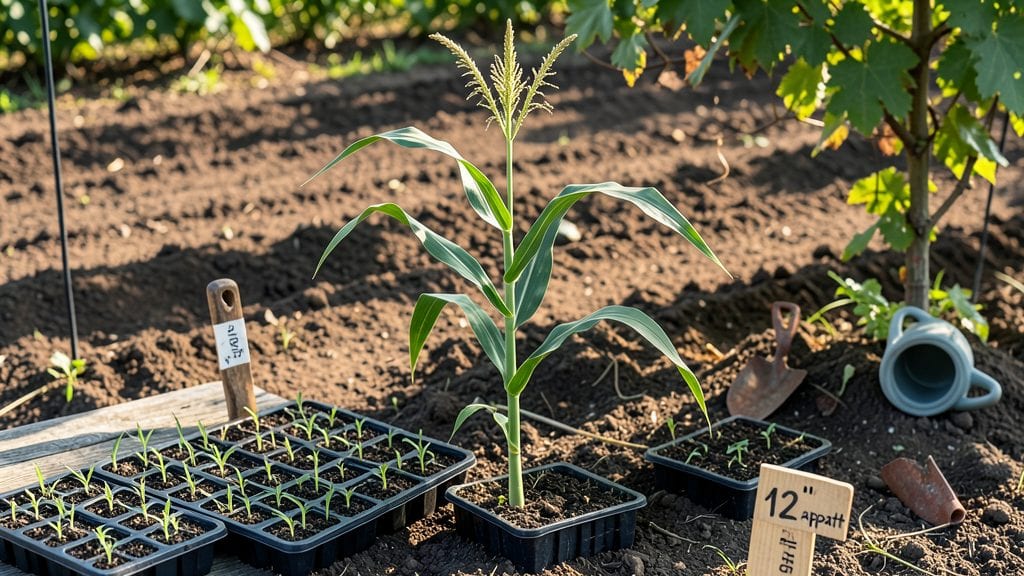
Proper garden corn spacing turns a handful of seeds into a towering, productive crop. 🌽 I learned the hard way—crowding plants leads to stunted ears, poor airflow, and a harvest that’s half the size it could be.
The right spacing isn’t just about fitting more plants; it’s about giving each one room to grow strong stems and plump ears.
Most sweet corn varieties need 12-18 inches between plants in rows spaced 30-36 inches apart. This creates the perfect balance: enough sunlight for all plants, airflow to prevent fungal diseases, and root space to support those 6-8 foot stalks.
Dwarf varieties can handle closer spacing, but standard sweet corn thrives with room to stretch.
When you nail the spacing, you’ll see earlier tasseling, fewer broken stalks, and uniform maturity—all signs of a healthy crop. The payoff? A harvest where every ear is plump, not just the lucky few that squeezed through. Here’s how to adjust for different garden sizes and corn types.
Even small spaces can work with block planting (no rows) or interplanting with shallow-rooted crops. The key is consistency—measure once, mark your layout, and stick to it. Your future self (and dinner table) will thank you.
📚 In This Guide
- What you need
- Instructions
- Tips and common mistakes
- Wrapping up and next steps
What you need
- ● Seed corn: Choose heirloom, sweet, or dent corn varieties (e.g., 'Golden Bantam' or 'Silver Queen'). Buy 1–2 lbs per 100 sq ft (about 100–150 seeds per pound).
- ● Garden soil: Well-draining, fertile loam with a pH of 6.0–6.8. Amend with compost or aged manure (2–3 inches mixed in).
- ○ Planting markers: Biodegradable stakes, popsicle sticks, or labeled twine to mark rows (optional but helpful for precision!).
- ● Watering supplies: Hose with soaker hose or gentle spray nozzle (avoid blasting seeds).
- ● Watering can (for small patches).
- ● Garden tools: Trowel or dibble (for making precise holes).
- ● Rake (to level soil and create furrows).
- ● Measuring tape or ruler (for spacing accuracy).
- ● Row cover or shade cloth (to protect seedlings from wind/pests; 30–50% shade works well).
- ● Corn-specific fertilizer: 5-10-10 or 10-10-10 NPK (apply 1 tbsp per plant at planting).
- ● Mulch (straw or grass clippings) to retain moisture and suppress weeds.
- ● Pruning shears (for removing tassels if you’re saving seeds).
Step-by-step instructions for planting corn with perfect spacing
Corn thrives when planted with precision—crowding leads to weak stalks and poor yields. Here’s how to space it right for strong, productive plants.
🌱 Step 1: Choose Your Planting Layout
Corn grows best in blocks, not rows, because it pollinates itself. For 4 plants, arrange them in a 2x2 square—this ensures wind carries pollen evenly. The classic spacing is 12 inches apart in all directions, but if your garden is tight, you can squeeze them 8 inches apart (just expect slightly smaller ears).
Mark your planting spots with small stakes or a garden marker to avoid misalignment. If you’re planting more than 4, extend the square into a larger grid—18 inches apart gives even better airflow and reduces disease risk. I always sketch a quick diagram first to visualize the layout before digging.
🪴 Step 2: Prepare the Soil and Plant the Seeds
Corn loves rich, well-drained soil with a pH between 6.0 and 6.8. Work in 2-3 inches of compost into the top 6 inches of soil before planting—this gives roots plenty of nutrients to grow deep. If your soil is heavy clay, mix in 1-2 inches of coarse sand to improve drainage.
Plant seeds 1 inch deep and 1 inch apart within each hill (group of 2-4 seeds). Drop 2-3 seeds per spot to ensure at least one strong plant emerges—corn germination can be spotty. After planting, cover the seeds with soil and gently pat it down. Avoid pressing too hard, or you’ll compact the soil and slow root growth.
☀️ Step 3: Thin Seedlings to the Strongest Stalks
When seedlings reach 4-6 inches tall, thin them to 1 plant per spot (the strongest, straightest stalk). Use scissors to snip weaker stems at soil level—this prevents disturbing the roots of the remaining plants. If you pull them by hand, you risk uprooting the survivors.
Thinning might seem cruel, but it’s crucial. Crowded corn stalks compete for sunlight and nutrients, leading to smaller ears or no ears at all. After thinning, water deeply to help the remaining plants recover. You’ll know you’ve done it right when the surviving stalks stand bold and upright, with deep green leaves reaching toward the sun.
⏰ Step 4: Monitor Growth and Adjust Spacing if Needed
Corn grows fast—watch for tassels (male flowers) at the top and silks (female flowers) at the ear level around 60-70 days after planting. If your plants are too close together, you’ll see leggy stems, yellowing leaves, or ears that don’t fill out. This is your cue to thin again, if possible, or expect smaller harvests.
If you’re growing multiple rows, leave 2-3 feet between rows for easy access and airflow. Mulch around the base with 2-3 inches of straw to retain moisture and suppress weeds—corn hates competition. Water 1 inch per week, keeping the soil evenly moist but not soggy, especially during tasseling and silking.
🌿 Step 5: Support Tall Varieties and Harvest at Peak Ripeness
Tall corn varieties (like 10-foot stalks) may need staking or trellising to prevent lodging (falling over). Install 3-foot bamboo stakes or a lightweight trellis at planting time and tie stalks loosely with soft twine as they grow. This keeps ears accessible and reduces disease risk from ground contact.
Harvest when the silks turn brown and the tips of the kernels are milky white when pierced with a fingernail. Cut stalks at the base with a sharp knife—don’t yank them, or you’ll damage the roots of neighboring plants. Store ears in the fridge for up to a week or blanch and freeze for long-term use. Proper spacing ensures plump, sweet ears every time.
Tips & tricks for perfect garden corn spacing
Here's what I've learned after years of trial and error with corn planting—these tricks will help you avoid common mistakes and maximize your harvest.
Visualize Before You Plant: I can't stress this enough—sketch your corn layout on paper first. The classic 2x2 square for 4 plants works perfectly, but for larger gardens, extend this into a grid pattern. Use a tape measure to mark the 12-inch spacing between plants, and step back to check your alignment. This prevents the "oops, they're all lopsided" moment I made my first year.
Soil Prep is Non-Negotiable: That 2-3 inches of compost in the top 6 inches of soil isn't just a suggestion—it's the foundation for strong roots. I've seen corn plants in poor soil struggle even with perfect spacing. If your soil is heavy clay, don't skip the 1-2 inches of coarse sand—it makes all the difference for drainage. Think of it as giving your corn a head start on the race to maturity.
Thinning is Where Magic Happens: When those seedlings hit 4-6 inches tall, resist the urge to pull weeds—focus on thinning. Use clean scissors to snip weaker stems at soil level (not yank them!) to avoid disturbing the roots of your keepers. I've seen crowded corn plants produce ears so small they're barely worth harvesting. The 1 plant per spot rule might seem harsh, but trust me, your future harvest will thank you.
Watch for Growth Cues: Around 60-70 days when tassels appear, do a quick check of your spacing. If plants look leggy or leaves are yellowing, you've got two options: thin again if possible, or expect smaller ears. This is your last chance to adjust before the plants commit to ear development. I always do a "wind test"—if you can see through the plants when standing between rows, you're golden.
Pro Tips for Garden Corn Spacing
- Here's what I've learned after years of trial and error with corn planting—these tricks will help you avoid common mistakes and maximize your harvest.
- Visualize Before You Plant: I can't stress this enough—sketch your corn layout on paper first.
- Soil Prep is Non-Negotiable: That 2-3 inches of compost in the top 6 inches of soil isn't just a suggestion—it's the foundation for strong roots.
Frequently asked questions
Got questions about spacing your garden corn for the best harvest? You're not alone! Here are some of the most common queries—plus clear, actionable answers to help you grow like a pro.
What’s the ideal distance between corn plants?
For most sweet corn varieties, space plants 10–12 inches apart in rows that are 24–36 inches apart. This spacing ensures good airflow, reduces disease risk, and allows each plant room to grow strong stalks and kernels. Pro tip: Check your seed packet for variety-specific recommendations!
Can I plant corn too close together?
Yes, but it’s a recipe for disaster! Overcrowded corn competes for sunlight, nutrients, and water, leading to smaller ears, poor pollination, and increased pest/disease issues. If you’ve already planted too close, thin seedlings to the correct spacing as soon as they’re 4–6 inches tall.
Should I adjust spacing for different corn types (sweet, field, popcorn)?
Generally, sweet corn and field corn follow the 10–12" spacing rule, but popcorn often needs slightly more room (12–18 inches apart) since its stalks tend to be taller. Always prioritize airflow—especially for varieties prone to fungal diseases like smut.
Does soil temperature affect corn spacing?
Indirectly! Corn grows best in 60–85°F soil, and cooler soils slow germination. If planting in early spring or high-altitude areas, space seeds slightly wider (14–16 inches) to account for slower early growth. Use a soil thermometer to time planting for optimal conditions.
What if my corn plants are already too far apart?
Don’t panic! If you’ve missed the spacing window, focus on soil health and watering consistency to maximize what you’ve got. For future batches, consider interplanting with shallow-rooted crops (like beans or lettuce) to utilize space efficiently until the corn matures.
| Quick Fixes for Spacing Mistakes |
|---|
| Overcrowded? Thin seedlings ASAP—grab them by the base and pull gently. |
| Too sparse? Add a nitrogen-rich fertilizer (like compost) to boost growth. |
| Pollination issues? Plant a "border row" of corn around the edges to improve cross-pollination. |
Wrapping up and next steps
Perfecting your garden corn spacing is the secret to a thriving harvest—whether you’re growing sweet corn for fresh ears or dent corn for storage. By following the right spacing guidelines, you’ll maximize sunlight, airflow, and root growth, ensuring plump, flavorful cobs every time. 🌽✨
Now that you’re armed with the knowledge, it’s time to roll up your sleeves and plant with confidence! Start small if you’re new to gardening, and soon you’ll be enjoying homegrown corn straight from your backyard.
Happy planting—and here’s to a harvest that’ll make your neighbors green with envy! 🌱💚
Next step: Mark your planting rows, grab your seeds, and get ready to watch your garden transform!