
Fertilization
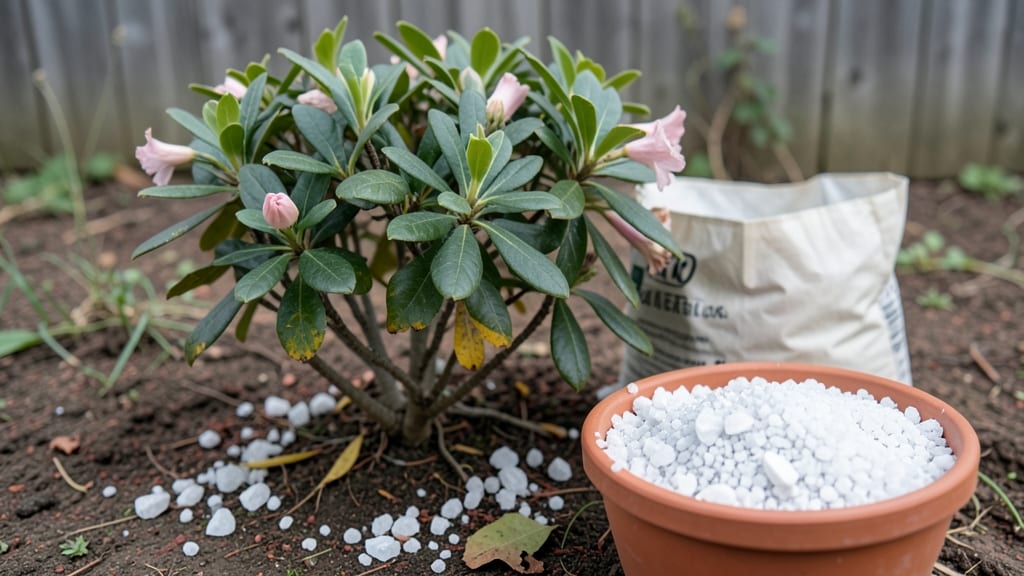
Using aluminum sulfate in gardening helps acidify alkaline soil, creating ideal conditions for acid-loving plants like blueberries, azaleas, and rhododendrons. Apply it carefully (1-2 pounds per 100 sq ft) and water deeply to prevent over-acidification or plant damage.
Aluminum sulfate works by breaking down in soil to release acidic compounds that gradually lower the pH, making nutrients like iron and manganese more accessible to plants. 🌱 Unlike slower-acting amendments like sulfur, it provides faster results, which is why gardeners often turn to it for quick fixes in alkaline conditions.
However, it's crucial to monitor soil pH regularly—overuse can harm plants by creating overly acidic environments that stunt growth or burn roots.
For best results, apply it in early spring or fall when plants are less stressed, and always mix it into the top 2-3 inches of soil rather than surface-dusting.
This ensures even distribution while minimizing direct contact with plant roots. 💫 I've found that testing soil pH before and after application helps avoid guesswork, especially when working with sensitive plants like camellias or gardenias.
💡 In This Article
- How Aluminum Sulfate Adjusts Soil Chemistry
- Safe Application Rates and Plant-Specific Guidelines
How aluminum sulfate adjusts soil chemistry
When aluminum sulfate dissolves in soil moisture, it dissociates into aluminum ions (Al³⁺) and sulfate ions (SO₄²⁻). The real magic happens with the aluminum ions, which react with water to form hydrated aluminum species that release hydrogen ions (H⁺) into the soil solution.
This proton release is what actually lowers the pH—think of it like adding tiny amounts of acid to your soil's chemistry. 🔥 The process is rapid compared to organic acidifiers like peat moss, which break down slowly over months.
The sulfate component plays a secondary role by contributing to the overall ionic strength of the soil solution, which can help displace other cations (like calcium and magnesium) from soil particles.
This displacement makes essential micronutrients like iron (Fe²⁺) and manganese (Mn²⁺) more available to plant roots—critical for acid-loving species that struggle in alkaline conditions. For example, blueberries need soil pH between 4.5-5.5 to access sufficient iron, while hydrangeas thrive at pH 5.5-6.0.
Compared to elemental sulfur (which oxidizes slowly over 2-6 months), aluminum sulfate works faster but also requires more careful monitoring. A 1-pound application per 100 sq ft can drop soil pH by 0.5-1.0 points within weeks, whereas sulfur might take 3-4 months for similar results.
The trade-off? Aluminum sulfate's speed makes it ideal for emergency corrections, but its solubility means it can also leach away quickly in sandy soils or during heavy rains.
Here's what happens at the molecular level: The hydrated aluminum ions (Al(H₂O)₆³⁺) act as Lewis acids, accepting electron pairs from water molecules to release H⁺ ions. This reaction continues until equilibrium is reached between the soil solution and the solid phase.
The key factor is moisture—without adequate water, the chemical reaction stalls, leaving unused aluminum sulfate crystals in your soil. 💫 This is why thorough watering after application is non-negotiable.
For a visual comparison, imagine sulfur as a slow-release capsule versus aluminum sulfate as a fast-acting liquid medication. Both achieve the same goal (lowering pH), but with different timelines and application considerations.
Peat moss, another organic acidifier, works by decomposing and releasing organic acids over time, but it also improves soil structure—a bonus aluminum sulfate lacks.
The aluminum ions themselves aren't typically toxic to plants at recommended rates, but they can become problematic if overapplied. Excess aluminum binds to phosphorus in the soil, making this essential nutrient less available—a phenomenon called "aluminum toxicity" that manifests as stunted growth or yellowing leaves.
This is why soil testing before and after application is essential, especially for plants sensitive to aluminum buildup like azaleas.