
Fertilization
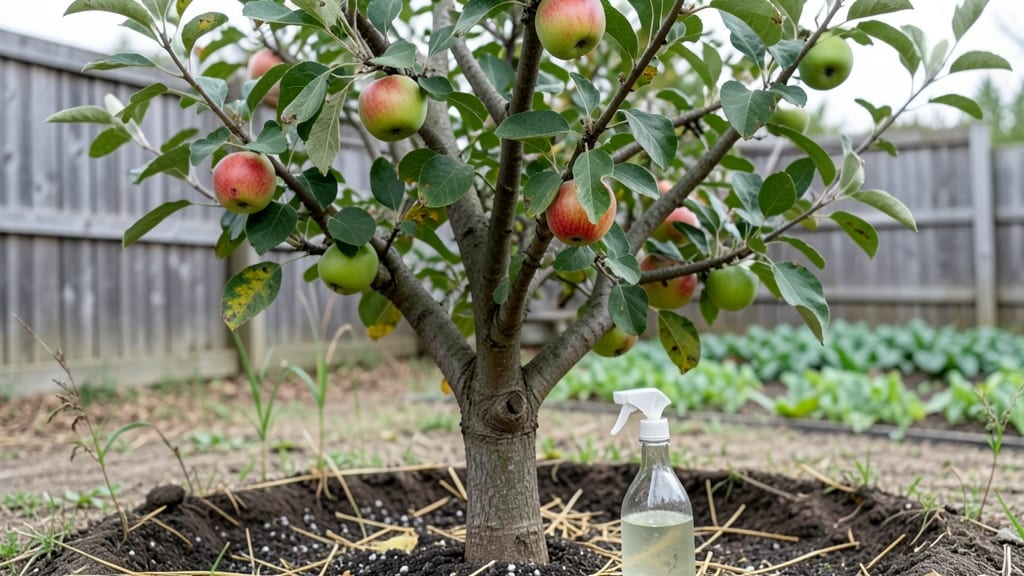
Using apple cider vinegar in gardening transforms it into a versatile natural solution that improves soil health, deters pests, and balances acidity without harsh chemicals. Dilute it properly (1-2 tbsp per gallon) to maximize benefits safely.
Apple cider vinegar's acetic acid content is the secret weapon in your gardening toolkit. It loosens compacted soil, making nutrients more accessible to plant roots while discouraging fungal growth and unwanted weeds. 🌱 For example, a 1:1 vinegar-water spray applied in early morning can eliminate dandelions within days—no digging required.
The key is consistency: regular applications help maintain optimal soil pH for acid-loving plants like tomatoes and blueberries, while also repelling soft-bodied pests like aphids.
What sets ACV apart is its dual functionality—it works as both a preventive and corrective treatment. For instance, mixing it with neem oil creates a potent antifungal spray for powdery mildew, while a diluted solution sprayed on foliage deters spider mites.
The best part? It's completely organic and budget-friendly compared to commercial alternatives. Just remember to test on small areas first—some plants may react differently to the acidity.
💡 In This Article
- How Apple Cider Vinegar Enhances Soil Chemistry
- Practical ACV Gardening Solutions for Common Problems
How apple cider vinegar enhances soil chemistry
Apple cider vinegar (ACV) works its magic primarily through its active ingredient: acetic acid, which typically makes up 4-6% of its composition. When applied to soil, this weak acid performs three key functions simultaneously.
First, it lowers soil pH by donating hydrogen ions (H⁺), creating a more acidic environment that benefits plants like blueberries and azaleas which thrive in pH ranges of 4.5-5.5.
The acetic acid also disrupts the chemical bonds in organic matter, releasing trapped nutrients like potassium and nitrogen in forms plants can absorb more easily. 🔥
In sandy soils, where nutrients drain quickly, ACV helps by temporarily binding minerals to soil particles through ion exchange—a process where the acetic acid's negative charge attracts positively charged mineral ions. This creates a slow-release effect, preventing nutrient loss during watering.
Clay soils, however, respond differently: their dense structure limits ACV's penetration, so it's most effective when worked into the top 2-3 inches of soil rather than applied as a surface spray. The acetic acid also creates an environment where beneficial soil microbes thrive, particularly those that decompose organic matter efficiently.
One of the most impressive chemical reactions occurs when ACV encounters fungal spores. The acid disrupts the cell walls of fungal pathogens through a process called plasmolysis, where water is drawn out of the fungal cells, causing them to dehydrate and die.
This is why ACV is particularly effective against common garden fungi like powdery mildew and root rot. The same mechanism explains why it deters soft-bodied pests—the acetic acid creates an inhospitable environment that repels insects without killing them outright, a gentler approach than many chemical pesticides. 🌱
For acid-loving plants, the pH adjustment is crucial. For example, blueberry bushes require soil pH between 4.5-5.5 to access iron and other micronutrients.
A single application of diluted ACV (1 tbsp per gallon) can lower soil pH by 0.5-1.0 points over several weeks, though regular monitoring with a pH meter is essential—over-acidification can harm other plants in the garden.
The potassium release is equally important: ACV helps break down potassium-rich minerals like feldspar into soluble forms, making them immediately available to plant roots.
What most gardeners don't realize is how ACV's effects vary with temperature. In cooler climates, the chemical reactions proceed more slowly, so applications should be more frequent (every 2-3 weeks) compared to warmer regions where monthly treatments suffice.
The acetic acid also acts as a natural chelator, binding to heavy metals like iron and manganese, preventing them from becoming toxic to plants. This dual role makes ACV particularly valuable in garden soils where micronutrient deficiencies are common. ✨
To maximize these benefits, always use diluted solutions—undiluted ACV can harm plant roots and beneficial soil organisms. Start with a ratio of 1 tablespoon per gallon of water for general soil conditioning, increasing to 2 tablespoons per gallon for highly alkaline soils.
The key is consistency: regular, moderate applications create the optimal environment for your plants without risking over-acidification. 💫