
Picking
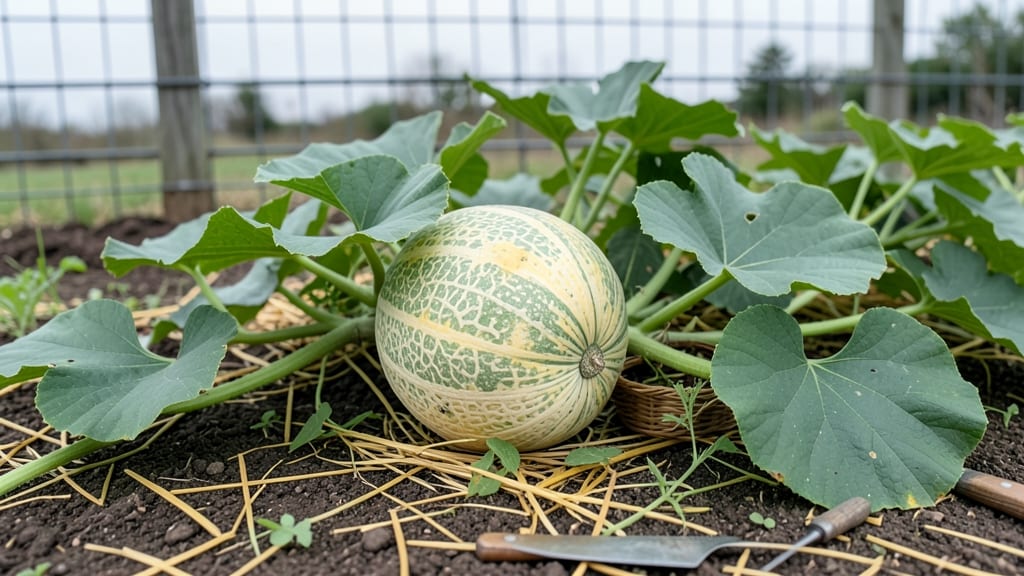
Picking cantaloupe from your garden requires checking for a creamy beige rind near the stem, a strong sweet fragrance at the blossom end, and a slight give when gently pressed. Harvest when the vine stops growing and the fruit detaches easily from the stem.
The right moment to harvest cantaloupe depends on balancing these visual and tactile cues—like spotting that golden blush near the stem or sniffing out that intoxicating honey-like aroma. 🌱 I’ve learned that cantaloupes often ripen unevenly, so checking multiple fruits on the vine helps ensure you don’t miss the peak sweetness window.
If you’re unsure, a gentle twist test (where the fruit releases from the vine with minimal force) is your best friend in the garden.
Timing matters too: morning harvests tend to yield fresher fruit since evening heat can stress the vines. Once picked, store cantaloupes at room temperature—never refrigerated—until fully ripe, as cold temperatures dull their natural sugars.
Pro tip? If your cantaloupe’s vine has stopped creeping and the tendrils are drying, that’s your final green light to harvest.
💡 In This Article
- How to Identify Perfectly Ripe Cantaloupe
- Cantaloupe Harvesting Tips for Garden Success
How to identify perfectly ripe cantaloupe
Here's what's actually happening when cantaloupe reaches peak ripeness: the fruit's natural sugars convert starches into sweet compounds through a process called respiration. This biological activity peaks when the vine stops growing and the fruit's internal temperature stabilizes—usually around 70-75°F during daytime hours.
The creamy beige color near the stem isn't just visual flair; it's a sign of carotenoid accumulation, pigments that develop as the fruit matures and its cell walls break down slightly, creating that signature softness.
The strong, honey-like fragrance at the blossom end comes from volatile organic compounds like hexanal and linalool, which intensify as the fruit ripens.
Think of it like a natural perfume—what most people don't realize is that this scent becomes most pronounced 24-48 hours before the fruit reaches its sweetest point. 🌟 A pro move? Sniff the fruit early in the morning when these compounds are most concentrated due to cooler temperatures.
The slight give when pressed (about 1/4-inch indentation) indicates the fruit's internal pressure has equalized, a sign that sugars have fully developed.
This works because cantaloupe sweetness correlates directly with vine maturity. The plant allocates its final energy reserves to the fruit when the vine stops growing—this is why you'll often see the tendrils drying out or curling.
What most gardeners overlook is that the stem detachment test should require minimal force (less than 5 pounds of pressure) but still feel slightly resistant. Too much give means the fruit is overripe; too little means it needs more time.
There's a common misconception that cantaloupe must detach completely from the vine to be ripe. Actually, the fruit should release with about 75% of the stem still attached—this prevents bruising during harvest.
The sound matters too: a ripe cantaloupe makes a hollow, thud-like noise when tapped (like knocking on a wooden door), while underripe ones sound more solid. 🔥 This acoustic test works because ripe fruit has less internal tension in its cell structure.
Consider these key factors when evaluating ripeness:
- Color variation: Look for 70-80% beige near the stem with 10-20% net pattern—this indicates proper sugar development
- Scent threshold: The aroma should be detectable 6 inches away from the blossom end
- Texture tolerance: Press with one finger—the skin should yield slightly but spring back
What separates expert pickers is understanding that cantaloupe sweetness peaks 2-3 days after meeting all these criteria. The fruit continues to ripen slightly after harvest, which is why many gardeners leave cantaloupes at room temperature for 48 hours post-picking to develop maximum flavor.
This post-harvest ripening is why you'll often see cantaloupes at markets that are slightly softer than what you'd pick from the vine.