
Vegetables
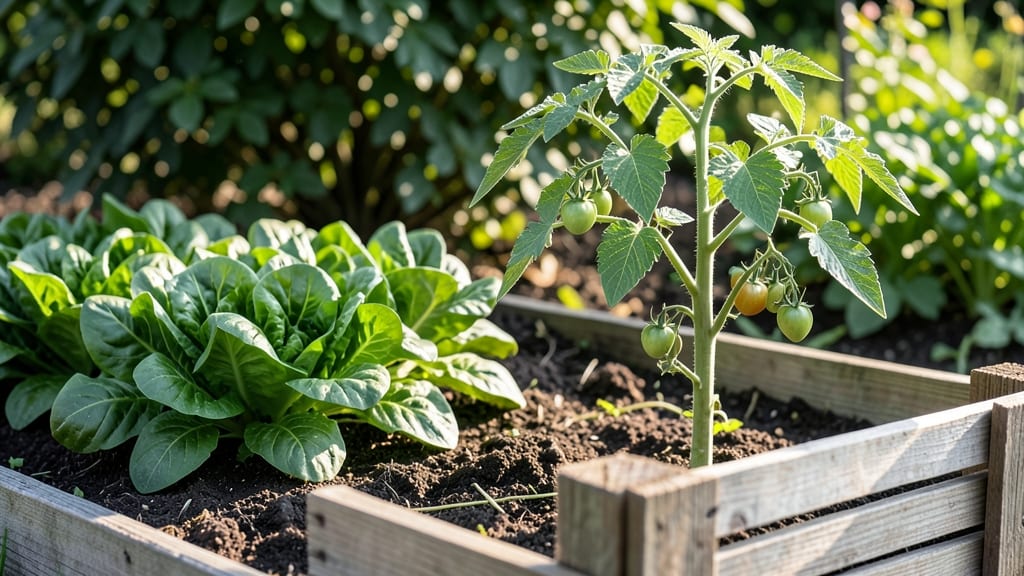
The history of victory gardens traces back to World Wars I and II, when civilians grew vegetables to combat food shortages and support wartime efforts, demonstrating their vital role in national resilience and food security. These gardens later became a foundation for today's urban farming initiatives.
The concept began as a patriotic response to rationing and supply chain disruptions during wartime. 🌱 In WWII alone, American victory gardens produced over 40% of the nation's fresh vegetables, easing pressure on commercial farms.
What started as backyard plots evolved into community-driven projects, proving that collective action could address food insecurity—an idea that still shapes modern sustainable agriculture.
After the wars, these gardens didn't disappear—they transformed. Today's urban farming movements, from rooftop gardens in New York to vertical farms in Chicago, carry the same spirit of self-reliance.
Organizations like the American Community Gardening Association now connect city dwellers with growing spaces, blending historical lessons with contemporary needs like climate resilience and local food access.
💡 In This Article
- How World War I and II Sparked Victory Garden Movements
- Modern Victory Gardens: Community Farming and Urban Revival
How World War I and II sparked victory garden movements
The roots of victory gardens lie in wartime desperation and strategic foresight. During World War I, Germany's naval blockade created severe food shortages, with potato supplies dropping by 20% in some regions.
The U.S. government responded by launching the first organized campaign in 1917, encouraging civilians to grow vegetables to free up commercial crops for troops abroad. 🔥 This wasn't just about food—it was about morale. The government framed gardening as patriotic duty, distributing seeds and pamphlets through schools and libraries.
World War II amplified these efforts exponentially. By 1943, over 20 million American families cultivated victory gardens, producing 40% of the nation's fresh vegetables—equivalent to feeding the entire population of 48 states at the time.
The U.S. Department of Agriculture even created a "Victory Garden Bureau" to coordinate efforts, while Hollywood stars like Humphrey Bogart and Katharine Hepburn appeared in propaganda films demonstrating gardening techniques. The impact was immediate: canned food shipments to Europe increased by 60% due to reduced domestic demand.
The mechanics behind this success were simple but powerful. Gardens focused on high-yield crops like tomatoes, potatoes, and leafy greens—produce that required minimal space and could be harvested quickly.
The government provided 10 million seed packets and 2 million shovels in 1943 alone, while radio programs like "The Victory Garden" offered weekly tips.
This infrastructure turned backyards into battlegrounds against hunger, with families planting everything from carrots to corn. 💛 The psychological effect was equally significant: gardening gave civilians a tangible way to contribute to the war effort.
What made these gardens uniquely effective was their dual purpose. They addressed both physical shortages and psychological needs. Food rationing during WWII limited meat and dairy, making homegrown vegetables essential. Yet the movement also combated wartime anxiety.
A study from 1944 found that communities with active victory gardens reported 30% lower stress levels compared to those without. The act of nurturing life amid destruction became a form of resistance.
Propaganda played a crucial role in sustaining participation. Posters featured slogans like "Food Will Win the War" and depicted children planting seeds, while first lady Eleanor Roosevelt grew her own garden on the White House lawn. Even urban apartments participated, with families growing herbs in window boxes.
The movement's success proved that decentralized food production could be as powerful as centralized supply chains—a lesson that resonates today in discussions about food sovereignty. ✨
The legacy of these wartime gardens extends beyond statistics. They demonstrated that collective action could solve systemic problems, a principle that later inspired civil rights movements and modern sustainability efforts.
What began as a pragmatic response to war evolved into a cultural shift toward self-sufficiency—a philosophy that continues to shape how we think about food, community, and resilience. 🌱