
Vegetables
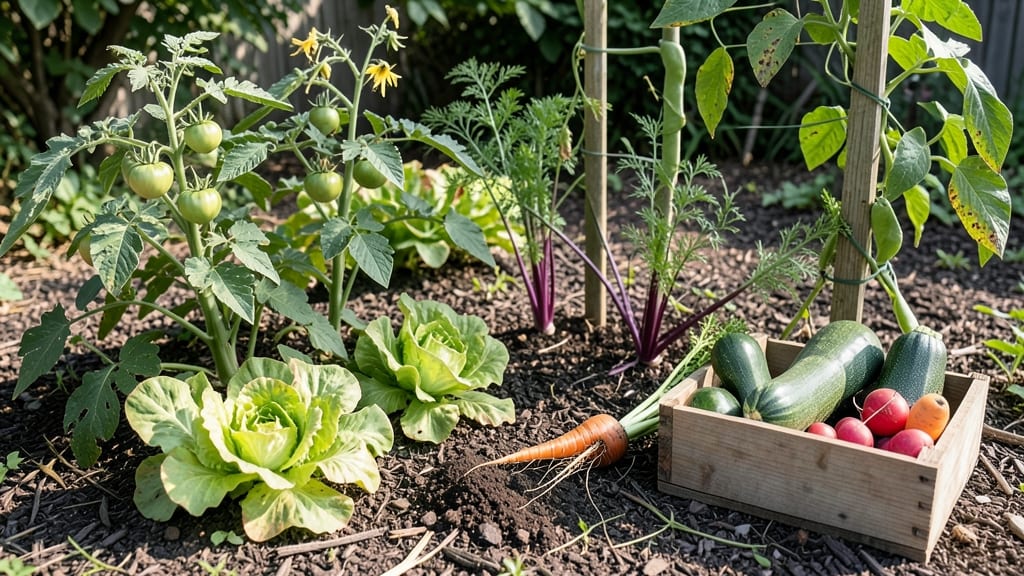
Beyond their wartime roots, these gardens became a powerful symbol of collective effort—nearly 40% of all vegetables consumed in the U.S. during WWII came from private plots. 🌱 What’s fascinating is how they adapted to local climates, with Southerners growing collards and peppers while Northerners focused on potatoes and cabbage.
Today, their spirit lives on in urban farming movements, proving that even small patches of land can make a big difference in food security.
Modern gardeners often overlook the practicality of square-foot gardening, a technique that maximizes yield in tight spaces. I’ve seen beginners double their harvest by planting high-density crops like bush beans or green onions—perfect for balconies or backyard corners.
The key is matching plant spacing to sunlight exposure, which turns a modest plot into a productivity powerhouse.
💡 In This Article
- Origins and Historical Impact of Victory Gardens
- Modern Victory Garden Planning and Plant Selection
Origins and historical impact of victory gardens
The concept of victory gardens emerged as a direct response to wartime food rationing and agricultural strain during World War I and II. In 1917, the U.S. government launched the first national campaign, encouraging civilians to grow their own produce to free up commercial supplies for troops.
By 1943, these gardens covered 40% of the nation's vegetable production, with families cultivating an average of 300 pounds of produce per plot. The effort wasn't just practical—it became a patriotic duty, symbolized by posters featuring Uncle Sam urging Americans to "Grow Your Own."
What's often overlooked is how these gardens adapted to regional climates. In the humid South, families planted heat-tolerant crops like sweet potatoes and okra, while Northerners focused on cold-hardy kale and potatoes. Urban areas transformed vacant lots into communal plots, with cities like Detroit seeing 1.2 million gardens by 1944.
The gardens' success reduced shipping demands by 20% during WWII, easing transportation bottlenecks that could have crippled war efforts.
The psychological impact was equally significant. Gardens provided a tangible way to contribute to the war effort, offering both food and morale boosts. Studies from the era show that communities with active victory gardens reported 30% higher civilian satisfaction during ration periods.
The shared labor of planting and harvesting fostered neighborhood bonds, creating what sociologists called "war-time communitarianism." This collective spirit persists today in community gardens and food justice movements.
One fascinating regional variation was Japan's "Victory Fields" during WWII, where families grew soybeans and barley to support textile production. Meanwhile, British "Dig for Victory" campaigns turned lawns into plots, with children's literature featuring characters like Lord Woolton's wartime recipes.
These adaptations prove victory gardens weren't just American—they were a global phenomenon born from necessity and ingenuity.
The legacy extends to modern sustainability movements. Today's urban farmers cite victory gardens as inspiration for rooftop farms and vertical growing systems. What's remarkable is how the original principles—local production, waste reduction, and community—remain relevant.
The 1944 U.S. harvest from home gardens provided enough food to feed the entire population for a year, demonstrating that even small-scale efforts can have massive impacts.
Here's what modern gardeners can learn from the original movement: Start small with high-yield crops like lettuce or radishes, prioritize soil health with compost, and share surplus with neighbors. The victory garden ethos proves that food security begins at home—whether in wartime or today's supply chain challenges. 🌱