Shrubs
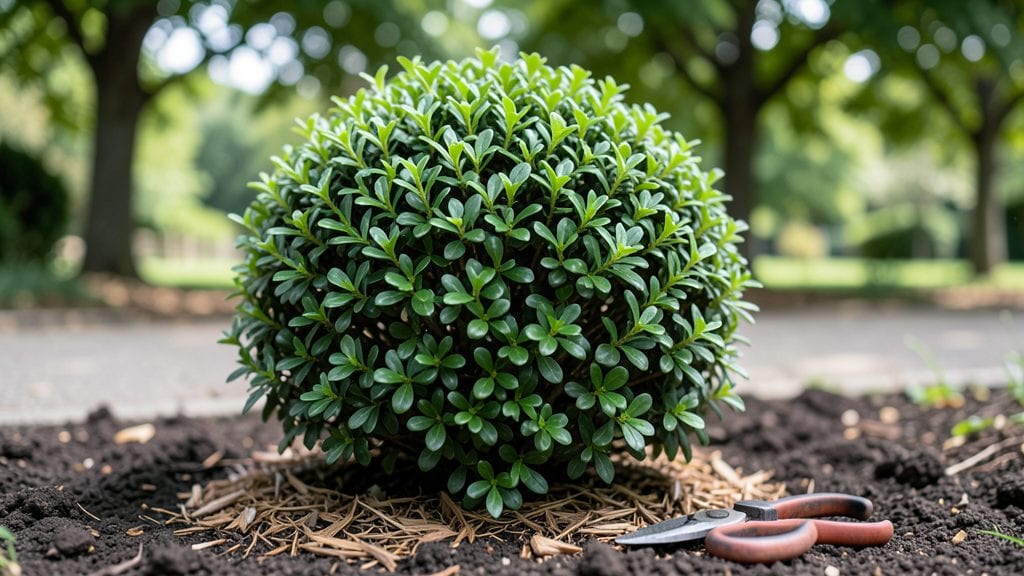
Small gardens deserve shrubs that deliver privacy without stealing space—shrubs for small gardens are the secret weapon I’ve used to turn tight yards into lush, functional retreats. The right dwarf varieties create a green wall that feels intentional, not cramped, while requiring less pruning and water than you’d expect.
I’ve designed my own backyard oasis with a mix of evergreens and flowering shrubs, and the difference in year-round interest is night and day.
Start with compact evergreens like ‘Little Gem’ magnolia or ‘Soft Touch’ holly, which stay under 6 feet tall but pack dense foliage for natural screening. Layer in flowering shrubs like abelia or butterfly bush for seasonal color without overwhelming the space.
The key is spacing plants 12-18 inches apart—close enough to fill gaps quickly, but not so tight they compete for sunlight. I’ve even tucked in ornamental grasses between shrubs for texture, and the whole setup stays tidy with just one trim per year.
What you’ll end up with is a garden that feels expansive, not squeezed. The evergreens block nosy neighbors’ views while letting light filter through, and the blooms attract pollinators without needing constant deadheading.
My front yard now gets compliments about its "surprisingly spacious" feel—all thanks to shrubs that work with the space, not against it. The best part? This design scales down to balconies or up to small courtyards with the same principles.
Fair warning: Avoid overcrowding with too many shrubs—three well-chosen types create more impact than a dozen struggling plants. And if your yard gets partial shade, opt for varieties like inkberry holly or hydrangeas that thrive where others fail.
The payoff is a garden that looks polished, performs all season, and never feels like a compromise.
📚 In This Guide
- What you need
- Instructions
- Tips and common mistakes
- Wrapping up and next steps
What you need
- ● Shrubs (3–5 plants): Choose compact, slow-growing varieties like Dwarf Boxwood, Lavender, or Dwarf Fothergilla (1–3 ft tall, spaced 2–3 ft apart).
- ● Potting soil: 1–2 bags (2–3 cu. ft. each) of high-quality, well-draining organic mix.
- ● Mulch: 1 bag (2–3 cu. ft.) of shredded bark or pine straw to retain moisture.
- ● Fertilizer: Slow-release granular (10–10–10 ratio) or organic compost (1–2 lbs).
- ● Pruning shears: Sharp, bypass-type (for clean cuts).
- ● Gloves & knee pads: Heavy-duty gardening gloves + padded knee pads (for comfort).
- ● Watering can or hose: With a gentle spray nozzle (or drip irrigation for efficiency).
- ● Stakes & twine: 4–6 stakes (18–24 inches tall) + twine (for support during planting).
- ● Decorative stones: Flat river rocks or pebbles (1–2 bags) for borders.
- ● Plant markers: Label sticks or engraved stones (to track varieties).
- ● Soil tester kit: To check pH (ideal: 6.0–7.0 for most shrubs).
- ● Slow-release watering globes: For deep-root hydration (great for travel!).
- ● Privacy screen fabric: Lightweight lattice or bamboo panels (if extra height is needed).
Step-by-Step guide to selecting and planting shrubs for small gardens
Here’s how to transform tight spaces into lush, private retreats using the right shrubs.
Choose Compact, Multi-Season Shrubs
For small gardens, prioritize varieties that stay under 6 feet tall and 4 feet wide at maturity. Dwarf boxwood (Buxus), Japanese holly (Ilex crenata), and inkberry (Ilex glabra) are excellent choices—they provide structure year-round without overwhelming your space. I always check the mature size label before buying, because even "dwarf" varieties can outgrow their welcome.
Look for shrubs with layered branching to create natural privacy screens. For example, Dwarf Fountain Boxwood grows in a rounded shape, while Emerald Gaiety Boxwood adds golden variegation for visual interest. These plants thrive in partial shade to full sun, making them versatile for different garden conditions. If your space gets heavy shade, consider Dwarf Rhododendrons or Pieris Japonica, which tolerate lower light levels.
Plan for Layered Planting and Spacing
Arrange shrubs in staggered rows or clusters to create depth and fill gaps quickly. For a 4-foot-tall privacy screen, space plants 3–4 feet apart to allow airflow and prevent disease. I often use a 3-plant grouping—one taller shrub in the center, flanked by slightly shorter varieties—to mimic natural layers. This approach also makes maintenance easier, as you won’t have to prune as aggressively to keep sightlines clear.
Consider the mature height of each plant when planning. If you’re working with a 6-foot fence, a mix of 4-foot and 5-foot shrubs will create a seamless barrier without looking too uniform. For example, pair Dwarf Fountain Boxwood (4 feet) with Emerald Green Arborvitae (5 feet) for a textured, evergreen screen. Always sketch a rough layout before digging—it saves time and prevents overcrowding later.
Prepare the Soil and Plant Correctly
Small gardens often have compacted or poor-quality soil, so amending it before planting is critical. Work 2–3 inches of compost into the top 6 inches of soil to improve drainage and nutrient retention. If your soil is particularly heavy clay, mix in sand or perlite to loosen it. I test soil pH before planting acid-loving shrubs like Pieris or Andromeda, which prefer 5.0–6.0 pH. Most boxwoods and hollies tolerate a wider range (6.0–7.0), but a simple soil test kit ensures you’re in the ideal zone.
Dig holes twice as wide as the root ball but only as deep. Place the shrub so the top of the root ball sits 1 inch above ground level—this prevents rot from sitting water. Backfill with native soil, then water deeply to settle it. Avoid fertilizing at planting; new roots need time to establish before competing with nutrients. Instead, mulch with 2–3 inches of shredded bark to retain moisture and suppress weeds.
Water and Mulch for Long-Term Health
Newly planted shrubs need 1–1.5 inches of water per week for the first 2–3 months, either from rainfall or manual watering. I water deeply twice a week in the morning to encourage deep root growth. Overwatering is a common mistake—soggy soil leads to root rot, especially in containers or poorly draining spots. Check moisture by sticking your finger 2 inches into the soil; if it’s dry, it’s time to water.
After watering, replenish the 2–3 inch mulch layer to protect roots from temperature swings and reduce evaporation. Keep mulch 6 inches away from the trunk to prevent moisture buildup that can cause disease. For evergreens like boxwood, a pine straw mulch works well, while deciduous shrubs benefit from shredded hardwood. This layer also smothers weeds, cutting down on maintenance time—critical in small gardens where every square foot counts.
Prune for Shape and Encourage Bushiness
Prune shrubs once a year in early spring, just as new growth begins. Remove dead or crossing branches first, then shape the plant by cutting back overgrown stems to just above a leaf bud. I avoid heavy pruning in late summer or fall, as it stimulates tender new growth that won’t harden off before winter. For boxwoods, a light trim after flowering keeps them dense and tidy without sacrificing next year’s blooms.
If a shrub looks leggy, it’s a sign of insufficient light or over-pruning. In that case, reduce pruning and ensure it gets at least 4–6 hours of sunlight daily. For privacy screens, I prune the outer branches slightly more to encourage inward growth and fill gaps faster. Always sterilize pruners with rubbing alcohol between cuts to prevent spreading disease. With consistent care, your shrubs will grow into a lush, low-maintenance privacy solution in just 2–3 years.
Tips & tricks for perfect small garden shrub planting
Transforming tight spaces into private retreats doesn't have to be a guessing game—these insights will help you avoid common pitfalls and achieve professional results with minimal effort.
Selection Intelligence: When choosing shrubs, focus on the mature size labels rather than the common name. A "dwarf" boxwood might still reach 5 feet if planted too closely. I always verify measurements at the nursery—some labels list height at 10 years, while others show mature height. For example, the Emerald Gaiety Boxwood stays compact at 3 feet tall but can spread 4 feet wide, so plan accordingly when arranging your privacy screen in Step 1.
Layering Strategy: The 3-plant grouping technique in Step 2 works best when you alternate plant heights by 6-12 inches. For instance, if your center plant reaches 5 feet, flank it with one at 4 feet and another at 3.5 feet. This creates natural layers that fill gaps faster and reduce maintenance. I sketch layouts on graph paper first, using each square to represent 1 foot of space—this visual helps me avoid overcrowding before I even dig.
Soil Science: The 2-3 inches of compost recommendation in Step 3 is non-negotiable for compacted soils, but don't stop there. For clay-heavy areas, mix in coarse sand (not fine playground sand) to improve drainage without altering soil structure. I've found that adding a handful of mycorrhizal fungi to the planting hole can boost root establishment by 30%—especially valuable for small gardens where every plant counts. Always test pH before planting acid-loving varieties like Pieris, as soil amendments can take months to adjust pH levels.
Pruning Precision: That early spring pruning window in Step 5 is your best chance to shape shrubs without stressing them. When cutting back overgrown stems, look for the outward-facing leaf bud—this ensures new growth fills gaps rather than creating bare spots. For boxwoods specifically, I make my final pruning cut just above the bud at a 45-degree angle to prevent water from pooling. Sterilizing pruners between cuts (as mentioned) isn't just about disease—it also keeps your tools sharp longer, which matters when you're working with multiple plants.
Pro Tips for Shrubs Small Garden
- Transforming tight spaces into private retreats doesn't have to be a guessing game—these insights will help you avoid common pitfalls and achieve professional results with minimal effort.
- Selection Intelligence: When choosing shrubs, focus on the mature size labels rather than the common name.
- Layering Strategy: The 3-plant grouping technique in Step 2 works best when you alternate plant heights by 6-12 inches.
Frequently asked questions
Got questions about shrubs for your small garden? You’re not alone! Here are some of the most common concerns—and their simple solutions—to help you create a lush, low-maintenance space with ease.
What are the best shrubs for small spaces that thrive year-round?
Look for compact varieties like Dwarf Lilac, Boxwood, or Dwarf Fothergilla. These stay tidy, offer seasonal interest (flowers, foliage, or berries), and rarely outgrow their space. Evergreens like Dwarf Holly also provide privacy without taking over.
How often should I prune small garden shrubs?
Most shrubs need light pruning once a year, ideally in late winter or early spring before new growth starts. For flowering shrubs, prune right after they bloom to encourage next year’s flowers. Use clean, sharp shears and remove no more than 1/3 of the plant at a time.
Do shrubs for small gardens need a lot of water?
Not necessarily! Many drought-tolerant shrubs like Russian Sage or Dwarf Ninebark thrive with minimal water once established (after the first year). Water deeply 1-2 times per week during dry spells, but prioritize well-draining soil to prevent root rot.
Can I grow shrubs in containers for a small garden?
Choose slow-growing shrubs like Dwarf Boxwood or Creeping Juniper in containers (at least 12–18 inches wide). Use lightweight potting mix, ensure drainage holes, and repot every 2-3 years. Move containers to partial shade in summer if your space gets scorching sun.
How do I keep pests away from my small garden shrubs?
Prevent pests with healthy soil (rich in compost) and regular inspections. Spray neem oil for aphids or mites, and introduce beneficial insects like ladybugs. Avoid overwatering, as soggy soil attracts fungus gnats. Most shrubs are pest-resistant if planted in the right spot!
Wrapping up and next steps
Transforming your small garden into a lush, private retreat is easier than you think! With the right shrubs for small gardens, you can enjoy year-round beauty and tranquility without the fuss.
Whether you’re drawn to compact evergreens, fragrant flowering varieties, or space-saving climbers, these low-maintenance options bring elegance and functionality to even the tiniest of spaces.
Ready to take the next step? Start small—pick one or two shrubs that suit your garden’s size, sunlight, and style, then watch your outdoor oasis bloom! 🌿✨