
Tools
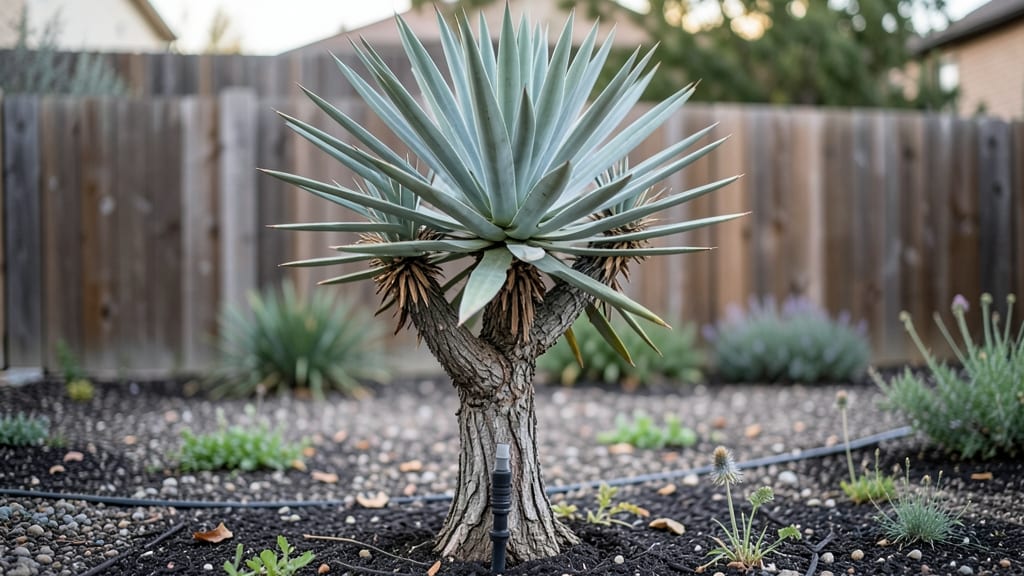
Creating a Mojave desert succulent garden turns the harshest conditions into a stunning, low-maintenance landscape. I spent years watching my plants wilt until I learned the secret: choosing the right species and working with the desert’s rhythm instead of against it.
The key isn’t fighting the heat—it’s embracing it with plants that thrive where others fail.
Start with native Mojave plants like agave, prickly pear cactus, and desert marigold—they’ve evolved to store water, resist drought, and handle 120°F temperatures. Your soil mix should be 60% coarse sand, 30% gravel, and 10% organic matter to drain fast and prevent rot.
A simple drip irrigation system on a timer delivers just enough water every 10-14 days, while mulch made from crushed granite keeps moisture where it’s needed.
By mid-summer, your garden will look lush and vibrant without a single drop of waste. The deep green of ocotillo contrasts with the silver-blue of desert spoon, and the Joshua tree’s dramatic silhouette becomes the centerpiece.
Even in winter, these plants stay green when most desert gardens go dormant. The only maintenance? A quick sweep of dead leaves twice a year.
This approach works for any desert climate—from the Sonoran to the Chihuahuan. The same principles apply whether you’re planting a small container garden or transforming a whole yard. Here’s how to make it happen without losing a single plant to the heat.
📚 In This Guide
- What you need
- Instructions
- Tips and common mistakes
- Wrapping up and next steps
What you need
- ● Succulents: 10–20 drought-tolerant varieties (e.g., Agave, Echeveria, Sedum, or native Mojave species like Yucca or Prickly Pear). Start with 3–5-inch pots.
- ● Well-draining soil: 5–10 bags of cactus/succulent mix (or DIY: 60% potting soil + 30% perlite + 10% coarse sand).
- ● Containers: 3–5 terracotta pots (1–2 gallons, with drainage holes).
- ● OR raised garden beds (4’x8’ frame, 6–12” deep, with landscape fabric at the bottom).
- ○ Drainage: 1–2 bags of gravel or lava rocks (for pots/beds) and drainage mats (optional for containers).
- ● Mulch: 1 bag of pebbles or decomposed granite (to retain moisture and reflect heat).
- ● Gloves: 1 pair of gardening gloves (cactus-specific if handling spiky plants).
- ● Trowel: 1 hand trowel (for planting) and 1 long-handled transplant spade (for beds).
- ● Watering can: 1 narrow-spout can (or a drip irrigation kit for efficiency).
- ● Pruners: 1 pair of bypass pruners (for shaping/trimming).
- ● pH tester: 1 digital soil pH kit (succulents prefer 6.0–7.0).
- ● Shade cloth: 30–50% coverage for newly planted succulents (protects from intense Mojave sun).
- ● Drip irrigation system: Micro-sprinklers or soaker hoses (for automated, waste-free watering).
- ● Sun calculator: A light meter to track 6+ hours of direct sun (Mojave’s ideal!).
- ● Native plant guide: A book or app (e.g., iNaturalist) to identify Mojave-friendly species.
Step-by-Step instructions for designing a thriving Mojave desert succulent garden
Transform your desert landscape into a resilient, water-independent oasis with these proven techniques.
Select Native and Drought-Tolerant Succulents
Choose plants that naturally thrive in the Mojave’s extreme conditions—agave, yucca, prickly pear, and Mojave asters are ideal. I always prioritize species like Agave parryi or Yucca schidigera because they store water efficiently and require minimal care once established. Avoid tender perennials or tropical succulents; they’ll succumb to heat stress within weeks.
Visit local nurseries specializing in desert plants to ensure your selections are adapted to your specific microclimate. If you’re unsure, ask for varieties that thrive in 100°F+ temperatures with zero irrigation. These plants won’t just survive—they’ll flourish with the natural rainfall your region receives.
Prepare the Soil for Optimal Drainage
Mojave soil is often rocky and alkaline, so amending it properly is critical. Mix 3 gallons of coarse sand with 2 gallons of native soil for every 1 square foot of planting area. This ensures water drains rapidly, preventing root rot—a common killer in desert gardens. I avoid compost-heavy mixes; they retain too much moisture and invite fungal diseases.
Test your soil’s pH if possible. Mojave plants prefer slightly alkaline conditions (7.5-8.5 pH). If your soil is too acidic, add 1 pound of crushed limestone per 10 square feet and till it in. The goal is to mimic the natural mineral composition of undisturbed desert soil, which these plants evolved to thrive in.
Plant During the Coolest Months
Timing is everything in the desert. Plant between October and March when temperatures stay below 80°F during the day. Shock from transplanting in peak heat can kill even the hardiest succulents. I dig holes twice as wide as the root ball but only as deep as the container’s base—burying too deep suffocates roots.
Space plants according to their mature size: 18-24 inches apart for most agaves and yuccas. Overcrowding leads to competition for moisture, and in the desert, every drop counts. Water deeply once after planting to settle the soil, then let nature take over. No need for fertilizers—these plants grow slowly and thrive on minimal nutrients.
Mulch Strategically to Retain Moisture
Apply 2 inches of gravel mulch around plants, leaving a 2-inch gap near the stem to prevent rot. Gravel reflects sunlight, keeping roots cooler, and allows excess water to evaporate quickly. Organic mulches like wood chips break down too fast in the heat and attract pests, so I never use them in Mojave gardens.
Limit mulch to the drip line of each plant—never pile it against the base. This mimics the natural desert environment where sparse ground cover exists only where shade is cast. Over time, the gravel will stabilize soil temperature and reduce evaporation, making your garden even more self-sufficient.
Establish a Watering Schedule That Mimics Nature
For the first 3 months, water once every 2-3 weeks during monsoon season (July-September) to encourage root growth. After that, stop watering entirely unless your region experiences an extended drought. Mojave plants have adapted to survive on less than 10 inches of rainfall annually, so they’ll store water in their leaves and stems.
If you must supplement, water deeply but infrequently—1 inch per week during extreme heat—using a drip irrigation system set to run in the early morning. Avoid overhead watering; it wastes moisture through evaporation and can damage leaves. Let the soil dry completely between waterings—this is how desert plants signal they’re ready for more moisture.
Tips & tricks for perfect Mojave desert succulent gardens
Creating a thriving desert garden isn't just about survival—it's about harnessing the unique conditions of the Mojave to create something truly extraordinary. These insights will help you avoid common pitfalls and maximize your garden's potential.
Plant Selection Wisdom: When choosing between agave varieties, opt for Agave parryi for its striking blue-green foliage and exceptional drought tolerance. For architectural interest, Yucca schidigera provides both form and function with its sword-like leaves and minimal water needs. I've learned the hard way that even "drought-tolerant" labels can be misleading—always verify a plant's specific heat tolerance (100°F+) and irrigation requirements before purchasing. The Mojave's extreme conditions demand precise species matching.
Soil Preparation Secret: The 3:2 sand-to-soil ratio in Step 2 isn't just about drainage—it's about creating an environment where roots can breathe. I recommend sifting your coarse sand to remove fine particles that could compact over time. For alkaline soil adjustments, test your pH before adding limestone. I've seen gardens where the pH was already perfect (7.5-8.5) but gardeners still added limestone, thinking more was better—this can actually disrupt the natural mineral balance these plants evolved to thrive in.
Timing is Everything: The October-March planting window might seem restrictive, but it's non-negotiable for desert success. I've witnessed firsthand how plants shocked by 100°F+ temperatures during transplanting can wilt within days. If you must plant outside this window, do it during the coolest part of the day (early morning or late evening) and provide temporary shade cloth until roots establish. The 18-24 inch spacing recommendation might seem generous, but remember—these plants are designed to compete for scarce resources in nature.
Mulching Mastery: The 2-inch gravel mulch serves multiple purposes beyond moisture retention. It creates a microclimate that stays cooler by reflecting sunlight rather than absorbing heat like organic mulches. I've found that using small, rounded gravel (about 1/4 inch diameter) works best—it allows water to penetrate while preventing soil evaporation. The 2-inch gap near the stem is crucial; I've seen many gardens where mulch was piled against stems, leading to rot despite the dry conditions.
Pro Tips for Mojave Desert Gardening
- Creating a thriving desert garden isn't just about survival—it's about harnessing the unique conditions of the Mojave to create something truly extraordinary.
- Plant Selection Wisdom: When choosing between agave varieties, opt for Agave parryi for its striking blue-green foliage and exceptional drought tolerance.
- Soil Preparation Secret: The 3:2 sand-to-soil ratio in Step 2 isn't just about drainage—it's about creating an environment where roots can breathe.
Frequently asked questions
Got questions about thriving in the Mojave’s harsh beauty? You’re not alone—here are the answers to the most common queries about Mojave Desert gardening, from water-wise wins to plant survival hacks.
How much water do Mojave desert plants really need?
Most succulents and drought-tolerant Mojave natives thrive on zero supplemental water once established (after 1–2 years). During extreme heat (over 100°F), give them a deep drink every 3–4 weeks—early morning or late evening only. Overwatering is the #1 killer! Pro tip: Use a moisture meter to check soil depth.
When is the best time to plant in the Mojave Desert?
Aim for fall (September–November) or early spring (February–March) when temps are mild (50–70°F). Avoid summer planting—intense heat stresses young roots. Evergreens like agave or yucca can handle cooler temps, but tender perennials (e.g., desert marigold) need a head start.
What are the easiest low-maintenance Mojave plants for beginners?
Start with these zero-fuss superstars:
- Agave parryi – Spiky, sun-loving, and deer-proof.
- Desert spoon (Dasylirion wheeleri) – Slow-growing and architecturally stunning.
- California buckwheat (Eriogonum fasciculatum) – Drought-proof and pollinator-friendly.
- Prickly pear cactus (Opuntia spp.) – Edible fruit + zero water.
Pro tip: Group plants with similar water needs to simplify care!
How do I protect my garden from Mojave pests (like snakes or rodents)?
Snakes and rodents avoid well-drained soil with sharp rocks or mulch (e.g., gravel or crushed granite). Use metal mesh barriers for vulnerable plants, and plant taller species (like ocotillo) as natural deterrents. Never use chemical repellents—opt for physical barriers instead.
Why are my succulents turning yellow or mushy?
Yellowing = overwatering or fungal issues. Mushy stems = root rot from soggy soil. Fix it:
- Let soil dry completely between waterings.
- Ensure pots have drainage holes.
- Trim dead leaves and repot in cactus/succulent mix.
Pro tip: If saved, the plant may regrow from healthy basal leaves!
Wrapping up and next steps
Creating a Mojave Desert succulent garden isn’t just about survival—it’s about crafting a stunning, sustainable oasis that thrives with minimal effort. By choosing the right plants, optimizing soil and sunlight, and embracing water-wise techniques, you’ve unlocked a low-maintenance paradise that celebrates the desert’s raw beauty. 🌵✨
Ready to turn your vision into reality? Start small—pick one corner of your yard or a sunny balcony—and let your garden grow naturally. Before you know it, you’ll have a thriving, drought-proof masterpiece that inspires both you and your community!