
Fertilization
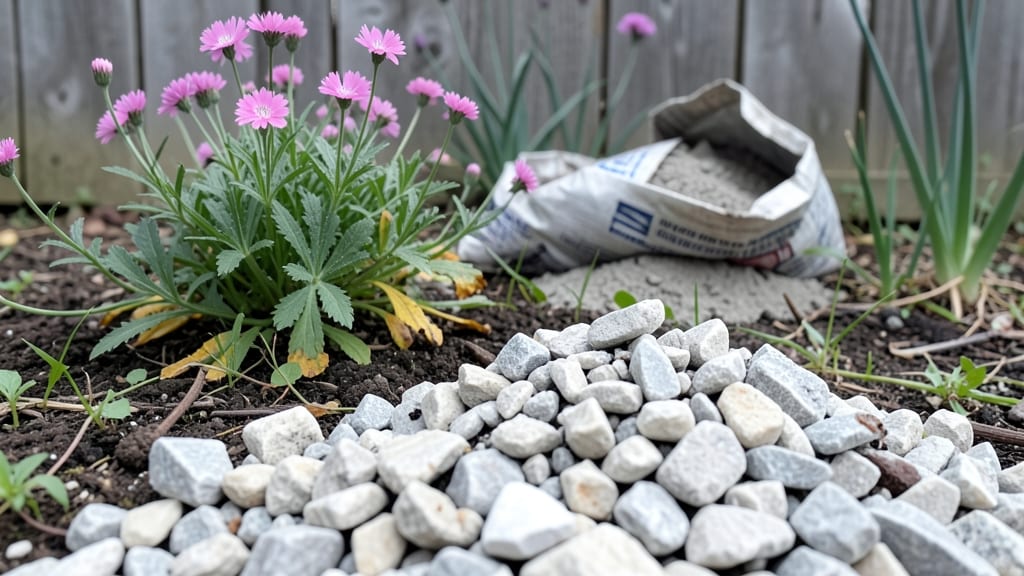
Using limestone in garden soil raises pH levels, neutralizing acidity and creating alkaline conditions ideal for plants like azaleas, blueberries, and hydrangeas. Apply crushed or pulverized limestone in spring or fall, following soil test recommendations for precise adjustments.
Limestone works by introducing calcium carbonate, which actively binds with acidic compounds in the soil to shift the balance toward neutrality or alkalinity. 💫 Unlike quick fixes, its effects are gradual, making it ideal for long-term adjustments—especially in clay-heavy or sandy soils where pH swings occur naturally.
I’ve seen gardeners achieve dramatic results within 3-6 months when they apply 5-10 pounds per 100 square feet, but the key is patience and testing.
This isn’t just about raising pH—it also unlocks nutrients like phosphorus that become locked in acidic conditions. For example, hydrangeas will shift from blue to pink blooms when soil pH moves above 6.0, proving how subtle changes can transform plant performance.
Just be cautious: overdoing it can harm acid-loving plants like potatoes or blueberries, so always cross-reference with a soil test.
💡 In This Article
- How Limestone Alters Soil Chemistry
- Best Plants and Application Rates for Limestone Soil
How limestone alters soil chemistry
Here's what's actually happening when you add limestone to your garden: the calcium carbonate (CaCO₃) in limestone reacts with hydrogen ions (H⁺) in acidic soil through a process called neutralization. This chemical reaction produces calcium ions (Ca²⁺) and bicarbonate (HCO₃⁻), effectively reducing soil acidity.
For every mole of calcium carbonate added, you neutralize about 2 moles of acidity—a precise chemical exchange that explains why 1 pound of limestone can raise the pH of 100 square feet of soil by roughly 0.5 units over time.
The granularity of limestone plays a crucial role in how quickly it works. Fine, pulverized limestone dissolves faster, releasing calcium ions within weeks, while coarse limestone may take months to fully integrate.
This difference matters because soil microbes need time to adapt—too rapid a pH shift can disrupt beneficial bacteria and fungi. 🔥 For example, 100-mesh pulverized limestone (particles 0.005 inches in diameter) starts working almost immediately, while 3/8-inch pellets take longer but provide a more gradual, long-lasting effect.
Soil buffering capacity—its resistance to pH change—determines how much limestone you'll need. Clay soils, with their high buffering capacity, may require 2-3 times more limestone than sandy soils to achieve the same pH shift. This is why soil tests are essential: they reveal your garden's unique buffering profile.
Organic limestone (derived from crushed shells or coral) and synthetic limestone (mined and processed) both work, but organic versions often contain trace minerals like magnesium that boost microbial activity.
What most people don't realize is how limestone affects microbial life. While it raises pH, it also creates microenvironments where beneficial bacteria thrive—especially those that fix nitrogen.
However, synthetic limestone can sometimes contain impurities that temporarily reduce microbial diversity. 💫 To mitigate this, mix limestone with compost or organic matter to support microbial recovery. The goal is balance: you want to raise pH without creating a sterile, alkaline environment that repels beneficial organisms.
Consider this comparison: in a pH 5.0 soil (highly acidic), adding 5 pounds of limestone per 100 square feet might raise pH to 6.5 within 3 months. But in the same soil type, achieving 7.5 pH could require 10-15 pounds due to the soil's buffering capacity.
The key is incremental adjustments—never more than 1 pound per 100 square feet per application—to avoid shocking plant roots.
For visual learners, imagine limestone as a slow-release pH regulator: it doesn't just dump alkaline minerals into the soil—it gradually releases them as water and microbes break down the calcium carbonate.
This process is why limestone is often called a "soil sweetener," creating the ideal growing conditions for plants that prefer neutral to slightly alkaline soils. ✨