Tools
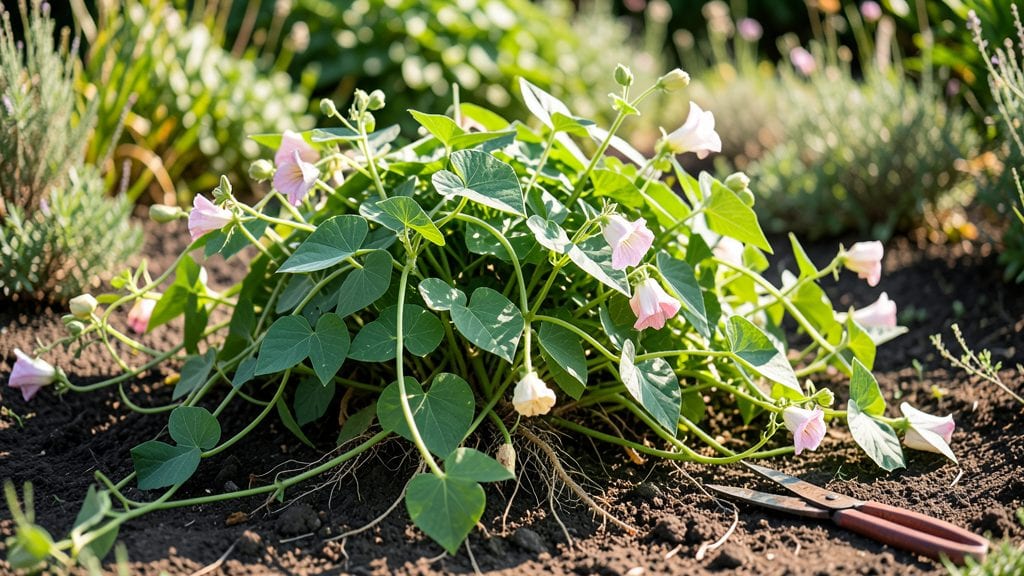
Garden vine weeds strangle your plants before they even get a chance to thrive. 🌱 I’ve wrestled with morning glory vines choking out my grapes and ivy smothering my trellises, and I finally cracked the code on removal without killing the good plants—or the soil.
The key? Targeted tools and timing that work with nature, not against it.
Most gardeners grab the first weed killer they see, but that’s a fast track to killing your vines too. Instead, I use a mix of hand-pulling at the right time, mulching to smother weeds, and a simple vine-pruning trick that keeps them from spreading.
It takes patience, but within 4-6 weeks, your vines breathe easier—and so do you.
The payoff is a vineyard or trellis that stays lush and productive, with no more battles against stubborn regrowth. Your grapes, morning glories, or ivy will grow stronger because they’re not competing for sunlight or nutrients. Plus, you avoid the chemical residue that lingers in the soil for years.
Works for any climbing plant, from decorative vines to fruit-bearing varieties. The same principles apply whether you’re dealing with a small trellis or a sprawling grape arbor. Let’s get those vines back in control—without the guesswork.
Root Causes Of Unwanted Vines
When your garden becomes a playground for aggressive vines, it’s rarely just bad luck—there’s usually a clear reason behind their rapid spread. Understanding these causes helps you tackle the problem at its source, preventing future invasions. Here’s why those tenacious vines keep showing up:
Vines thrive in specific soil environments, and if your garden’s conditions align with their preferences, they’ll take over like an uninvited houseguest who never leaves. Here’s what’s likely happening:
- Rich, Loose Soil 🌿 Vines like morning glories, kudzu, or bittersweet love nutrient-dense soil. If your garden has been amended with compost, manure, or organic matter, you’ve essentially created a buffet for weed seeds.
These vines spread quickly because their roots and runners can easily penetrate soft, aerated soil, anchoring themselves deeper and faster than desired plants.
- Poor Drainage 💦 Waterlogged or poorly draining soil creates the perfect storm for vine weeds. Many aggressive vines, such as bindweed (Convolvulus arvensis), thrive in moist conditions. When soil stays damp for extended periods, it weakens native plants while giving weeds the upper hand.
Their roots can tolerate waterlogged conditions, while your prized plants may struggle to compete.
- Compacted or Disturbed Ground 🏗️ Construction, foot traffic, or tilling can disrupt soil structure, creating gaps where vine seeds can germinate.
Vines like Virginia creeper (Parthenocissus quinquefolia) exploit disturbed areas because their tendrils can latch onto any exposed surface—whether it’s loose soil, mulch, or even cracks in pavement.
Not all vines are equal, and their growth patterns are heavily influenced by sunlight and climate. If your garden’s conditions match their ideal habitat, expect an invasion:
- Full Sun Exposure ☀️ Many fast-growing vines, such as trumpet vine (Campsis radicans) or honeysuckle, crave sunlight. If your garden is bathed in direct rays for most of the day, these vines will stretch, spread, and dominate.
They outcompete slower-growing plants by photosynthesizing at a rapid pace, shading out everything beneath them.
- Warm Climates 🌡️ Vines like kudzu (Pueraria montana) are tropical or subtropical plants that thrive in warm, humid conditions. If you live in a region with hot summers and mild winters, these vines can grow year-round or resprout aggressively after dormancy.
Even temperate climates can see invasions if winters aren’t cold enough to kill vine roots.
- Microclimates 🌿🔥 Small areas in your garden—like the base of a fence, a shady corner, or a south-facing wall—can create microclimates that favor certain vines.
For example, ivy (Hedera helix) often takes over shady, moist spots where other plants can’t survive. These niche environments give vines a competitive edge.
Sometimes, the problem isn’t nature—it’s us. Certain gardening practices unintentionally encourage vine growth:
- Over-Mulching 🍂 While mulch is great for retaining moisture and suppressing weeds, too much can create a cozy environment for vine weeds. Thick layers of mulch (especially organic mulch like wood chips) can trap moisture and warmth, signaling vine seeds to germinate.
Additionally, vines like bindweed can smother themselves in mulch and still thrive by sending up new shoots.
- Improper Pruning ✂️ If you’ve ever pruned a vine back only to see it regrow even stronger, you’re not alone. Some vines, like Japanese honeysuckle (Lonicera japonica), are notorious for resprouting from the base or hidden roots if not cut properly.
Pruning too late in the season or leaving stubs can stimulate new growth, making the problem worse.
- Unchecked Propagation 🌱 Vines spread through seeds, runners, or underground rhizomes. If you’ve ever moved soil, compost, or even water from one part of your garden to another, you might have accidentally transplanted vine seeds or fragments.
Even well-meaning practices like composting yard waste can reintroduce weed seeds into your garden.
Believe it or not, your garden’s ecosystem can play a role in vine dominance:
- Lack Of Natural Predators 🐞 Some vines have few natural enemies in your garden. For example, deer might avoid certain toxic vines (like poison ivy), but they may also nibble on young, tender plants, giving vines an opening to take over.
If your garden lacks birds, insects, or other wildlife that might control vine spread, these plants can grow unchecked.
- Competition Gaps 🏃♂️ When desirable plants are stressed, sick, or slow-growing, they create gaps that vines rush to fill. Over-fertilizing with nitrogen-heavy feeds can lead to lush foliage but weak roots, making plants vulnerable to invasion.
Similarly, drought or disease can leave patches of bare soil where vines can establish themselves without competition.
Vines don’t always arrive by accident—they’re often spread by nature (or humans) in sneaky ways:
- Wind And Wildlife 🦉 Lightweight seeds from vines like morning glory or milkweed (Asclepias) can travel vast distances on the wind, landing in your garden and germinating.
Birds and squirrels may also disperse seeds through their droppings, especially if they feed on berries from invasive vines like bittersweet.
- Waterways And Runoff 💧 If your garden is near a stream, pond, or even a poorly sloped yard, vine seeds can hitch a ride via water runoff. Flooding or heavy rains can deposit seeds from upstream areas, leading to unexpected invasions.
- Hitchhiking On Tools Or Clothing 👕 Vine fragments, seeds, or even small root pieces can cling to gardening tools, shoes, or clothing. If you’ve borrowed tools, shared compost, or walked through an infested area, you might have unknowingly transported vine propagules to your garden.
Quick Fixes for Unwanted Garden Vines
Tangled vines choking your garden? Don’t despair—there are humane, chemical-free ways to reclaim your space without harming the environment or your plants. Below, we break down the most common causes of vine weed overgrowth and match them with practical, step-by-step solutions.
Plus, we’ll share prevention tips to keep your garden vine-free for good.
If your garden is too dense or lacks sunlight, vines like morning glories, bindweed, or kudzu thrive in the chaos. Here’s how to tackle them:
🔥 Pull Early, Pull Often
- When: Remove vines before they flower or seed (spring to early summer is ideal).
- How:
- Wet the soil first—damp ground makes roots easier to extract. 💦
- Grab the base (not just the leaves) and pull firmly in a side-to-side motion to break the root system. 👩🌾
- Check for regrowth—if pieces remain, they’ll resprout. Use gloves to avoid skin irritation (some vines, like poison ivy, can cause rashes). 🛡️
- Pro Tip: 💡 Use a vine ripper tool (a pronged garden fork) to dig out stubborn roots without bending over too much.
🌞 Improve Airflow and Sunlight
- Thin out crowded plants to let sunlight reach the soil.
- Plant low-growing ground covers (like clover or creeping thyme) to compete with vines for space.
- Install trellises strategically—if you want vines (like grapes or cucumbers), train them upward instead of letting them sprawl.
🌡️ Smother with Mulch
- Lay down cardboard or newspaper under vines, then cover with 3–4 inches of mulch (straw, wood chips, or leaves). This blocks sunlight and suffocates weeds over time. ☀️🚫
- Avoid plastic sheeting—it can heat up the soil and harm beneficial microbes.
Some vines (like bindweed or Japanese honeysuckle) have deep, aggressive roots that regrow even after cutting. Here’s how to permanently disrupt them:
🔪 Cut and Solarize
- When: Late spring or early summer (when soil is warm).
- How:
- Mow or cut vines down to ground level. ⏰
- Water the area thoroughly for 3–5 days to saturate the soil.
- Cover with clear plastic (secure edges with rocks or soil). Let it bake in the sun for 4–6 weeks. The heat will kill roots and seeds. 🔥
- Warning: This works best in hot, dry climates. In cooler areas, combine with hand-pulling.
🍳 Boiling Water Treatment
- Best for: Small patches of vines in walkways or cracks.
- How:
- Pour boiling water directly onto the vine’s base (avoid desirable plants).
- Repeat weekly until the vine wilts and dies. 💧🔥
- Pro Tip: 🌡️ Add a drop of dish soap to the water to help break down leaves faster.
👨🍳 Manual Root Excavation
- For: Stubborn perennials like bindweed.
- Tools Needed: Garden fork, shovel, or a dandelion digger.
- Steps:
- Loosen the soil around the vine’s base.
- Dig deep (bindweed roots can go 6+ feet down—go slow!).
- Remove every root fragment—even tiny pieces will regrow. 🪴
- Bonus: Plant deep-rooted competitors like comfrey afterward to crowd out regrowth.
The best defense is a proactive garden. Here’s how to stop vines before they start:
🎯 Design Your Garden to Discourage Vines
- Use raised beds—vines struggle to invade elevated soil.
- Install edging (metal, stone, or plastic) to block creeping roots.
- Plant vine-resistant ground covers like:
- Ajuga (Bugleweed) – Spreads fast and shades out weeds.
- Creeping Jenny – Bright foliage that outcompetes invaders.
- Clover – Nitrogen-fixing and vine-repellent.
✨ Regular Maintenance Habits
- Weekly inspections: Check for new vine shoots, especially after rain. 👀
- Hand-pull weeds when soil is moist (early morning is best).
- Compost or bag removed vines—never leave them in the garden (they’ll reseed!).
💡 Natural Vine Deterrents
- Plant strong-scented herbs (like mint or rosemary) near problem areas—many vines avoid their fragrance.
- Spread coffee grounds (used, not fresh) around plants—caffeine inhibits weed seed germination.
With these targeted, humane methods, you can say goodbye to garden vine weeds without harsh chemicals. The key? Act fast, stay consistent, and design your space to make it harder for vines to take over. Your garden will thank you!
Frequently asked questions
How do I tell if a vine is a weed or a beneficial plant?
Look for these red flags: vines growing wildly without training, spreading aggressively into flower beds, or choking out your trellised plants. Beneficial vines (like grapes or cucumbers) grow along supports, while weeds sprawl unpredictably. Check leaf patterns—most garden weeds have simple leaves (no complex shapes), while edible vines often have distinctive foliage.
Will mulch really stop vine weeds from coming back?
Yes, but only if you use the right method. A 3-4 inch layer of organic mulch (straw or wood chips) blocks sunlight, but you must first smother existing vines with cardboard underneath. For stubborn regrowth, reapply mulch twice yearly—spring and fall—to maintain the barrier.
Can I use vinegar to kill garden vines without harming my plants?
Only with extreme caution! A 20% vinegar solution (1 part vinegar to 4 parts water) works on small patches, but it can damage nearby plants. Apply only on sunny days to dry vines faster. For safety, spot-test first and avoid spraying edible plants—vinegar's acidity can linger in soil.
Why do some vine weeds keep coming back even after I pull them?
Many perennials like bindweed have deep roots or underground rhizomes that regrow from tiny fragments. Always dig 6+ inches deep and remove every root piece—even a 1-inch stub can sprout. For repeat offenders, try solarization (covering with plastic for 6 weeks) to kill hidden roots.
What's the best time of year to tackle garden vine weeds?
Spring (just as shoots emerge) and early fall (before seeds form) are ideal. In warm climates, work year-round—weeds grow faster in heat. Avoid winter removal unless you're dealing with frost-sensitive vines, as disturbed soil can encourage new growth when temperatures rise.