Tools
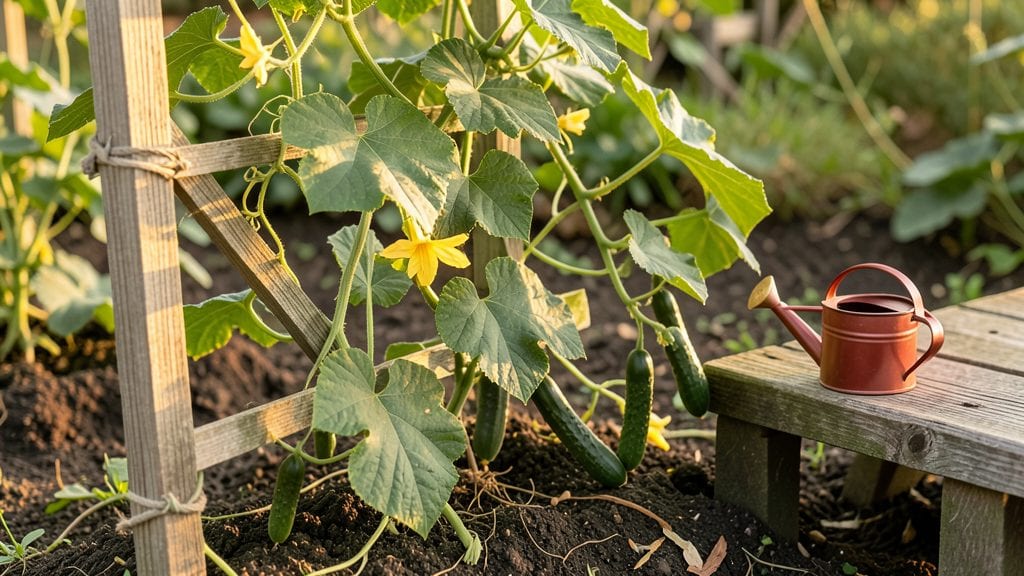
A sturdy garden trellis for cucumbers transforms wild vines into an orderly, bountiful vertical garden—and trust me, ignoring it means chaos and wasted fruit. The right trellis transforms your garden layout, saving space while giving cucumbers the airflow they crave to fight disease.
My favorite setup? A 6-foot A-frame trellis in the corner of my raised bed, where vines climb like a jungle gym and I can reach every fruit without bending over.
You’ll need just three basic supplies: a sturdy trellis (wood, metal, or even PVC pipes), galvanized wire for tying vines, and disease-resistant varieties like ‘Straight Eight’ or ‘Marketmore’ that thrive when trained upward.
The payoff? 30-50% more cucumbers in the same footprint, plus cleaner plants that stay off the ground where pests lurk. Even small patios can handle this—just scale the trellis height to your space.
Picture this: glossy green vines twisting upward, cucumbers dangling like nature’s chandeliers, and no more searching through mulch for hidden fruit. Trellising also makes harvesting easier on your back and keeps the garden looking intentional, not chaotic.
I’ll show you how to place trellises for maximum sunlight exposure and pair them with companion plants like nasturtiums to repel pests naturally.
Whether you’re working with a tight urban plot or expanding a backyard garden, trellises adapt to any layout. The key is matching your cucumber variety to the trellis type—obelisks for bushier types, wire cages for slicers, or strong A-frames for heavy heirlooms.
Let’s make your garden work with your cucumbers, not against them.
📚 In This Guide
- What you need
- Instructions
- Tips and common mistakes
- Wrapping up and next steps
What you need
- ● Trellis Structure: 4–6 T-posts (5–6 ft tall, galvanized or cedar for durability)
- ● 2–4 Horizontal lattice panels (4 ft wide × 6 ft tall, 1–2" grid spacing for vine support)
- ● Bamboo stakes or wooden slats (alternative DIY option: 1–2" diameter, 6 ft long)
- ● Fasteners: Heavy-duty zip ties or garden twine (for securing vines)
- ● Galvanized screws/nails (2–3" for assembling lattice panels)
- ● Cucumber Plants: 4–6 vining cucumber varieties (e.g., 'Straight Eight,' 'Marketmore,' or 'Armenian'—check seed packets for trellis suitability)
- ● Essential Tools: Post-hole digger or auger
- ● Hammer or drill
- ● Measuring tape
- ● Gloves and safety glasses
- ● Drip irrigation kit (to keep vines hydrated without wetting leaves)
- ● Shade cloth (for hot climates to protect young plants)
- ● Pruning shears (for trimming excess vines and encouraging upward growth)
- ● Compost or mulch (to retain moisture and suppress weeds at the base)
- ● Decorative lattice paint (if you want a stylish touch!)
Step-by-Step guide to training cucumbers on a garden trellis
Here’s how to transform sprawling vines into a tidy, high-yielding vertical garden.
Select and Assemble the Trellis Structure
Choose a trellis that’s at least 6 feet tall to accommodate cucumber vines, which can grow 10-15 feet if given support. I prefer A-frame or pyramid designs for cucumbers because they distribute weight evenly and prevent vines from toppling. Assemble the trellis in a location with full sun exposure (6-8 hours daily)—cucumbers need warmth to produce fruit.
Drive stakes or posts into the ground at least 18 inches deep for stability, especially in windy areas. Secure the trellis frame with galvanized wire or strong twine—avoid plastic ties, which can cut into vines as they thicken. If using a freestanding trellis, weigh it down with sandbags or buried anchors to prevent tipping when vines mature.
Plant Cucumbers Near the Trellis
Sow cucumber seeds or transplant seedlings 6-12 inches away from the trellis base, depending on the variety. Bush cucumbers can be planted closer (6 inches), while vining types need 12 inches to sprawl initially before training. Work 2-3 inches of compost into the soil to improve drainage and fertility—cucumbers are heavy feeders and reward rich soil with larger yields.
Plant seeds 1 inch deep and 1 inch apart in rows, thinning to 2-3 feet between plants once they sprout. If transplanting, bury stems slightly deeper than their original pot to encourage stronger root growth. Water deeply after planting to settle the soil and remove any mulch within 6 inches of the stem to prevent rot.
Train Vines to Climb the Trellis
As vines reach 12-18 inches tall, gently guide the main stem upward and secure it to the trellis with soft plant ties or fabric strips. Avoid metal or wire ties—they can girdle the stem as it thickens. Let side shoots (laterals) grow freely until they reach 6-8 inches long, then tie them to the trellis as well. Prune any suckers (small shoots growing from the leaf axils) to redirect energy into fruit production.
Here’s the thing—cucumbers climb by twining their tendrils, but they won’t latch onto smooth surfaces like metal. If your trellis is slick, wrap it with burlap or jute to give vines purchase. Once vines cover the trellis, they’ll shade the ground, suppressing weeds and retaining moisture—just water at the base to avoid wetting leaves, which spreads disease.
Maintain and Harvest for Maximum Yield
Check vines twice weekly for fruit development, harvesting cucumbers when they reach 6-8 inches long for optimal flavor and to encourage continuous production. Use pruning shears to cut stems ½ inch above the fruit to prevent damage to the vine. If cucumbers start yellowing or developing soft spots, they’re overripe—remove them immediately to avoid attracting pests.
Fertilize lightly every 3-4 weeks with a balanced organic fertilizer (10-10-10) once vines start climbing. Too much nitrogen promotes leafy growth at the expense of fruit. Watch for powdery mildew on leaves—this is common in humid climates. If you spot white powder, spray leaves with a baking soda solution (1 teaspoon per quart of water) in the early morning to prevent spread.
Prepare for Season’s End
As temperatures drop below 50°F or frost threatens, harvest any remaining cucumbers and cut vines back to 6 inches tall. Remove and compost the old vines to prevent pests from overwintering in the soil. If you’re in a mild climate, you can extend the season by covering young plants with floating row covers to retain warmth.
Clean the trellis thoroughly with a 10% bleach solution (1 part bleach to 9 parts water) to kill any fungal spores or pests before storing it for next year. Store the trellis in a dry place—rust or warping will weaken its structure and reduce its lifespan. I like to disassemble it and stack components vertically to save space.
Tips & tricks for perfect garden trellis cucumbers
These practical insights will help you maximize your cucumber harvest while avoiding common pitfalls that turn vertical gardens into tangled messes.
Trellis Stability is Non-Negotiable: I can't stress enough how critical Step 1's stability requirements are. If your trellis wobbles when vines reach 10-15 feet, it will topple—especially in windy conditions. For freestanding trellises, use sandbags or buried anchors at each corner. I've seen pyramid designs handle weight better than A-frames because they distribute the cucumber load more evenly across the structure. Remember, those 18-inch deep stakes aren't just for show—they're what keeps your entire harvest from crashing to the ground.
Soil Preparation Makes All the Difference: The 2-3 inches of compost in Step 2 isn't just about fertility—it's about creating the right environment for cucumber roots. Work that compost into the top 6 inches of soil, not just surface-level. Cucumbers are heavy feeders, and their roots need both drainage and nutrients to support those 10-15 foot vines. If your soil is clay-heavy, mix in some perlite or coarse sand to prevent waterlogging, which can lead to root rot and stunted growth.
Pruning Strategy for Maximum Yield: In Step 3, when training vines, focus on the 6-8 inch lateral shoots—these are where most of your fruit will develop. Prune suckers aggressively but leave those laterals alone until they're firmly established on the trellis. I've found that allowing 3-4 main lateral branches per plant gives the best balance between fruit production and vine support. And here's a pro tip: when you tie vines to the trellis, use a loose figure-eight knot that can be easily adjusted as the stem thickens.
Harvest Timing is Critical: Those 6-8 inch cucumbers in Step 4 are the sweet spot for flavor and texture. Waiting longer means tougher skin and seedy flesh. I harvest mine every 2-3 days during peak production to keep the plant focused on fruit development rather than seed maturation. Use clean pruning shears each time to prevent spreading disease from plant to plant. And when you spot that first yellowing cucumber, remove it immediately—it's a sign the plant is slowing production and focusing on seed development.
Pro Tips for Garden Trellis Cucumbers
- These practical insights will help you maximize your cucumber harvest while avoiding common pitfalls that turn vertical gardens into tangled messes.
- Trellis Stability is Non-Negotiable: I can't stress enough how critical Step 1's stability requirements are.
- Soil Preparation Makes All the Difference: The 2-3 inches of compost in Step 2 isn't just about fertility—it's about creating the right environment for cucumber roots.
Frequently asked questions
Got questions about growing cucumbers on a trellis? You’re not alone!
Here are answers to the most common queries to help you grow like a pro.
What’s the best time to plant cucumbers for trellis growing?
Plant cucumbers 2–3 weeks after the last frost when soil is at least 60°F (15°C). For cooler climates, opt for bush varieties or use black plastic mulch to warm the soil. In warm zones, start in early spring—just avoid extreme heat (above 90°F/32°C), which stresses plants.
Can I reuse a trellis from last year?
Yes, but clean it first! Scrub with a 10% bleach solution (1 part bleach to 9 parts water) to kill fungi or pests. Let it dry completely before reuse. Avoid wooden trellises if they’re rotting—opt for metal, PVC, or sturdy plastic instead for longevity.
Will trellising cucumbers change how they taste?
Not at all! Trellising improves airflow and sunlight exposure, which can actually enhance flavor by reducing disease risk. The key is pruning (remove suckers) and harvesting frequently to keep plants productive. Varieties like ‘Straight Eight’ or ‘Marketmore’ thrive on trellises without sacrificing taste.
What do I do if cucumbers fall off the trellis or rot?
Falling fruit? Check for overcrowding or weak vines—thin plants to 12–24 inches apart and tie vines gently with soft twine. Rotting? It’s likely powdery mildew or blossom end rot. Improve airflow, water at the base (not leaves), and add compost to prevent nutrient deficiencies.
Are there trellis alternatives for small spaces?
Try:
- Wall-mounted trellises (use suction cups or brackets for balconies).
- Cage-like structures (like tomato cages, but taller).
- String systems (dangle vines between two posts with fishing line).
- Vertical planters with built-in trellises (great for patios!).
Wrapping up and next steps
Growing cucumbers on a trellis isn’t just clever—it’s a game-changer for small gardens! 🌱 You’ll save space, boost airflow to prevent disease, and enjoy straighter, cleaner fruits with minimal effort. Whether you’re a beginner or a seasoned gardener, this method makes harvesting easier and your harvests bigger.
Ready to transform your garden? Start by picking your trellis style, gathering supplies, and planting those cucumber seeds or seedlings. Next up: Watch your vines climb, tend to them with love, and soon, you’ll be feasting on crisp, homegrown cucumbers all season long!