
Plants
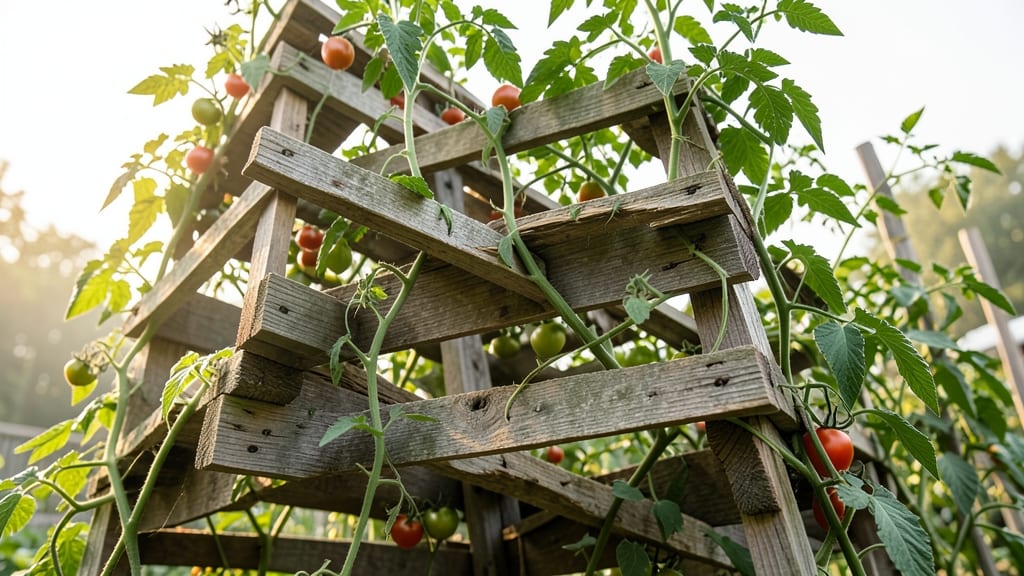
Heavy tomato vines can collapse under their own fruit weight, leading to cracked skins and wasted harvests. These 10 garden tomato support ideas transform floppy plants into sturdy, high-yielding systems that protect your investment and maximize production space.
Cage Systems with Built-In Trellis
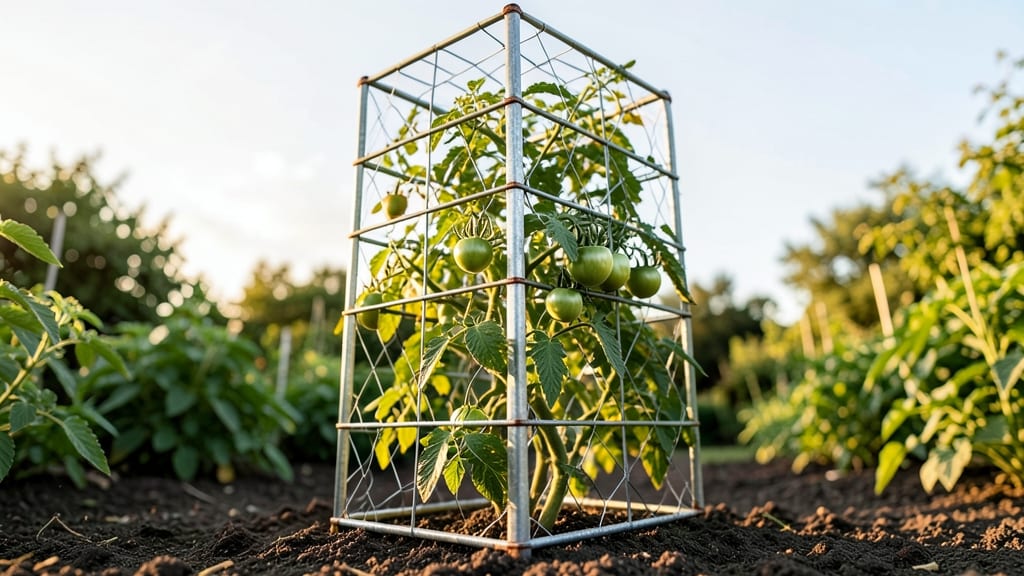
Say goodbye to flopping vines and hello to 6-foot-tall tomato towers—pre-fabricated cages with built-in trellis wires are the ultimate solution for indeterminate varieties like 'Sungold' or 'Brandywine'. These cages eliminate the guesswork of DIY staking while providing three-dimensional support that lets vines climb upward, outward, and even sideways without toppling.
Look for cages made from galvanized steel or heavy-duty plastic with 6-8 vertical wires spaced 6-8 inches apart—this spacing ensures fruit hangs freely without crowding. Install them early (at planting) to avoid disturbing roots later, and water at the base to prevent rusting metal. The best part? No pruning required—just let the plant grow wild within the cage’s sturdy embrace.
Perfect for urban gardeners with limited space or anyone tired of tangled stakes, these cages turn messy vines into organized, high-yielding machines. Your tomatoes will thank you with bigger, healthier fruit—and so will your back! 🌟
Over-Under Trellis for Compact Spaces
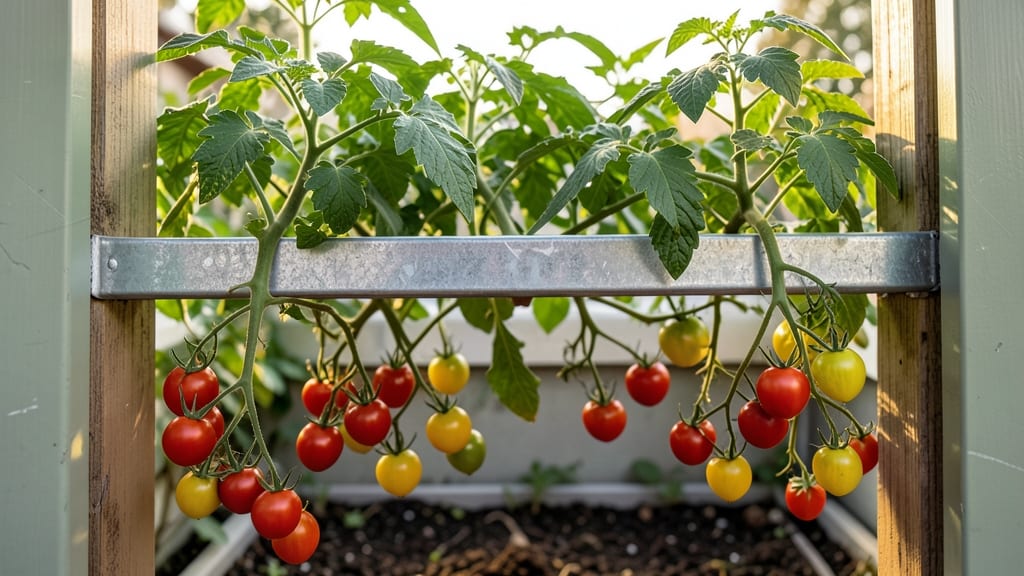
When space is tight but your tomato dreams are big, an over-under trellis turns limited square footage into a vertical harvest goldmine. This clever system trains vines to grow both above and below a central horizontal bar, creating a two-tiered display perfect for dwarf patio varieties or small containers.
Build it with cedar or treated wood for durability, spacing the horizontal bar about 18 inches off the ground—low enough for downward-growing vines to reach the soil while upward vines climb freely. Use soft twine to gently guide vines through the system, and prune suckers regularly to maintain airflow. The result? Double the growing space in the same footprint, with fruit at eye level for easy picking.
Urban gardeners and balcony growers will love this space-saving hack—it’s the secret to growing cherry tomatoes or bush varieties without sacrificing yield or style. 🌱
Florida Weave Staking for Bush Varieties
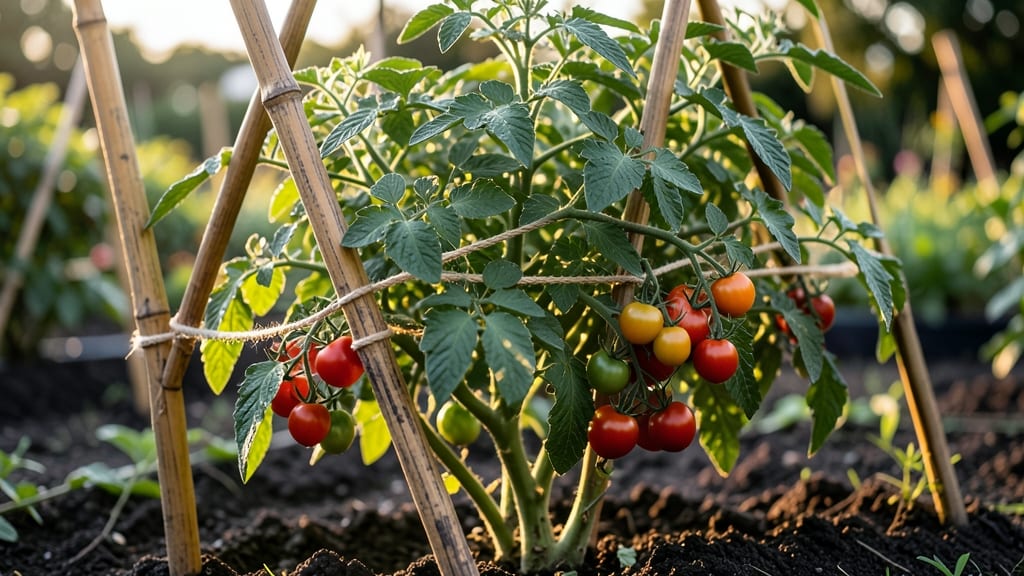
If you grow determinate tomatoes—the compact, bushy varieties that produce fruit all at once—you’ve likely struggled with keeping their vines off the damp soil. The Florida Weave Staking method solves this by lifting plants just enough to prevent soil-borne diseases while keeping their natural shape intact.
This traditional technique uses bamboo stakes (or sturdy wooden dowels) placed every 18–24 inches along the row. Wrap twine or soft jute loosely around each stake and the plant’s main stem, creating a gentle cradle that holds vines 2–3 inches off the ground. The key is to weave the twine in a figure-eight pattern to avoid restricting growth. Since determinate varieties don’t need vertical support, this method focuses on airflow and disease prevention—critical for Florida’s humid climate.
Perfect for small-scale gardeners or those with limited space, this approach also works beautifully in raised beds or containers. It’s a low-cost, low-maintenance way to protect your harvest without sacrificing the plant’s natural form. 🌻
Tower Systems for Vertical Farming
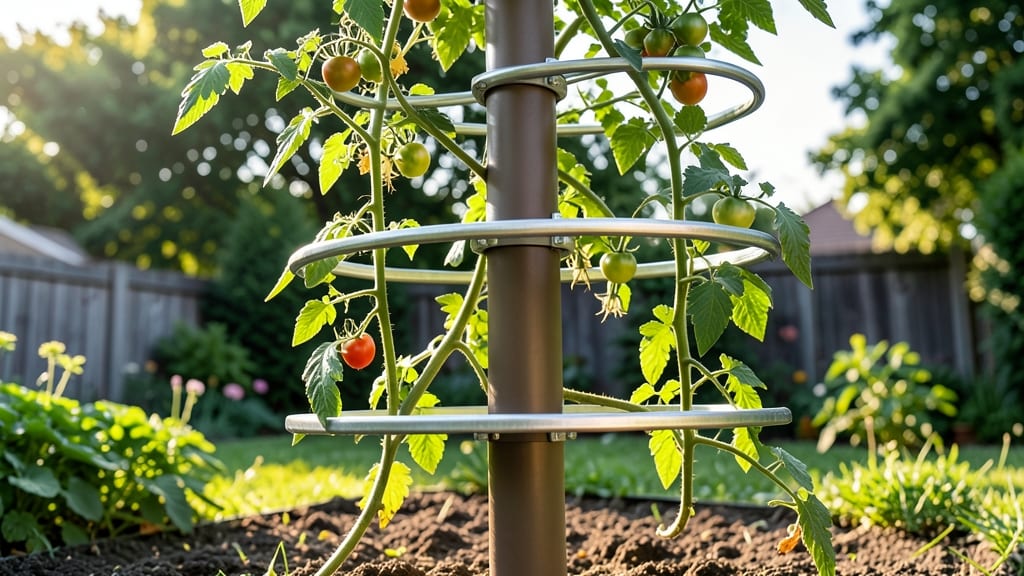
If your backyard is small but your tomato dreams are big, tower systems turn vertical space into a high-yielding harvest zone. These self-supporting structures use multiple horizontal rings to distribute weight evenly, making them ideal for indeterminate varieties that grow 6+ feet tall.
The rings (typically spaced 12–18 inches apart) let you train vines upward while keeping fruit off the ground. For urban gardeners, a 5-tier tower fits where a single cage wouldn’t—producing up to 20 pounds of tomatoes in a 2x2-foot footprint. Use galvanized metal or PVC for durability, and place towers near fences or walls for stability. Prune suckers regularly to focus energy on upward growth.
Perfect for balconies, rooftops, or tight garden corners, these towers maximize yield without sacrificing space. 🌟
Hanging Basket Trellis for Balconies
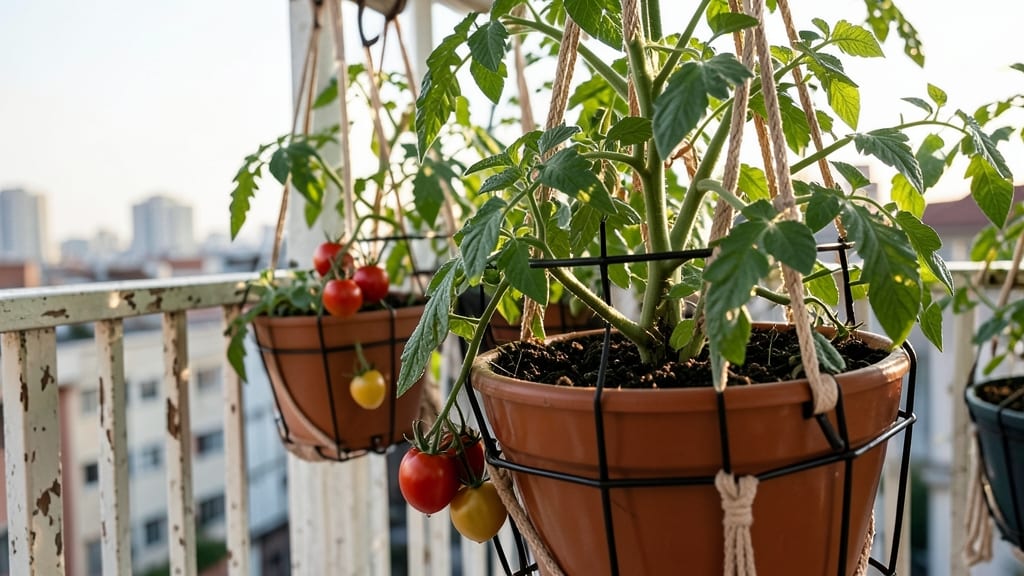
If your balcony is more railing than garden plot, don’t let limited space stop you from growing heirloom tomatoes. A hanging basket trellis turns underutilized vertical space into a productive tomato haven—ideal for varieties like 'Sweet Million' or 'Tiny Tim' that thrive in containers.
Start with a 14-18 inch hanging basket (deeper for indeterminate types) and add a lightweight wire trellis (like galvanized chicken wire or plastic lattice) inside. Secure the trellis to the basket’s rim with zip ties, then train vines upward while letting fruit dangle below. Use a well-draining potting mix with added compost, and water consistently—hanging baskets dry out faster than ground beds. For extra stability, hang the basket from a sturdy metal hook rated for 20+ pounds.
This system is a game-changer for urban gardeners or anyone with limited floor space. You’ll enjoy year-round harvests (in warmer climates) while keeping your patio looking lush and productive. 🌻
Straw Bale Trellis for Disease Prevention
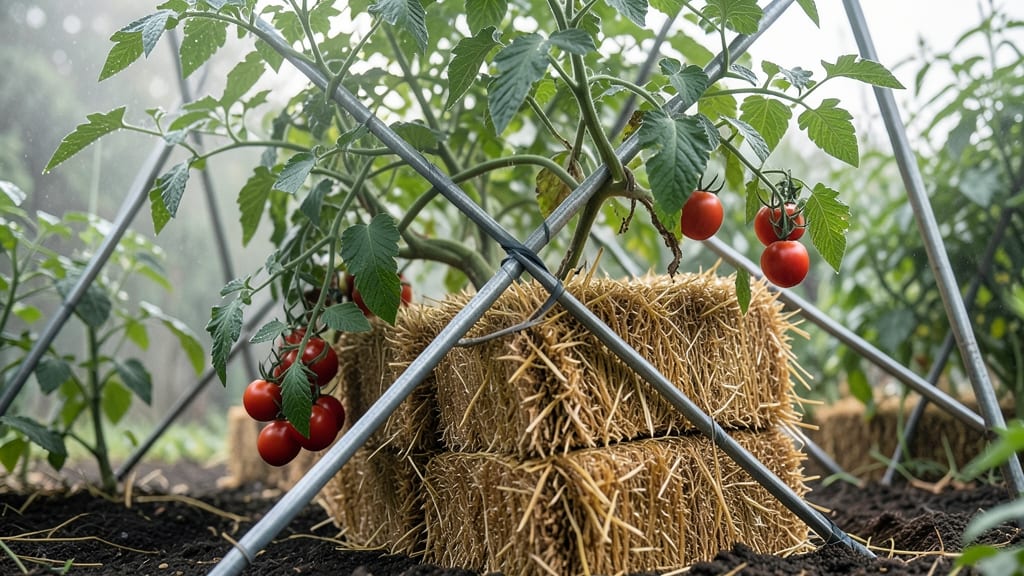
If you live in a humid climate where tomato diseases like blight spread quickly, a straw bale trellis could be your secret weapon. This simple yet genius setup lifts your plants off the ground, cutting off the path for soil-borne pathogens while improving airflow around the foliage.
Start by placing a straw bale (pre-moistened for 3-5 days) beneath your tomato plant to create a natural base. Drive a sturdy wooden stake (3-4 feet tall) into the bale, then gently tie the main stem to the stake with soft twine. The bale’s height elevates fruit off the soil, reducing rot, while the straw’s natural decomposition adds nutrients back to your garden. For indeterminate varieties, this method also prevents sprawling vines from dragging in pests.
This low-cost, zero-waste solution works especially well for gardeners with heavy clay soil or limited space—just place bales along fence lines or garden edges. It’s a game-changer for those battling fungal diseases or looking for a sustainable way to keep tomatoes thriving. 🌱
A-Frame Trellis for Wind Protection
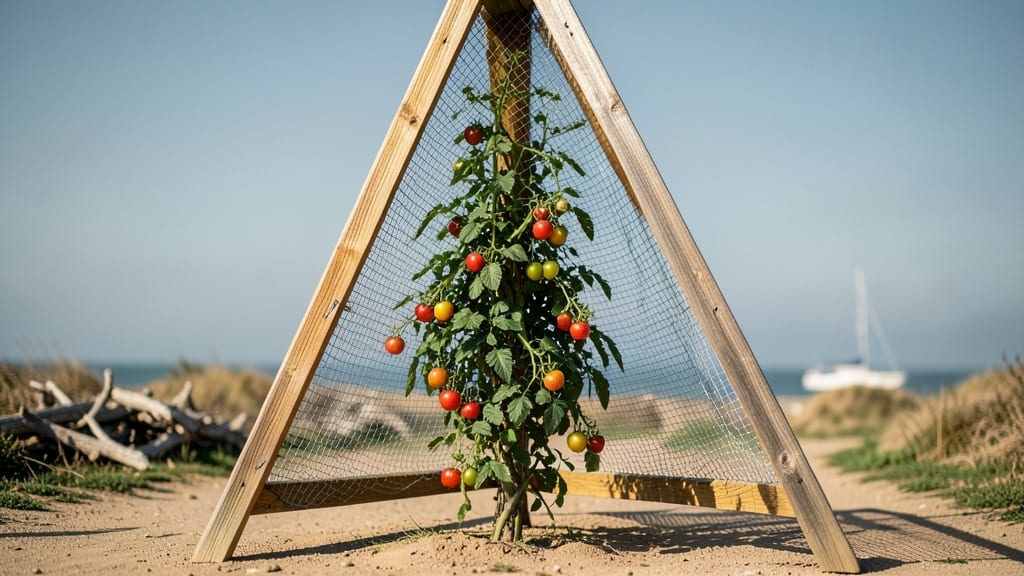
If you live near the coast or in an open, breezy space, strong winds can turn your tomato plants into floppy, fruit-laden messes. An A-frame trellis solves this by acting as both a windbreak and a sturdy support, shielding delicate vines while keeping them upright.
The triangular design distributes weight evenly, preventing collapse under heavy fruit loads. Use 2x4 lumber for the frame, angled at 45 degrees and secured with metal brackets for stability. Position the trellis facing the prevailing wind to create a natural barrier, and train vines along the sides for maximum protection. This system works especially well for indeterminate varieties that need vertical support.
Coastal gardeners and those in exposed areas will love how this design preserves plant integrity while reducing wind damage. It’s a game-changer for maintaining healthy, high-yielding tomato plants in challenging conditions. 💪
Cattle Panel Arches for Large-Scale Gardens
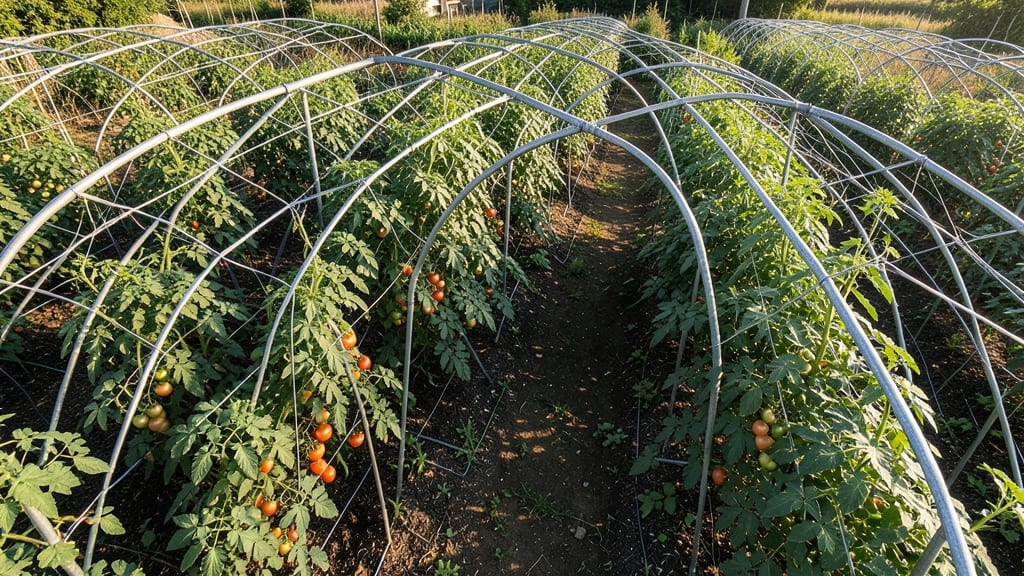
If you grow indeterminate tomatoes on a large scale, you know how quickly vines can overwhelm traditional supports. Cattle panel arches solve this problem with a single, sturdy structure that spans entire rows—turning sprawling plants into neat, upward-growing systems without the need for multiple cages or stakes.
Start by bending a 4-foot-wide cattle panel into a semi-circle and securing it with heavy-duty zip ties or metal brackets. This creates a 6-8 foot tall arch that can support 2-4 tomato plants per side, depending on spacing. The galvanized metal resists rust and lasts for years, while the arch shape naturally distributes the weight of heavy fruit. For long rows, place arches 8-10 feet apart and thread twine between them to guide vines upward.
This system is ideal for homesteaders and commercial growers who need to maximize space and minimize labor. The rustic aesthetic also blends seamlessly into farm-style gardens while keeping vines off the ground for better airflow and disease prevention. 🌟
Individual Plant Stakes with Straps
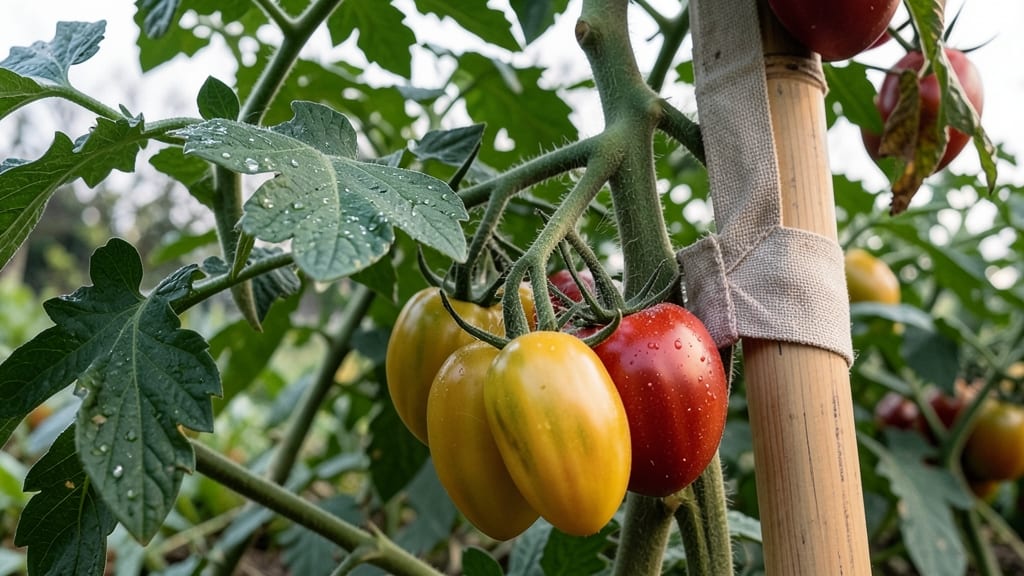
If you grow heirloom tomatoes or varieties with extra-large fruit, individual stakes with straps offer a gentle yet sturdy solution that prevents stem damage while keeping vines upright. Unlike rigid cages or heavy trellises, this method lets each plant grow naturally while providing targeted support where it’s needed most.
Use thick bamboo stakes (3-4 feet tall) or untreated wooden dowels, then secure vines with soft fabric straps (like old T-shirts or garden twine) tied loosely every 12-18 inches. This setup distributes weight evenly, reducing the risk of snapped stems during heavy fruit set. For extra durability, add a second stake at a slight angle to create a "V" shape, which stabilizes plants in windy conditions.
This approach is perfect for gardeners with limited space or those who prioritize minimalist aesthetics without sacrificing support. It’s also ideal for container gardens where larger structures aren’t practical. 🌻
DIY Pallet Trellis for Upcycled Support

Skip the store-bought trellises and turn wooden pallets into a sturdy, zero-cost tomato support system that’s both functional and rustic. This upcycled method works for both determinate and indeterminate varieties, offering a customizable height that adapts to your garden’s layout.
Stack two pallets vertically, securing them with galvanized screws or heavy-duty zip ties to create a lattice-like frame. For added stability, anchor the base with stakes or bricks to prevent tipping in windy conditions. The natural wood grain adds charm while providing 360-degree climbing space, encouraging even vine growth and better air circulation to reduce disease risk.
This DIY solution is perfect for urban gardeners, homesteaders, or anyone with leftover pallets—just sand rough edges and treat with a non-toxic sealant for longevity. Your tomatoes will thrive while keeping your wallet (and the planet) happy. 🌱