Pests
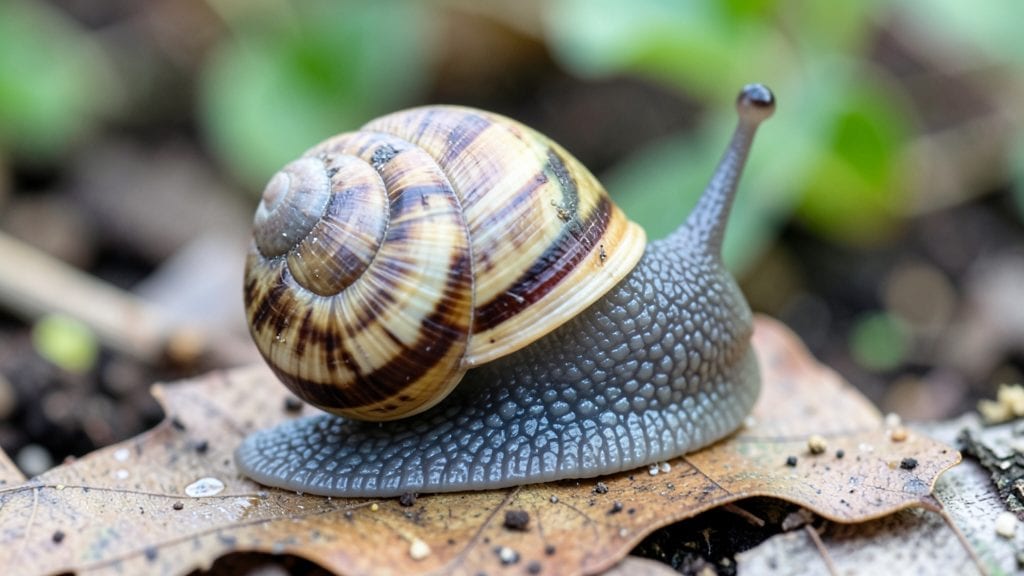
Understanding garden snail anatomy reveals why they thrive in gardens: their muscular foot powers movement, a coiled shell protects vital organs, and a retractable head houses sensory tentacles, eyes, and a scraping radula. The mucus trail they leave behind isn't just slippery—it's a survival tool for moisture retention and predator evasion, while their lung allows them to breathe outside water.
These tiny creatures pack incredible adaptations into their compact bodies. 🔥 The spiral shell isn't just for looks—it's a fortress made of calcium carbonate layers that grow with the snail, repairing cracks over time.
Meanwhile, that slimy trail you see isn't waste; it's a specialized glycoprotein secretion that creates a lubricated path while also leaving a chemical scent trail that confuses predators.
Gardeners often notice how snails can climb seemingly impossible surfaces thanks to their foot's unique muscular segmentation, which acts like a tiny tread system.
What's fascinating is how their anatomy directly relates to garden survival tactics. The radula—a ribbon-like tongue covered in tiny teeth—lets them scrape plant surfaces with surgical precision, while their eyes perched on stalks give them 360-degree vision.
This combination makes them both efficient garden pests and masters of stealth, able to hide during the day and forage at night when conditions are ideal.
💡 In This Article
- How Garden Snails’ Shell and Mucus Enable Survival
- Identifying Key Snail Body Parts for Gardeners
How garden snails’ shell and mucus enable survival
The coiled shell of a garden snail is a marvel of biological engineering, primarily composed of calcium carbonate arranged in concentric layers. This spiral structure isn't just for show—it acts as a protective fortress that houses vital organs while maintaining a compact shape.
The shell's weight, typically 10-20% of the snail's total body weight, provides stability during movement, preventing the snail from tipping over on uneven surfaces.
What's truly remarkable is how the shell grows: new layers are secreted by the mantle (a fold of tissue) at a rate of about 0.5-1 millimeter per week, creating a living armor that thickens over time.
The shell's spiral design serves another critical function: moisture retention. The tight coils create microclimates that reduce water loss through evaporation. Studies show that snails in drier environments develop thicker shells with more compact spirals, a clear adaptation to conserve moisture.
This moisture-retaining property is why you'll often find snails seeking out damp spots—their shells can't compensate for prolonged dryness. The shell's porous nature also allows for gas exchange, enabling the snail to breathe through its lung while remaining safely tucked inside during threats.
Now let's talk about that infamous slime trail. The mucus isn't just water—it's a complex secretion containing glycoproteins and mucopolysaccharides that create a slippery, lubricated path.
This secretion serves three vital purposes: reducing friction (allowing snails to climb surfaces up to 45 degrees steep), leaving a chemical trail that confuses predators, and maintaining moisture on the snail's body surface.
The production rate is impressive: a snail can secrete up to 0.5 milliliters of mucus per hour during active movement. This slime also contains antimicrobial properties that help prevent infections when the snail retracts into its shell.
The shell's repair mechanisms are equally fascinating. When damaged, the mantle secretes new calcium carbonate to fill gaps, a process that can take several weeks to months depending on the severity.
Young snails have thinner, more fragile shells that are more prone to damage, which is why you'll often see them moving more cautiously.
The spiral's tightness also provides structural integrity—when a predator attempts to pry open the shell, the spiral design distributes the force more evenly than a flat surface would.
Here's what most people don't realize about the mucus: it's not just a lubricant but also contains pheromones that communicate with other snails. These chemical signals can indicate food sources or warn of predators, creating a primitive social network.
The mucus also contains enzymes that begin breaking down plant material even before the snail reaches its destination, giving them a head start on digestion. This dual-purpose secretion explains why snails are so efficient at both movement and plant consumption in garden environments.
The combination of these adaptations explains why garden snails are such resilient survivors. Their shells provide protection and moisture regulation, while the mucus system enables both mobility and chemical communication. Understanding these mechanisms helps explain why traditional control methods often fail—simply removing snails doesn't address their sophisticated survival strategies. 💫