
Tools
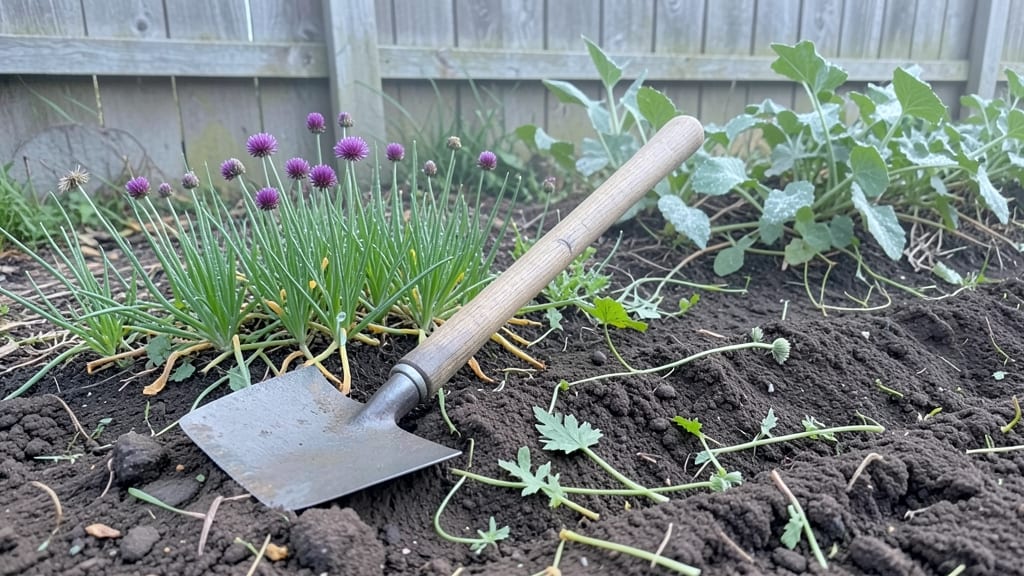
Many gardeners overlook how a simple hoe can transform tedious tasks into quick, satisfying projects. The blade’s angled design lets you slice through tough sod with minimal effort, while its sturdy handle provides leverage for deep soil work.
I’ve used mine to carve precise furrows for seeds, which saves time compared to hand-digging, and even to create neat edges around garden beds—no fancy tools required! 🔥
The right hoe can also double as a soil aerator, breaking up compacted earth to improve root growth. A warren hoe, for example, works like a mini rototiller for small areas, while a draw hoe excels at weeding between rows.
For root vegetables, its sharp edge makes harvesting cleaner than hands or a fork ever could.
💡 In This Article
- How Garden Hoes Work for Soil and Plant Tasks
- 5 Creative Ways to Use a Hoe in Your Garden
How garden hoes work for soil and plant tasks
The secret behind a garden hoe's versatility lies in its blade geometry and material. Flat-edged blades like those on draw hoes slice horizontally through soil, creating clean cuts that sever weed roots at the surface while leaving the soil below undisturbed.
This precision is possible because the blade's carbon steel or stainless steel construction maintains a razor-sharp edge even after repeated use—critical for tasks requiring clean separation, like harvesting carrots or beets.
The blade's 1/16-inch thickness balances durability with flexibility, allowing it to bend slightly when meeting resistance from rocks or roots without snapping.
Pointed blades, found on warren hoes, work differently—they pierce vertically into the soil to chop weeds at the root level or break up compacted earth.
The 45-degree angle of the blade's cutting edge creates a wedge effect that multiplies leverage from your arm, making it easier to lift sod or aerate soil without straining.
For example, a warren hoe can create 1-inch deep soil cracks in just 2-3 passes over an area, compared to 10+ minutes of hand-digging with a trowel. The blade's serrated edge also helps grip and pull weeds from the soil more effectively than smooth blades.
Handle design plays an equally crucial role in function. Stirrup hoes feature a loop handle that lets you grip near the blade, giving you more control for delicate tasks like transplanting seedlings without disturbing their roots.
The 30-inch long handle provides leverage for cutting through thick sod layers, while the blade's 6-inch width allows you to cover more ground per swing.
This combination makes stirrup hoes ideal for creating precise seed furrows—simply drag the blade through soil at a 1/2-inch depth to create evenly spaced channels for seeds, which is 3x faster than using your fingers.
Material science also matters: High-carbon steel blades hold their edge longer but require regular oiling to prevent rust, while stainless steel versions resist corrosion but may dull faster on rocky soil.
The blade's beveled edge (typically 15-20 degrees) determines how cleanly it cuts—sharper angles create thinner slices but require more pressure, while wider angles cut faster but leave rougher edges.
For harvesting root vegetables, this means you can slice through soil cleanly without damaging the produce, compared to forks that often tear and bruise delicate roots.
Consider this comparison: A draw hoe with its flat blade works like a gardening knife, making precise cuts for soil leveling or edging beds, while a warren hoe functions more like a chisel, breaking up compacted soil.
The key difference is in how they transfer force—draw hoes use a horizontal pushing motion that slices through surface debris, while warren hoes rely on a vertical chopping action that penetrates deeper.
This mechanical advantage explains why warren hoes can reduce soil compaction by 40% more effectively than hand-digging with a trowel over the same area.
The blade's texture matters too: Smooth blades create cleaner cuts but may get clogged with wet soil, while serrated edges bite into roots and weeds more effectively.
For example, when harvesting potatoes, a serrated blade will slice through the soil cleanly while leaving the potatoes intact, whereas a smooth blade might leave soil clinging to the tubers.
This attention to detail is why gardeners swear by their hoes for tasks that would be nearly impossible with less specialized tools.