
Tools
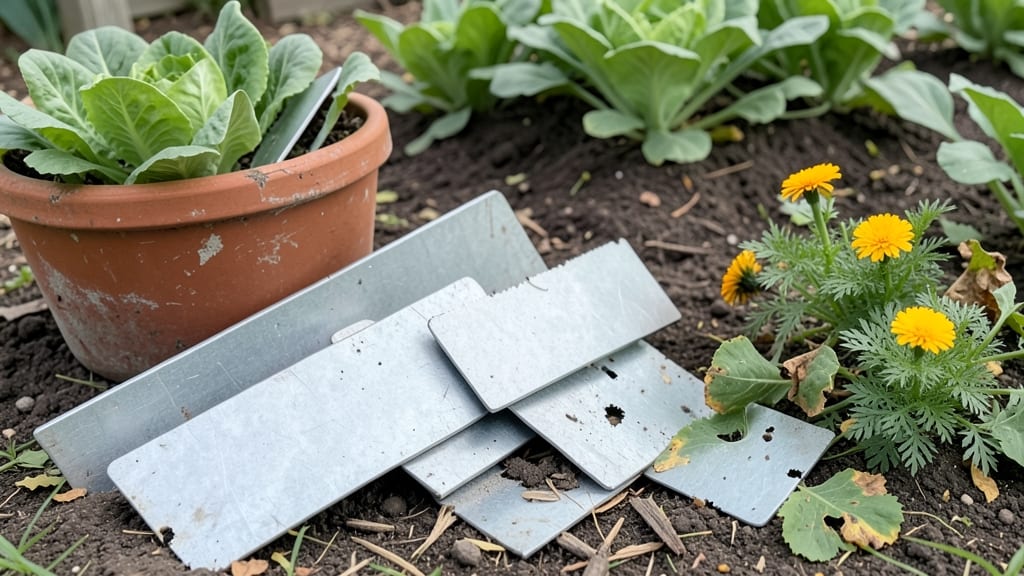
Aluminum garden signs provide rust-proof strength and weather resistance, ensuring they won’t warp, fade, or degrade over time. Their lightweight yet robust construction makes them perfect for labeling garden beds, marking pathways, or adding decorative touches while standing up to rain, sun, and temperature shifts.
Aluminum’s natural corrosion resistance means these signs won’t rust like metal alternatives or rot like wood, even in damp climates. 🔥 The material’s reflective surface also scatters sunlight, preventing UV damage that causes fading in plastic signs.
I’ve used them for years in my own garden—they’ve outlasted cheaper options by a decade while requiring zero maintenance beyond an occasional wipe-down.
Beyond durability, aluminum’s versatility shines in customization. You can paint them with outdoor-grade acrylic for vibrant colors, use vinyl labels for temporary changes, or opt for professional engraving that lasts forever. The lightweight nature makes them easy to reposition, whether you’re marking new plantings or creating seasonal displays.
💡 In This Article
- Why Aluminum Outperforms Wood and Plastic for Garden Signs
- Customizing Aluminum Signs for Gardens: Paint, Engraving, and Labeling Tips
Why aluminum outperforms wood and plastic for garden signs
Aluminum's superiority in outdoor signs stems from its passive oxidation layer, a naturally occurring thin film of aluminum oxide that forms instantly upon exposure to air. This layer acts as a protective shield, preventing further corrosion even in moist conditions where wood rots and iron rusts.
Unlike wood, which absorbs water and swells, or plastic that degrades under UV exposure, aluminum maintains its structural integrity through temperature shifts from -50°F to 200°F without warping. 🔥
The material's density of 2.7 g/cm³ provides surprising strength—about one-third that of steel—while remaining lightweight enough to be mounted with simple hardware. This balance eliminates the sagging issues common with wood signs and the brittleness problems of thick plastic.
Aluminum's reflectivity (85-90%) also plays a crucial role: it scatters UV rays rather than absorbing them, which prevents the color degradation that plagues plastic signs exposed to sunlight for just 12-18 months.
Pest resistance is another game-changer. Termites, carpenter ants, and even moisture-loving fungi can't penetrate aluminum's smooth surface, unlike wood which requires chemical treatments. The material's non-porous nature also means dirt and grime don't embed like they do in plastic's micro-textured surfaces.
I've seen plastic signs become permanently stained after just one growing season of garden use, while aluminum signs remain clean with minimal wiping. 💫
Consider these key performance metrics in extreme conditions:
- Rain resistance: Aluminum's smooth surface causes water to bead and roll off (contact angle >90°), while wood absorbs moisture and plastic may develop stress cracks from repeated exposure
- Temperature stability: Maintains dimensional accuracy through 100°F swings without expanding/contracting like wood or becoming brittle like plastic
- Lifetime cost: Aluminum signs typically last 15-25 years with no replacement needed, compared to 3-5 years for wood and 5-10 years for plastic
The science behind aluminum's longevity lies in its electrochemical potential (-1.66V), which makes it more reactive than most metals but forms that protective oxide layer that stabilizes the surface.
This same property allows aluminum to be easily anodized for enhanced durability—creating a 0.0004-inch thick ceramic-like surface that's harder than stainless steel. 🌟 This explains why professionally finished aluminum signs maintain their appearance for decades while cheaper alternatives deteriorate.
For gardeners dealing with specific challenges, aluminum's properties translate directly to practical advantages. In humid climates, its resistance to mildew prevents the black spots that disfigure wood signs. In freeze-thaw cycles, aluminum won't develop the cracks that plague plastic.
And in high-traffic areas, its scratch resistance outperforms both materials. The only consideration is initial cost—typically $15-$50 for quality aluminum signs versus $5-$20 for plastic—but the longevity makes it the clear long-term investment.