
Pests
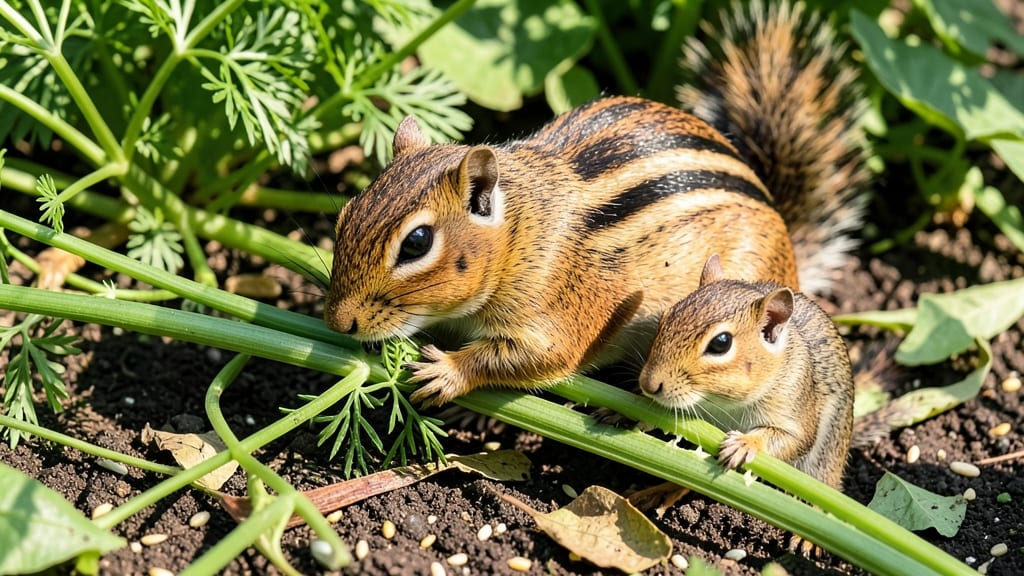
Chipmunks eat garden plants, especially tender vegetables like lettuce, peas, beans, and corn, as well as fruits, flowers, and young seedlings. Their voracious appetite and burrowing habits make them a common nuisance in home gardens.
These tiny but mighty rodents have a real knack for zeroing in on your garden’s most vulnerable crops—think sprouting seeds and ripe tomatoes—because they’re packed with moisture and easy to dig up. 🌱 Their cheek pouches let them stuff away up to 10 seeds at once, which explains why entire rows of carrots or radishes can vanish overnight.
The real headache? They don’t just nibble—they burrow, uprooting entire plants while leaving your garden looking like a war zone.
💡 In This Article
- Chipmunk Diet: What Garden Plants They Prefer Most
- Natural and Humane Chipmunk Deterrents for Gardens
Chipmunk diet: What garden plants they prefer most
Chipmunks target garden plants based on three key factors: high moisture content, soft textures, and nutrient density. Their diet mirrors that of squirrels but with a preference for young, tender growth—think sprouting seeds and ripe fruit—because these require minimal chewing.
Studies show they consume up to 30% of their body weight daily, which explains why a single chipmunk can devastate a 10-square-foot garden section in a week.
Here’s why they zero in on specific plants: Lettuce and spinach (90% water content) are their top targets because they’re easy to carry in cheek pouches. Peas and beans (high in protein) get dug up by the roots, while corn kernels (starchy and calorie-rich) are a favorite once ears mature. 🌱 Their foraging behavior peaks at dawn and dusk when predators like hawks are least active, and they use their sharp claws to pry open even 1-inch-deep soil layers to access buried tubers or bulbs.
Their seasonal habits shift dramatically: In spring, they focus on sprouting seeds and new shoots (like radishes or carrots), while summer brings a preference for ripe tomatoes and berries (high sugar content).
Fall is all about storing nuts and seeds for winter, but they’ll still raid gardens for apples or grapes if left unprotected. This explains why gardeners often see damage worsening after harvest season—chipmunks are preparing for hibernation!
Here are the 15 most commonly damaged vegetables, ranked by chipmunk preference:
- Lettuce and spinach: 90% water, minimal chewing required
- Peas and beans: Protein-rich pods dug up by roots
- Corn kernels: Starchy and calorie-dense once ears mature
- Radishes and carrots: Young shoots prized in spring
- Tomatoes: Ripe fruit (high sugar) targeted in summer
- Berries (strawberries, raspberries): Sweet and easy to carry
- Cucumbers: Crunchy texture satisfies their gnawing instinct
- Squash and pumpkins: Soft flesh near vines
- Onions and garlic: Bulbs dug up for storage
- Potatoes: Starchy tubers buried shallowly
- Peppers: Juicy and tender when unripe
- Broccoli and cauliflower: Tender florets preferred over stems
- Zucchini: Young shoots and flowers eaten
- Melons (watermelon, cantaloupe): Juicy flesh when overripe
- Herbs (basil, parsley): Soft leaves for quick snacks
What most gardeners don’t realize is that chipmunks prefer damaged or stressed plants. A wilted tomato or overripe berry is far more appealing than a healthy one because it’s easier to process. This is why regular harvesting and removing fallen fruit can reduce their interest by up to 60%. Their foraging strategy also involves cache-and-return behavior—if they find a reliable food source, they’ll keep coming back until it’s depleted. 🐿️
To make matters worse, chipmunks are opportunistic and will switch to flowers (like marigolds or nasturtiums) if vegetables run low. This is why companion planting with strongly scented herbs (like rosemary or thyme) can act as a natural deterrent—their volatile oils mask the aroma of preferred crops.
Understanding these patterns lets you time interventions (like traps or barriers) precisely when chipmunks are most active.