
Pests
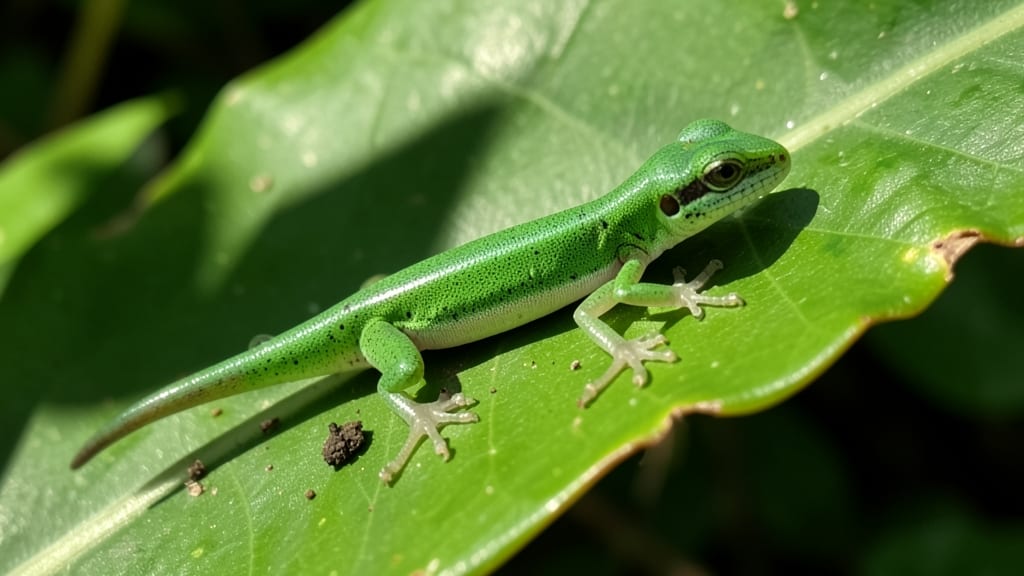
A common garden lizard is typically a small, green or brown reptile like the anole or skink, often found in sunny outdoor spaces where they hunt insects and thrive near vegetation. They’re harmless to plants but may enter homes seeking shelter or food.
These little reptiles are nature’s pest controllers, devouring mosquitoes, ants, and even small spiders that invade your yard. 🐍 Their presence usually means your garden has a healthy ecosystem—just don’t mistake their helpfulness for an invitation indoors!
Many homeowners spot them basking on warm stones or darting under patio furniture, especially after rain when insects are most active. Unlike snakes or rodents, they pose zero threat to your plants or pets, so consider them allies rather than nuisances.
If you’re curious about their behavior, you might notice them flicking their tongues to "taste" the air—a trait shared with snakes but far less intimidating. 🌿 Anoles often bob their heads to communicate, while skinks prefer to scurry away at the first sign of danger.
Knowing these habits helps you appreciate their role in your garden’s balance while keeping them where they belong: outside.
💡 In This Article
- Identifying Garden Lizards by Species and Habitat
- Humane Ways to Relocate Garden Lizards Safely
Identifying garden lizards by species and habitat
Here's what's actually happening when you spot one of these reptiles in your yard: anoles, skinks, and geckos each have distinct physical traits that reveal their identity.
Anoles typically measure 3-8 inches with a crested head and a tail that's longer than their body, often with a blue or pink dewlap under their throat.
Skinks, on the other hand, have smooth, shiny scales and a rounded body shape, with tails that can detach as a defense mechanism. 🔥 Geckos, while less common in gardens, have sticky toe pads for climbing and are often nocturnal.
The key factor in their habitat preferences is temperature regulation. Anoles love sunny spots with direct sunlight exposure, often seen on patio furniture, rocks, or garden walls where they can bask at 80-90°F. Skinks prefer moist environments like mulch piles or under leaf litter, where humidity stays higher.
Geckos, if present, will hide in cracks or under bark during the day and emerge at night. Regional climate plays a huge role too—warmer southern gardens host more diverse species, while northern climates may only see hardy skinks in summer months.
Seasonal behavior offers more clues to their identity. Anoles are most active during spring and summer mating seasons, when males display their dewlaps aggressively. Skinks, however, become more visible after spring rains when insect populations surge.
What most people don't realize is that these reptiles have brumation periods (a reptile version of hibernation) during colder months, often hiding in deep leaf litter or under debris.
In drought conditions, they'll seek out shady, moist areas to prevent dehydration—this is why you might suddenly notice them indoors during heatwaves.
Climate and regional ecosystems create these habitat preferences. In arid southwestern gardens, you'll find tree lizards adapted to 100°F+ temperatures with specialized water-conserving scales. Meanwhile, eastern gardens with humid summers support five-lined skinks with bright blue tails.
The science behind this involves thermoregulation strategies: different species have evolved to optimize their body temperatures based on local climate patterns. 💫 This is why a lizard seen in Arizona might look completely different from one in Florida, even if they're the same general species.
Consider these visual identification tips when you're trying to tell them apart:
- Anoles: Look for crested heads and color-changing abilities (they can shift from green to brown in minutes)
- Skinks: Check for smooth scales and bright blue tails (a warning to predators)
- Geckos: Search for nocturnal activity and climbing on vertical surfaces
The most reliable way to confirm their species is by observing their tail shape and movement patterns. Anole tails are whip-like and prehensile, while skink tails are thicker and can regenerate if lost.
This tail regeneration is a fascinating survival adaptation—skinks can grow back up to 60% of their original tail length over several weeks, though the regrown section will be slightly different in texture and color. ✨