
Pests
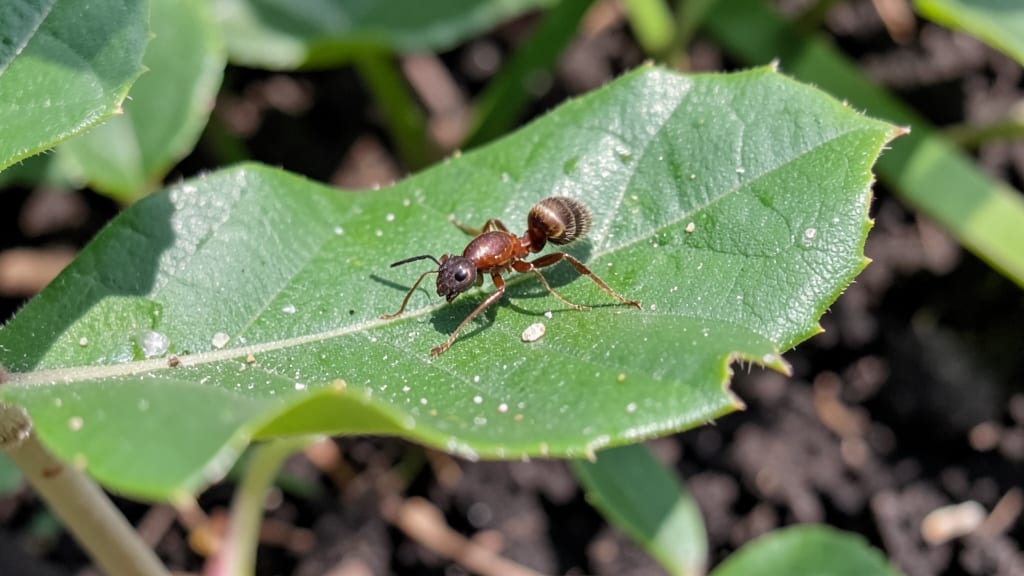
While ants themselves aren’t plant predators, their behavior creates a ripple effect that can stress your garden’s health. Many species act as "farmers" for sap-sucking pests like aphids, trading protection for their sugary honeydew secretions—effectively shielding these pests from natural enemies like ladybugs.
Their underground tunnels may also disrupt soil aeration, making roots more vulnerable to disease or drought stress over time.
Instead of panicking, I recommend observing their patterns first—some ants (like pavement ants) are harmless, while others (like Argentine ants) signal deeper pest problems.
A simple fix like spreading citrus peels or diatomaceous earth around plants can deter them without chemicals, while removing nearby moisture sources often reduces their appeal. 🌱
💡 In This Article
- How Ants Indirectly Damage Garden Plants
- Natural Ways to Manage Ants Without Harming Your Garden
How ants indirectly damage garden plants
Here's what's actually happening when ants set up shop in your garden: they act as unwitting protectors for some of the most destructive plant pests. Ants like Argentine ants or little black ants form mutualistic relationships with sap-sucking insects like aphids, mealybugs, and scale insects.
These pests produce a sweet liquid called honeydew, which ants harvest like farmers tending crops. In exchange, ants aggressively defend these pests from natural predators like ladybugs, lacewings, and parasitic wasps that would otherwise keep their populations in check. 🔥
The science behind this involves chemical signaling. Ants release pheromones that repel predators while guiding more sap-suckers to their "farms." Studies show that ant-protected aphid colonies can grow 3-5 times larger than unprotected ones, leading to severe plant stress from nutrient depletion.
The sticky honeydew also creates a perfect environment for sooty mold—a black fungal growth that blocks sunlight and reduces photosynthesis by up to 30% on infected leaves.
Beneath the soil surface, ants create extensive tunnel networks that can reach depths of 1-2 feet and spread horizontally up to 10 feet from their nest. While these tunnels improve drainage in some cases, they also disrupt soil structure by breaking apart soil aggregates.
This creates air pockets that reduce water retention capacity by 15-25%, making roots more susceptible to drought stress. The constant movement also exposes roots to physical damage during planting or weeding operations. 🌱
What most people don't realize is how these effects compound over time. A single ant colony can protect thousands of aphids, each capable of producing 50-100 offspring per generation. This exponential growth creates a feedback loop where plant health declines, making them even more vulnerable to other pests and diseases.
The key factor is timing—early intervention when you first spot ant trails can prevent this cascade from starting.
Consider these ecological trade-offs: some ant species actually benefit gardens by preying on other pests or aerating soil. However, the Argentine ant (Linepithema humile) and fire ant (Solenopsis spp.) are particularly aggressive protectors of harmful insects.
Fire ants, for example, create mound nests that can reach 18 inches tall and 3 feet wide, physically displacing plants and altering soil pH levels in their vicinity by up to 0.5 units—enough to stress acid-sensitive plants like blueberries.
The visual signs to watch for include: ant trails leading to curled leaves (aphid feeding), sticky residue on lower leaves (honeydew), and blackened stems (sooty mold). These indicators often appear before you notice significant plant damage, giving you a window to intervene before the situation becomes critical. 💫