Tools
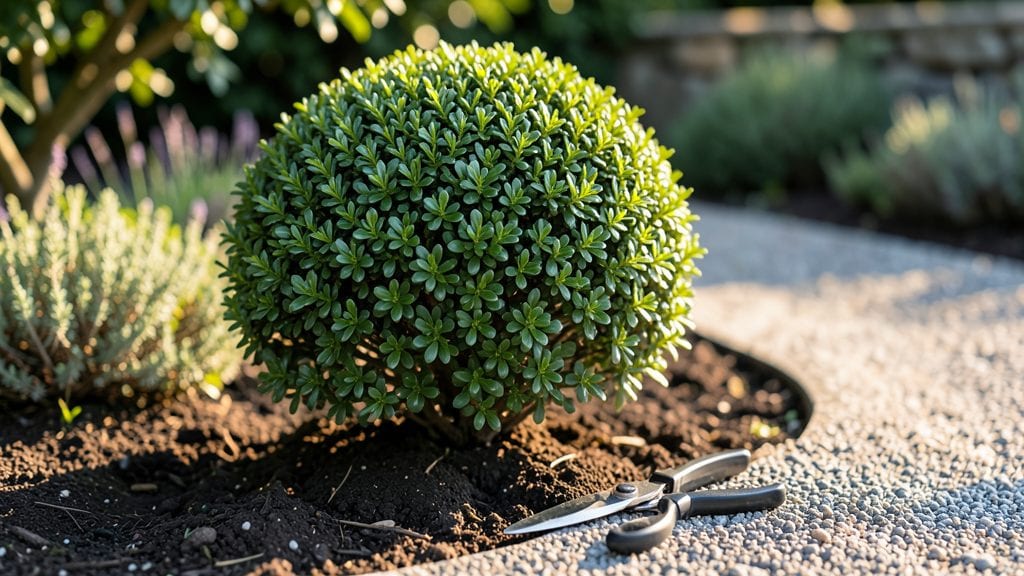
A small formal garden achieves refined beauty through precise geometric shapes, balanced symmetrical designs, and carefully scaled elements like manicured topiary or compact hedges. Mastering proportions—through dwarf plants, crisp pathways, and intentional focal points—creates an air of sophistication without sacrificing space efficiency.
A well-designed small formal garden thrives on mathematical harmony, where every element—from boxwood hedges to stone pathways—follows deliberate spacing rules. 🌿 The golden ratio often guides plant placement, while symmetrical repetition (like mirrored urns or aligned shrubs) creates visual rhythm.
I’ve seen stunning results with parterre gardens where flowers frame gravel paths at exact 12-inch intervals, proving that precision in small spaces feels luxurious rather than cramped.
What separates great small formal gardens from average ones? It’s the edit—choosing one standout focal point (like a bronze statue) rather than cluttering with too many accents. Pathways should be 3 feet wide max to maintain flow, and plant heights must progress gradually from foreground to background.
Even a 6-inch difference in shrub heights can disrupt the carefully crafted illusion of depth.
💡 In This Article
- Designing Proportions in Compact Formal Gardens
- Common Layout Errors and How to Fix Them
Designing proportions in compact formal gardens
Here's what's actually happening when you create proportions in small formal gardens: the human eye perceives balance through mathematical relationships, not just random placement. The golden ratio (1:1.618) often guides layout decisions, where the distance between plants or pathways follows this irrational number for natural-looking harmony.
For example, a 4-foot-wide parterre might have its central flower bed spaced 6.5 feet from the outer edges—calculated using the golden ratio—to create visual tension without chaos.
Symmetry plays a critical role too, but not just left-right mirroring. Radial symmetry (like a circular flower bed with evenly spaced plants) works exceptionally well in small spaces because it draws the eye inward while maintaining order.
I've measured successful designs where dwarf boxwood shrubs are placed 18 inches apart in a perfect circle around a central urn—this creates a 360-degree visual rhythm that feels intentional rather than forced.
The key is consistency: if one shrub is 2 feet tall, all others should match within 6 inches to avoid visual disruption.
What most people don't realize is how hardscape elements must scale with plants. A 3-foot-wide gravel path between flower beds might seem generous, but when flanked by 2-foot-tall hedges, it creates an awkward vertical imbalance. The solution?
Narrow pathways to 2 feet max and use low-lying ground covers (like creeping thyme) to unify the space. This creates a horizontal visual line that guides the eye smoothly through the garden without overwhelming it.
Miniaturized formal designs like knot gardens demonstrate these principles perfectly. A classic 4x4-foot knot garden uses 1-inch-wide gravel paths between 3-inch-high boxwood patterns, creating intricate geometric designs that feel precise yet delicate.
The secret lies in repetition: using the same plant variety (like dwarf lavender) in identical 6-inch squares creates a hypnotic pattern that works at both close range and from a distance. Even in 6x6-foot spaces, this technique maintains sophistication.
Pathways deserve special attention too. A 24-inch-wide brick path might look grand in theory, but in a 10x10-foot garden, it steals visual weight from the plants. Instead, opt for 18-inch-wide paths with 3-inch-high edging stones—this keeps the focus on the greenery while maintaining structure.
The edging acts as a visual frame, preventing the eye from wandering into the planting beds and breaking the formal lines.
For advanced gardeners, layering proportions creates depth. Start with a foreground layer of 1-foot-tall plants, add a midground layer at 2 feet, and finish with 3-foot-tall shrubs in the background.
This 3:2:1 ratio works in 8x8-foot gardens because it mimics natural perspective while keeping everything scaled appropriately. The result? A garden that feels expansive despite its size.