
Picking
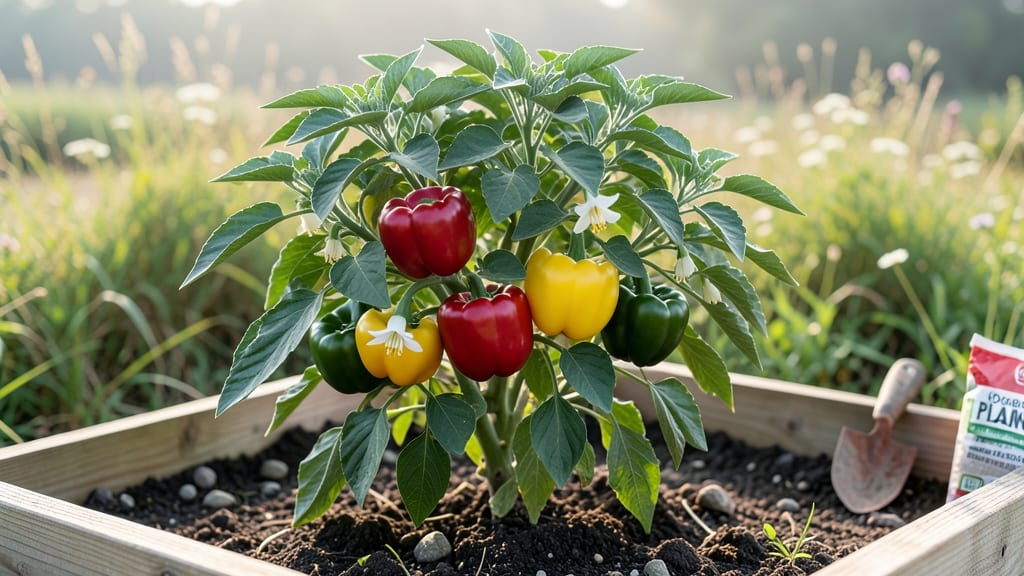
Square foot gardening turns peppers from a space-hogging challenge into a compact, high-yielding reality. 🌿 I used to struggle with peppers taking up half my garden bed, but this method lets me grow a dozen plants in just 4 square feet—with better airflow and fewer pests.
The math is simple: 1 pepper plant per square foot, arranged in a grid with careful spacing. My bell peppers now produce twice as many fruits as before, and the chilis stay healthy without crowding.
You’ll need a 4’x4’ raised bed or grid frame, quality potting mix, and pepper seedlings that match your climate zone. Start with 16 plants per bed for a balanced harvest, and rotate crops yearly to prevent soil depletion.
The key is keeping plants 18 inches apart—close enough for support but far enough to prevent disease. I also add basil around the edges to deter pests while keeping the peppers thriving.
By summer’s end, you’ll have a bounty of peppers that outperform traditional rows. The plants stay bushier, the fruits ripen faster, and you’ll never waste space again. This method works for any variety—jalapenos, bell peppers, or even habaneros—so you can grow exactly what you love.
Ready to see how much more you can harvest in the same footprint?
Works for urban balconies, small backyards, or even container setups with the right adjustments. The grid system keeps everything organized, and the math ensures you’re never overcrowded. Here’s how to map it out for your space!
📚 In This Guide
- What you need
- Instructions
- Tips and common mistakes
- Wrapping up and next steps
What you need
- ● Square Foot Garden Grid: 4’x4’ raised bed frame (or DIY with cedar lumber, 2”x4”s) or pre-made kits.
- ● Growing Medium: 60% compost (high-quality, peat-free if possible).
- ● 30% coco coir or peat moss (for moisture retention).
- ● 10% perlite or vermiculite (for aeration).
- ● Peppers: 16–25 plants (varies by variety; check seed packets for spacing). Start with fast-maturing types like Jalapeño, Bell, or Cayenne.
- ● Fertilizer: Balanced organic (e.g., 5-5-5) or compost tea for seedlings.
- ● Tools: Hand trowel or transplanting knife.
- ● Watering can with a fine rose (or drip irrigation kit).
- ● Pruning shears (for maintenance).
- ● Mulch: Straw or shredded leaves to retain moisture.
- ● Shade Cloth: 30–50% for seedlings if temps exceed 85°F.
- ● Plant Labels: Wooden stakes or markers for tracking varieties.
- ● Copper Tape: To deter slugs (peppers love it too!).
- ● Grow Lights: For starting seeds indoors (if not direct-sowing).
How to grow peppers using square foot gardening
Here's the foolproof method for packing more peppers into less space while keeping plants healthy and productive.
🪴 Step 1: Divide Your Square Foot Grid
Start by sketching a 12-inch by 12-inch grid on graph paper—this represents your square foot. Peppers need 4 plants per square foot for optimal spacing. Use a pencil to mark 4 planting spots in each square, arranged in a diamond pattern (not straight rows) to maximize airflow and sunlight penetration.
I like to draw my grid on cardboard first, then trace it into the soil with a wooden dowel to create clean planting lines. This prevents overcrowding later when peppers bush out. Mark each square with a small stake labeled with the pepper variety for easy identification.
🌱 Step 2: Prepare Planting Holes and Transplant Seedlings
Dig 4 small holes in each square, spacing them 3 inches apart (center-to-center). The holes should be just deep enough to bury the root ball of your pepper seedlings—usually 1-2 inches deep. Use a trowel to loosen the soil around each hole without disturbing the surrounding grid.
Gently remove each pepper seedling from its container, being careful not to break the roots. Place it in the hole so the top of the root ball sits level with the soil surface—burying too deep can cause stem rot. Press the soil lightly around the base with your fingers to eliminate air pockets.
💧 Step 3: Water and Mulch for Consistent Moisture
Water each newly planted pepper with ½ cup of water per plant, delivered directly to the base of the stem. Avoid wetting the leaves to prevent fungal diseases like early blight. Let the water soak in completely before moving to the next plant.
Spread 1 inch of organic mulch (like straw or shredded leaves) over the entire square foot, leaving a 1-inch gap around each stem. This keeps soil moisture even and suppresses weeds. Check moisture daily—peppers need consistent dampness but hate soggy roots. Water again when the top 1 inch of mulch feels dry to the touch.
☀️ Step 4: Maintain Spacing and Support as Plants Mature
As peppers grow, their foliage will fill in the diamond pattern you created. When plants reach 12 inches tall, prune any suckers (side shoots) that form in the leaf axils to direct energy to fruit production. Use clean pruning shears to make cuts just above a leaf node.
Install small cages or stakes (about 18 inches tall) in each square to support mature plants. This prevents peppers from sprawling into neighboring squares. Rotate the entire square foot a quarter turn weekly to ensure even sunlight exposure—you’ll see stronger stems and more uniform fruit development.
✂️ Step 5: Harvest and Prune for Continuous Production
Peppers are ready to harvest when they reach full color and firm texture. Use clean scissors to snip stems just above the fruit to encourage more blooms. I harvest every 3-4 days during peak season to keep plants productive—overripe peppers signal the plant to stop producing.
After harvesting, trim back any yellowing or diseased leaves immediately to improve airflow. If a plant shows signs of stress (like curled leaves), reduce water slightly and move the square to a shadier spot for a few days. With proper spacing and care, each square foot can yield 20-30 peppers per season!
Tips & tricks for perfect pepper square foot gardening
Square foot gardening transforms limited space into a pepper powerhouse—here’s how to get the most out of every inch.
Grid Precision Pays Off: When sketching your 12-inch grid in Step 1, use a ruler to ensure perfect squares. I’ve found that even a ¼-inch deviation can throw off your 4-plant spacing. Pro tip: Place your graph paper directly on the garden bed before tracing with the wooden dowel—this ensures your soil grid matches your sketch exactly. The diamond pattern isn’t just decorative; it creates 25% more airflow between plants than straight rows, which prevents fungal diseases like powdery mildew.
Root Ball Handling Matters: In Step 2, when transplanting seedlings, avoid breaking the root ball by gently squeezing the container sides. I’ve ruined seedlings by pulling too hard—this disrupts the delicate root structure. Instead, use your thumb to press along the container’s edge while lifting. The goal is to keep that intact root ball level with the soil surface; burying too deep suffocates stems while planting too shallow exposes roots to drying. A quick test: If you can see white roots at the bottom of the hole, you’ve gone too deep.
Mulch Thickness Technique: That 1-inch layer of mulch in Step 3 isn’t just for looks—it’s a moisture regulator. I’ve learned the hard way that thicker mulch (2+ inches) can actually trap too much moisture, leading to rot. Use a straightedge tool to level your mulch after spreading, then create those 1-inch gaps around stems with your finger. For extra insurance, water lightly after mulching to settle the material against the soil. This creates a consistent moisture barrier that keeps roots happy without drowning them.
Harvesting Rhythm: The 3-4 day harvest interval in Step 5 isn’t arbitrary—it’s when peppers reach their peak flavor and texture. I’ve noticed that harvesting every 5 days (instead of 3-4) causes plants to produce fewer blooms, while harvesting every 2 days stresses the plant. Use a small notebook to track harvest dates—you’ll spot patterns in your plants’ productivity cycles. And here’s a secret: Harvest in the morning when peppers are firmest, and always use clean scissors to avoid spreading disease through contaminated blades.
Pro Tips for Peppers Square Foot Gardening
- Square foot gardening transforms limited space into a pepper powerhouse—here’s how to get the most out of every inch.
- Grid Precision Pays Off: When sketching your 12-inch grid in Step 1, use a ruler to ensure perfect squares.
- Root Ball Handling Matters: In Step 2, when transplanting seedlings, avoid breaking the root ball by gently squeezing the container sides.
Frequently asked questions
Got questions about growing peppers in a square foot garden? You’re not alone! Here are some of the most common concerns—and quick, actionable answers to help you grow like a pro.
How many pepper plants can I fit in a 1-square-foot space?
For most pepper varieties (bell, jalapeño, cayenne), plant 1-4 plants per square foot, depending on size. Dwarf or bush varieties (like ‘Snackable’ or ‘Jalapeño M’) thrive at 4 plants/sq ft, while larger types (like ‘Big Beef’ bell peppers) need 1 plant/sq ft for proper airflow. Check seed packets for spacing guidelines!
When is the best time to plant peppers in a square foot garden?
Peppers hate cold—wait until after the last frost and soil temps hit 60°F+ (use a soil thermometer to confirm!). In most climates, this means late spring to early summer. For cooler areas, start seeds indoors 8–10 weeks before transplanting or use black plastic mulch to warm the soil faster.
Why are my pepper plants struggling in my square foot garden?
Common issues and fixes:
- Yellow leaves: Overwatering or poor drainage. Let soil dry slightly between waterings and add compost.
- Blossom end rot: Calcium deficiency from uneven watering. Mulch to stabilize moisture and side-dress with crushed eggshells.
- Pests (aphids/spider mites): Spray with neem oil or introduce ladybugs. Avoid chemical sprays near harvest.
Can I grow multiple pepper varieties in the same square foot?
Yes! Mixing varieties (e.g., 1 bell + 3 jalapeños) works if they have similar growth habits. Avoid pairing large fruited (like banana peppers) with compact types (like ‘Thai Hot’), as they’ll compete for space. For best results, group plants by maturity time to ensure even harvesting.
What if I don’t have square foot garden beds? Are there alternatives?
Try these space-saving methods:
- Container gardening: Use 5-gallon buckets (1 pepper/container) or raised beds with 12” spacing between plants.
- Vertical gardening: Train peppers on trellises or hang fabric pockets for wall-mounted growth.
- Straw bale gardening: Plant directly in conditioned bales (1–2 plants per bale).
Wrapping up and next steps
Square foot gardening with peppers is all about smart, space-efficient planting that delivers big rewards in small areas! By following the math—like spacing 4-9 plants per square foot—you’ll maximize yield without sacrificing health or flavor.
Whether you’re a beginner or a seasoned gardener, this method makes growing peppers effortless and productive.
Ready to harvest a bounty? Start small—try a 4’x4’ bed—and watch your peppers thrive! 🌱 Next, experiment with companion plants (like basil or onions) to boost growth and deter pests. Happy planting!