
Tools
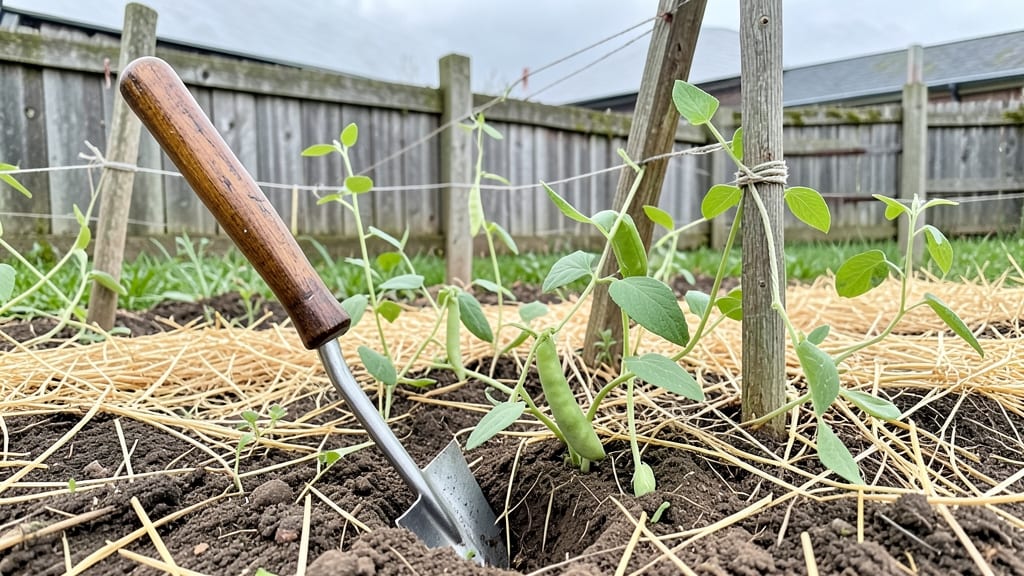
A dibber garden tool creates precise planting holes to ensure seeds or seedlings go in at the right depth and spacing, which helps roots grow strong and plants stay evenly spaced. The sharp tip lets you mark rows cleanly, even in large garden areas.
A dibber isn't just a simple stick—it's designed to eliminate guesswork in planting.
The angled tip lets you tap it into the soil at consistent depths, while some models even have depth markers to prevent over-planting. 🌱 I've found that using one saves time when planting rows of carrots or radishes, where spacing matters for harvest size.
For larger seeds like beans, you can even use it to create small furrows before dropping seeds in.
What sets dibbers apart is their ability to work with different soil types, from loose garden beds to denser clay. Unlike fingers or trowels, they maintain uniform spacing without compacting the soil around delicate seedlings. For bulb planting, a specialized dibber with a wider tip prevents damage to the base.
💡 In This Article
- How Dibbers Improve Seedling and Seed Planting Accuracy
- Best Dibber Types for Different Planting Needs
How dibbers improve seedling and seed planting accuracy
The secret behind a dibber's precision lies in its angled, tapered tip designed to create holes with minimal soil disturbance. This tapered shape allows the tool to slide through soil cleanly, reducing compaction around the planting site—a critical factor for seedling root development.
Most dibbers feature a 30-45 degree angle, which creates holes just wide enough for seeds or seedlings without crushing tender roots. The ergonomic handle design (often with a slight bend) also lets you apply consistent pressure, ensuring uniform hole depth across entire garden beds.
Many dibbers include depth markers at key planting levels, such as ½ inch for small seeds or 1-2 inches for larger seeds/bulbs. These markers prevent over-planting, which can lead to stunted growth or disease from poor air circulation.
For example, planting marigold seeds at ¼ inch depth yields better germination than burying them deeper. The markers also help maintain proper spacing—typically 2-3 inches apart for small seeds—which reduces competition between plants for nutrients and sunlight.
Unlike manual finger planting or trowel methods, dibbers maintain consistent spacing even in loose, sandy soil or dense clay. In sandy soil, the dibber's weight helps create clean holes without crumbling, while in clay, the angled tip prevents soil from sticking and clogging.
This adaptability makes dibbers ideal for raised beds or container gardens where soil types vary. For large-scale planting, they're far more efficient than automated seeders, which can struggle with uneven terrain or rocky soil.
Consider this comparison: A standard dibber creates holes in 3-5 seconds each, while finger planting takes 10-15 seconds and risks inconsistent depth. The time savings becomes significant when planting 100+ seeds—a task where precision and speed matter most.
Even for experienced gardeners, dibbers reduce fatigue by eliminating the need to repeatedly bend and adjust hand pressure. The tool's simplicity also makes it accessible for beginners learning proper planting techniques.
For specialized needs, bulb dibbers feature wider tips to accommodate larger planting depths (6-8 inches for tulip bulbs), while succulent dibbers have ultra-fine tips for delicate cuttings.
The right dibber choice depends on your plants' root structure and growth habits—carrots need deep, narrow holes, while lettuce thrives with shallow, wide spacing. This precision translates directly to healthier plants and higher yields, especially in vegetable gardens where spacing affects harvest size.
What most gardeners don't realize is how dibbers support seedling establishment through reduced soil disturbance. When you plant directly into dibber-made holes, you minimize root damage and preserve soil structure around the seedling.
This is particularly valuable for transplanting seedlings or direct sowing in cool weather, where careful placement can mean the difference between thriving and struggling plants. 🌱