Vegetables
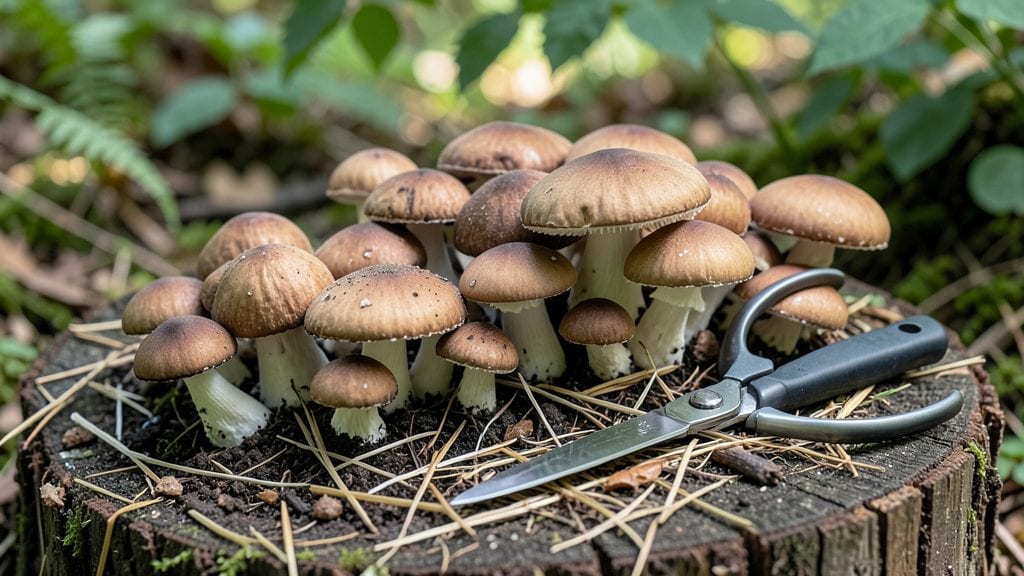
Growing black garden mushrooms in dark, humid corners transforms scraps into a protein-rich harvest. ✨ I started with a single bag of straw and a spray bottle—now I fill jars year-round. The key is mimicking their natural habitat: shade, moisture, and the right food source.
Most people fail at mushrooms because they overcomplicate humidity control. A simple plastic tent over your growing tray keeps moisture steady without fancy equipment. Straw breaks down quickly, so inoculate it fresh and keep it damp like a wrung-out sponge—not soggy, not dry.
Within 2-3 weeks, you’ll see pinheads popping up.
Harvesting is quick but precise—twist the stems at the base when caps flatten. One cluster feeds a family for days, and the substrate keeps producing for 4-6 weeks if you maintain conditions. The real magic? Growing in basements, closets, or under porch roofs where nothing else thrives.
Common challenges like mold or pests vanish with proper airflow and clean tools. Even my first batch—grown in a shoebox—yielded enough for stir-fries. Let’s get those dark corners working for you.
Underlying Causes Of Dark Growth
Black or discolored mushrooms in your garden beds aren’t just a cosmetic issue—they’re a sign that something’s off in your growing environment. Understanding the root causes helps you fix the problem before it spreads. Here’s why your mushrooms might be turning dark, and what’s really happening beneath the soil.
Mushrooms thrive in moist conditions, but too much water can trigger anaerobic stress—when oxygen levels drop in the soil. This causes:
- Fungal stress responses: Dark pigments (melanin) form as a defense mechanism against low oxygen and excess moisture.
- Root rot risk: Waterlogged soil suffocates mycelium (the mushroom’s root network), leading to blackening as cells die off.
- pH imbalance: Excess water leaches nutrients and can make soil too acidic, further stressing the fungi.
Actionable fix: Test soil moisture with your finger—it should feel damp like a wrung-out sponge, not soggy. Amend with perlite or coarse sand to improve drainage, and water only when the top 1–2 inches of soil are dry.
Mushrooms need airflow to breathe, but tight spaces or dense mulch create microclimates where humidity lingers. This leads to:
- Black mold or sooty growth: High humidity (above 80%) encourages Cladosporium or Alternaria fungi, which coat mushrooms in dark spores.
- Stunted mycelium: Without oxygen, the fungal network weakens, causing discoloration as it struggles to expand.
- Heat buildup: Trapped humidity raises temperatures, accelerating spoilage and darkening.
Actionable fix:
- Space out mushroom beds by at least 12 inches for airflow.
- Use a fan on low (24/7) in humid grow rooms to maintain 60–70% humidity.
- Remove dense mulch and replace with straw or wood chips for better ventilation.
Mushrooms are sensitive to soil chemistry. Off-kilter pH, nutrient deficiencies, or toxic buildup can trigger darkening:
| Cause | Effect on Mushrooms | How to Test/Fix |
|---|---|---|
| Low pH (too acidic, <5.0) | Blackened tips from aluminum toxicity (common in acidic soils). | Test with a soil pH kit; amend with lime (calcium carbonate) to raise pH to 6.0–7.0. |
| High salt buildup | Dark, crispy patches from osmotic stress (cells lose water). | Flush soil with rainwater or use a chelating agent like Epsom salt in moderation. |
| Nitrogen deficiency | Pale, then blackened stems as the fungus can’t produce melanin properly. | Add composted manure or blood meal (0.5–1 cup per square foot). |
Pro tip: 💡 Use a mushroom-specific substrate (like pasteurized straw or hardwood sawdust) to avoid soil-related issues entirely.
Dark spots aren’t always environmental—they can be pathogen warfare. Common culprits:
- Slime molds (Fuligo spp.): These not mushrooms create black, slimy patches that smother mycelium.
- Nematodes: Microscopic worms burrow into fungal tissue, causing blackened, mushy areas.
- Bacterial blight: Pseudomonas bacteria produce dark, water-soaked lesions.
Actionable fix:
- Remove infected mushrooms immediately and sterilize tools with 70% isopropyl alcohol.
- Apply neem oil (1 tsp/gallon water) to deter pests and fungi.
- For nematodes, use beneficial fungi like Trichoderma to outcompete them.
Even after growth, mushrooms can darken due to physical trauma or improper storage
- Bruising: Dark spots appear where stems break, thanks to oxidation (exposure to air).
- Ethylene gas: Overcrowded storage releases this plant hormone, accelerating spoilage and darkening.
- Temperature swings: Freezing or heat stress (above 80°F) causes cell damage, turning mushrooms black.
Actionable fix:
- Harvest with a clean knife and avoid twisting stems.
- Store in paper bags (not plastic) in the fridge (35–40°F) for up to 5 days.
- Use calcium ascorbate (a food preservative) to slow oxidation.
Quick Fixes for Common Growing Woes
Growing black garden mushrooms (or other dark, humid-loving varieties) in tight spaces can come with challenges—from moldy caps to stunted growth. But don’t worry! With the right fixes, you can revive your crop and prevent future issues.
Below, we’ve mapped out practical solutions for the most common problems, along with prevention tips to keep your mushrooms thriving year-round.
Cause: High humidity + poor airflow = moldy mushrooms. Fix:
- 🔥 Increase Airflow Immediately
- Open vents, use a small fan (on low) near the growing area, or rearrange shelves to improve circulation.
- Pro Tip: 🌡️ Aim for 60-70% humidity—use a hygrometer to monitor levels.
- ✂️ Trim Affected Mushrooms
- Snip off moldy caps and compost them (don’t reuse the substrate).
- Prevention: 💡 Sterilize tools with 70% isopropyl alcohol before each use.
- 🌬️ Adjust Watering
- Mist lightly once daily instead of soaking the bed. Damp (not soggy) is key.
Cause: Low temperatures, poor substrate, or lack of nutrients. Fix:
- 🔥 Optimize Temperature & Light
- Keep growing area at 65–75°F (18–24°C)—use a small space heater if needed.
- Provide indirect light (12 hours/day) with a LED grow light (no direct sun).
- 🍳 Boost Substrate Nutrition
- Mix in 1 part gypsum (calcium sulfate) or crushed eggshells per 5 parts substrate for calcium.
- Prevention: ✨ Use a balanced mix (e.g., 70% hardwood sawdust + 30% straw) for faster colonization.
- 👨🍳 Refresh the Growing Medium
- If mycelium is weak, pasteurize (not sterilize) fresh substrate and inoculate again.
Cause: Overwatering, dirty tools, or introducing pests unknowingly. Fix:
- 🔪 Eliminate Pests ASAP
- Fruit flies? Use apple cider vinegar traps (fill a cup with vinegar + dish soap).
- Mites? Spray with neem oil solution (1 tsp neem oil + 1L water) weekly.
- 🧼 Sanitize Everything
- Wash containers with bleach solution (1:10 ratio), then rinse thoroughly.
- Prevention: 🎯 Quarantine new substrate for 2–3 days before use.
- ⏰ Rotate Growing Areas
- Move trays to a clean, pest-free zone if infestation spreads.
Cause: Too much heat, dehydration, or poor ventilation. Fix:
- 🌬️ Cool It Down
- Move growing trays to a shadier, cooler spot (basement or north-facing shelf works).
- Use a small USB fan on low for gentle airflow.
- 💧 Rehydrate Gently
- Lightly mist mushrooms 2–3 times daily (avoid soaking).
- Prevention: 💡 Mist in the morning to reduce nighttime condensation.
- 🔄 Adjust Humidity Gradually
- Lower humidity slowly (by 5% every 2 days) to avoid shock.
To keep your black garden mushrooms (or any dark-space varieties) happy long-term: ✅ Sterilize tools & containers before each use. ✅ Monitor humidity with a hygrometer—never exceed 80%. ✅ Rotate crops every 2–3 harvests to prevent substrate depletion. ✅ Use a dedicated growing space (avoid cross-contamination with other plants). ✅ Harvest early—pick mushrooms when caps are fully opened but still firm.
Final Thought: 🌟 Most issues are fixable with small adjustments—don’t let setbacks discourage you! Black garden mushrooms are resilient, and with these tweaks, you’ll be enjoying year-round harvests in no time.
Frequently asked questions
What’s the best substrate for growing black garden mushrooms?
Use a mix of pasteurized straw and hardwood sawdust (70/30 ratio) for optimal growth. Straw provides structure while sawdust offers nutrients. Avoid garden soil—it can introduce contaminants. For faster results, add 10% gypsum to improve calcium levels.
How do I tell if my black garden mushrooms are ready to harvest?
Harvest when caps are fully expanded but still firm, before they turn black and release spores. Twist gently at the base—they should pop free cleanly. Avoid cutting stems, as this can cause bruising. Harvest in the morning for best flavor and texture.
Why are my black garden mushrooms turning black before harvesting?
This usually means overcrowding or excess moisture. Thin out clusters to improve airflow, and mist with water instead of soaking. Check humidity—ideal levels are 60-70%. If black spots appear, remove affected mushrooms immediately to prevent spread.
Can I grow black garden mushrooms indoors without special equipment?
Yes! Use a plastic storage bin with a clear lid as a mini greenhouse. Drill small holes for airflow, keep the substrate damp (like a wrung-out sponge), and place it in a cool (65-75°F), dark corner. A spray bottle and a small fan are all you need for basic conditions.
How long does it take for black garden mushrooms to fruit after inoculation?
With proper conditions, you’ll see pinheads (tiny mushroom buds) in 2-3 weeks. Full-sized mushrooms appear in 3-5 weeks, depending on temperature and humidity. If fruiting takes longer, check for low light or cool temperatures—move to a warmer spot with indirect light.