
Pruning
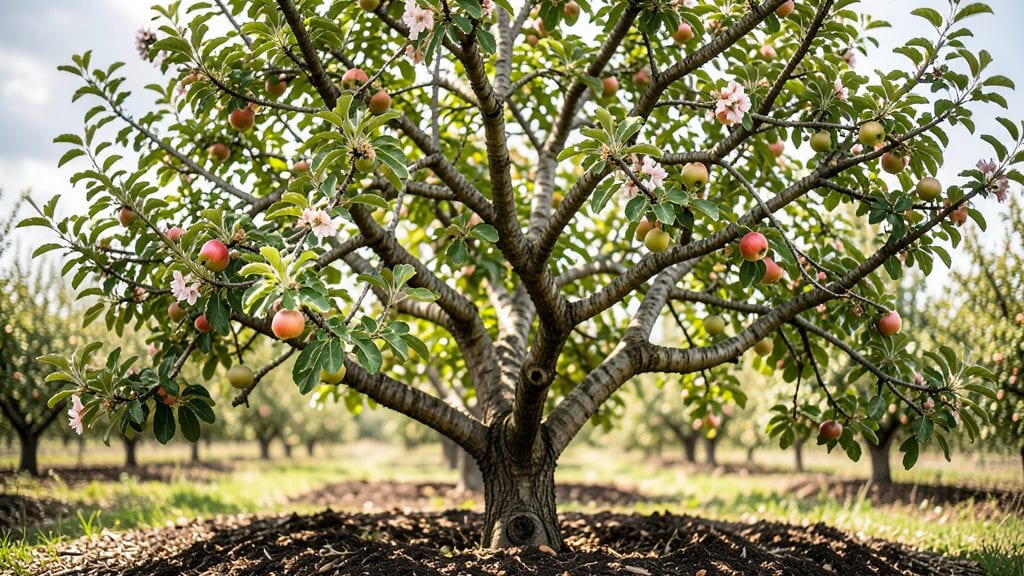
Apple tree gardening transforms your yard into a treasure trove of flavor, with crisp, sun-ripened fruit straight from your own soil—just like the apples I harvested after planting my first tree last spring.
The key isn’t just digging a hole; it’s choosing the right spot, prepping the soil, and giving the tree the care it needs year-round.
You’ll need a sunny location with well-draining soil, two compatible varieties for pollination, and basic tools like pruners and mulch. Most people overlook soil pH—aim for 6.0 to 7.0—and watering deeply once a week during dry spells.
Pruning in late winter shapes the tree and boosts fruit production, while thin fruit clusters in summer prevent overcrowding.
By year three, you’ll see full harvests of apples that feed your family and neighbors. The tree grows stronger each season, and with proper care, it can produce fruit for decades.
The best part? Watching kids (or your inner kid) climb the branches to pick fresh fruit in late summer.
Works in most climates, though colder zones need cold-hardy varieties. Whether you’re starting with a bare-root sapling or a small container tree, this method delivers real results. Let’s get those roots growing!
📚 In This Guide
- What you need
- Instructions
- Tips and common mistakes
- Wrapping up and next steps
What you need
- ● Apple Tree: 1 bare-root or potted tree (choose disease-resistant varieties like Honeycrisp or Granny Smith)
- ● Rootstock size: Standard (20–25 ft), Semi-dwarf (12–16 ft), or Dwarf (6–8 ft)
- ● Planting Supplies: 5–10 gallons of high-quality potting soil or native soil amended with compost
- ● 1 5-gallon bucket for watering
- ● 1 shovel or trowel (for digging)
- ● 1 garden hose with adjustable nozzle
- ● Pruning Tools: 1 bypass pruners (sharp, 6–8" blades for clean cuts)
- ● 1 loppers (for thicker branches, 18–24" reach)
- ● 1 pruning saw (for large limbs, 12–14" blade)
- ● 1 disinfectant spray (70% isopropyl alcohol or bleach solution)
- ● Support & Protection: 1–2 tree stakes (2–3 ft tall, wooden or metal)
- ● 1 roll tree tie or soft garden twine
- ○ 1 tree guard (plastic or wire mesh, 4–6 ft tall) optional but recommended
- ● Soil Amendments: 1 bag slow-release fertilizer (10-10-10 or organic options like fish emulsion)
- ● 1 bag mulch (wood chips or straw to retain moisture)
- ● Pest Control: Neem oil spray or horticultural oil (for aphids/mites)
- ● Apple tree spray (copper-based fungicide for disease prevention)
- ● Monitoring Tools: 1 moisture meter (to track soil hydration)
- ● 1 fruit thinning shears (for managing harvest size)
Instructions for planting and maintaining a healthy apple tree
Here’s how to get your apple tree thriving from planting through harvest—no guesswork involved.
Choose the Right Location and Prepare the Soil
Select a sunny spot with at least 6 hours of direct sunlight daily. Apple trees need room to grow, so space them 20-25 feet apart if planting multiple trees. Avoid low spots where water pools, as soggy roots lead to rot.
Before planting, loosen the soil to a depth of 18 inches using a shovel or garden fork. Mix in 3-4 inches of compost to improve drainage and fertility. The goal is loose, well-draining soil that won’t compact around the roots. If your soil is heavy clay, amend it with sand or peat moss to help water move through.
Plant Your Apple Tree at the Correct Depth
Dig a hole twice as wide as the root ball but no deeper. Gently remove the tree from its container and inspect the roots. If they’re circling tightly, loosen them with your fingers to encourage outward growth. Place the tree in the hole so the graft union (the bump where the scion was attached) sits 2-3 inches above the soil line. This prevents the tree from growing a weak, suckering base.
Backfill the hole with soil, tamping it down lightly as you go to remove air pockets. Water deeply to settle the soil around the roots. You’ll know it’s done right when the soil surface looks firm but not packed hard. Mulch around the base with 2-3 inches of wood chips, keeping it 3 inches away from the trunk to prevent rot.
Water and Fertilize for Strong Early Growth
Water your apple tree once a week for the first month, providing 10-15 gallons per tree. After that, water deeply every 10-14 days, ensuring the soil stays moist but not waterlogged. Check moisture by sticking your finger 2 inches into the soil—if it feels dry, it’s time to water. Overwatering is just as harmful as underwatering.
In early spring, apply a balanced fertilizer (10-10-10 ratio) around the drip line, not the trunk. Use ½ pound per year of tree age, up to a maximum of 2 pounds. For example, a 5-year-old tree gets 2.5 pounds. Reapply in late spring and again in early summer. Avoid high-nitrogen fertilizers, which promote leafy growth over fruit production.
Prune for Shape and Airflow in Late Winter
Prune your apple tree in late winter or early spring, before buds swell but before leaves appear. Remove dead, diseased, or crossing branches first, cutting just outside the branch collar. Next, thin out crowded branches to improve airflow and sunlight penetration. Aim to keep the tree open and upright, with no more than 3-4 main scaffold branches.
Make clean cuts with sharp pruning shears, avoiding jagged edges that invite disease. If a branch is too large to cut safely, make a 3-cut pruning technique to avoid tearing the bark. After pruning, apply pruning sealant to cuts wider than ½ inch to prevent infection. You’ll see new growth sprout within 4-6 weeks, signaling the tree is healing well.
Monitor for Pests and Diseases Year-Round
Inspect your apple tree weekly for signs of pests like aphids, codling moths, or apple scab. Early detection is key—treat aphids with a strong spray of water or insecticidal soap, and apply neem oil as a preventative spray in early spring and after harvest. For fungal diseases, remove infected leaves immediately and apply copper fungicide if needed.
Thin fruit when they’re golf-ball sized to improve size and quality. Leave 4-6 inches between apples on the branch. This reduces competition for nutrients and encourages larger, sweeter fruit. Harvest apples when they easily detach from the tree with a slight twist. Store them in a cool, dark place for 2-4 weeks to enjoy fresh fruit long after the season ends.
Tips & tricks for perfect apple tree gardening
Growing a healthy apple tree takes patience and attention to detail, but these practical tips will help you avoid common pitfalls and set your tree up for success.
Soil Preparation Insight: When loosening the soil to 18 inches deep in Step 1, don't just scratch the surface. Use a garden fork to break up compacted layers all the way down. I've seen many gardeners stop halfway, which leaves the roots struggling to penetrate deeper soil. For clay-heavy soils, mix in sand or peat moss gradually—too much at once can create pockets where water collects.
Planting Depth Secret: That 2-3 inch graft union placement in Step 2 is crucial for tree health. If you plant too deep, the tree may develop weak, disease-prone growth below the graft. Mark the graft union with a pencil before planting as a reference. Also, gently spreading circling roots prevents girdling—a common issue that strangles young trees as they grow.
Watering Wisdom: The 10-14 day watering schedule in Step 3 works for established trees, but young trees need more frequent watering. For the first year, water every 5-7 days during dry spells to encourage deep root development. The 2-inch soil moisture check is perfect—if it feels dry at that depth, your tree needs water regardless of the calendar.
Pruning Precision: In Step 4, when making those 3-cut prunes, visualize the final shape before cutting. I always step back and imagine how the tree will look with each removal. And remember: pruning wounds take 4-6 weeks to heal, so avoid heavy pruning in late summer when pests can exploit fresh cuts. A sharp pair of shears makes all the difference—dull blades tear bark and invite disease.
Pro Tips for Apple Tree Gardening
- Growing a healthy apple tree takes patience and attention to detail, but these practical tips will help you avoid common pitfalls and set your tree up for success.
- Soil Preparation Insight: When loosening the soil to 18 inches deep in Step 1, don't just scratch the surface.
- Planting Depth Secret: That 2-3 inch graft union placement in Step 2 is crucial for tree health.
Frequently asked questions
Got questions about growing your own apple tree? You’re not alone! Here are some of the most common concerns—plus expert answers to keep your orchard thriving.
When is the best time to prune an apple tree?
The ideal time is late winter or early spring (before buds swell but after heavy frost). This promotes healthy growth and airflow. Avoid pruning in fall, as wounds may not heal before winter. For young trees, prune in summer to shape them early.
How do I protect my apple tree from frost or cold damage?
Use tree wraps or frost cloth for young trees, and avoid pruning too late in the season. Mulch the base with straw or wood chips (3–4 inches deep) to insulate roots. Dwarf varieties are hardier—choose cold-resistant cultivars like ‘Liberty’ or ‘Honeycrisp’ for colder climates.
What should I do if my apple tree has pests or diseases?
Start with preventive care: Remove fallen fruit, prune for airflow, and apply copper fungicide in spring. Common pests like aphids or codling moths? Try neem oil or horticultural oil. For severe issues, consult a local extension service for targeted solutions.
Can I grow an apple tree in a container or small yard?
Choose dwarf or semi-dwarf varieties (like ‘Columnar’ or ‘Spindle’ types) and a large pot (15+ gallons) with drainage holes. Use well-draining soil and repot every 2–3 years. Just ensure it gets 6–8 hours of sunlight daily and winter protection in cold zones.
Why aren’t my apples ripening properly?
Apples need chilling hours (varies by variety, typically 200–1,000 hours below 45°F). If your climate lacks chill, try low-chill cultivars like ‘Anna’ or ‘Dorsett Golden’. Poor ripening can also stem from over-fertilizing with nitrogen—balance with potassium and phosphorus for fruit development.
Wrapping up and next steps
Growing your own apple tree is a rewarding journey that blends patience, care, and a touch of creativity! 🌳🍏 By mastering year-round pruning, soil health, and pest management, you’re well on your way to a thriving orchard.
Every snip and seasonal check-in brings you closer to that sweet, sun-ripened harvest—so keep nurturing your tree with confidence.
Ready to take the next step? Start small: pick one task from this guide—like pruning in winter or testing your soil—and build from there. Before you know it, your backyard will be buzzing with life (and delicious apples)! 🌱