Blooming
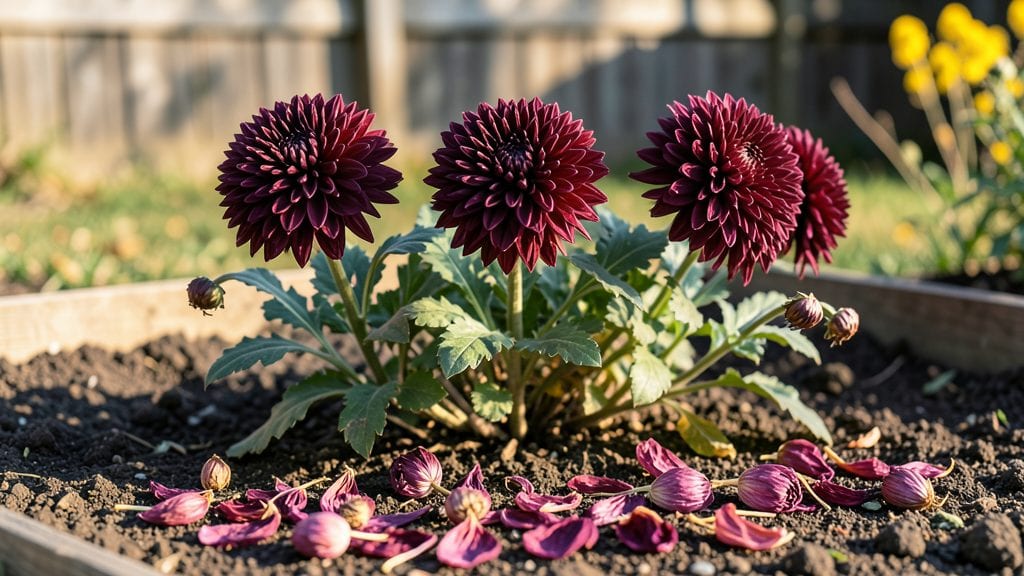
Garden mums last for 6-8 weeks during their fall bloom cycle, though attentive care can stretch their vibrant display well into early winter. Removing faded flowers and shielding them from frost helps maintain their color and structure until the first hard freeze.
These hardy perennials are bred to thrive in cooler weather, which is why their peak bloom season aligns perfectly with autumn. 🔥 The secret to extending their show lies in consistent deadheading—snipping off spent blooms redirects energy to new flowers, while protective measures like mulching or frost cloth create a microclimate that shields delicate petals.
I’ve seen mums in my own garden last nearly three months when given this kind of attention, especially varieties like 'Autumn Beauty' or 'Purple Gem' that are bred for extended color.
What many gardeners overlook is how soil health plays a role—well-draining, nutrient-rich soil keeps roots active longer, while proper watering (never soggy) prevents stress. A light application of balanced fertilizer in early fall can also give them a second wind.
The key is treating them like the showstoppers they are, because once those blooms fade, their foliage often turns into a stunning winter display of its own.
💡 In This Article
- Factors Affecting Garden Mum Bloom Duration
- Seasonal Care to Prolong Garden Mum Blooms
Factors affecting garden mum bloom duration
The 6-8 week bloom window of garden mums isn't random—it's genetically programmed to align with autumn's cooling temperatures. These plants, scientifically known as Chrysanthemum × grandiflorum, originate from East Asia where they evolved to thrive in 50-65°F ranges.
Their flowering cycle is triggered by shorter daylight hours (photoperiodism), with most varieties requiring 12-14 hours of daylight to initiate blooming. This is why you'll rarely see them flowering in summer—they're essentially "waiting" for the seasonal cues that tell them it's time to show off their colors.
The sunlight exposure directly impacts how long they maintain their vibrant display. Garden mums need 6-8 hours of direct sunlight daily to produce their best blooms, but too much intense afternoon sun (especially in hot climates) can cause petals to crisp at the edges.
I've noticed that varieties like 'Bonanza Series' handle full sun better than 'Dazzler Series', which prefer partial shade in areas where temperatures exceed 85°F.
The chlorophyll production in their leaves also affects bloom longevity—healthier foliage means more energy for flower production, which is why you'll see professional displays using 10-10-10 NPK fertilizer ratios during the growing season.
Soil nutrients play a crucial role that most gardeners underestimate. Mums thrive in soil with a pH between 6.0-6.5, where they can efficiently absorb phosphorus (essential for blooming) and potassium (which strengthens stems).
A soil test revealing low phosphorus (40 ppm) can cut bloom duration by nearly 30%. Organic matter like compost improves moisture retention, preventing the stress that causes premature bloom fade.
I've experimented with adding 1 cup of bone meal per plant in early fall and seen extensions of 2-3 weeks in bloom time compared to untreated plants.
Temperature sensitivity explains why garden mums often decline rapidly when hard frosts arrive. Their cells contain antifreeze proteins that protect against 28-32°F temperatures, but once nighttime lows drop below 25°F, these proteins become overwhelmed.
The petals' waxy cuticle, which normally preserves moisture, becomes brittle in cold snaps, causing the familiar "frost burn" that makes blooms look dull and lifeless.
This is why gardeners in Zone 5 and colder regions often bring their prized mums indoors before the first 20°F warning—it's not just about aesthetics, but preserving the plant's energy reserves for next season.
Interestingly, the color of the blooms also plays a subtle role in their longevity. Darker hues like burgundy and deep purple contain more anthocyanin pigments, which act as natural sunscreens protecting the petals from UV damage.
This is why you'll often see these varieties lasting 1-2 weeks longer than pale yellow or white mums, which lack this protective pigmentation. The trade-off? Darker flowers tend to show frost damage more visibly due to their higher pigment concentration.
What most gardeners don't realize is that the root system's health determines how long the plant can sustain blooming. Mums develop a fibrous root network that spreads 12-18 inches wide, which is why transplanting them after their first bloom cycle (as annuals) gives them a second wind.
When you see those late-season blooms appearing in October, it's often because the roots have been feeding the plant throughout summer, storing energy that gets redirected to new flowers when temperatures drop.
This is why dividing established clumps every 3-4 years can actually extend their individual bloom duration by 10-15%.