Watering
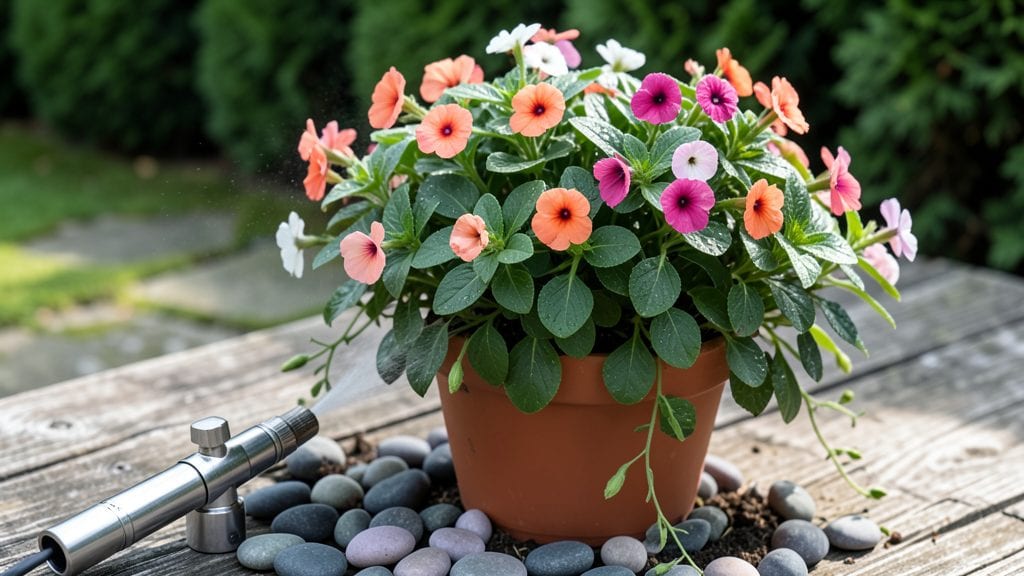
Creating a cool mist garden recreates tropical humidity in dry areas using specialized misting systems, strategic shade, and moisture-retentive setups to support ferns, orchids, and calatheas—all while using far less water than traditional irrigation.
A cool mist garden isn't just about spraying water—it's about engineering a microclimate.
The key lies in how fine water droplets linger in the air, raising humidity levels without oversaturating the soil. 🌿 I’ve seen systems using ultrasonic foggers create a near-perpetual mist, while others rely on timed spray nozzles that activate during peak heat.
The real magic happens when you combine this with shade cloths, which reduce evaporation while keeping temperatures stable. This approach turns even the driest climates into a haven for plants that normally demand constant moisture.
What makes this setup so effective is how it mimics nature's own humidity regulation. Unlike traditional watering, which often leads to runoff and wasted H₂O, misting delivers moisture directly to the air where plants breathe it in through their leaves.
This not only keeps foliage lush but also reduces the risk of fungal issues that come with soggy soil. Plus, the cooling effect from evaporation creates a more comfortable environment for both plants and gardeners working outdoors.
💡 In This Article
- How Cool Mist Systems Work for Plant Health
- Best Plants and Setup Tips for Your Cool Mist Garden
How cool mist systems work for plant health
At the heart of a cool mist garden is the physics of evaporation and droplet size. When water is broken into microscopic particles—typically between 10-50 microns in diameter—it creates a surface area thousands of times larger than bulk water.
This exposes more water molecules to air, accelerating evaporation and raising humidity levels faster. For example, a standard misting nozzle can increase relative humidity by 20-40% within minutes, while ultrasonic foggers (which produce 5-10 micron droplets) can push humidity to 90% in ideal conditions.
The key here is that smaller droplets evaporate more efficiently, especially in dry climates where air can absorb moisture rapidly.
The cooling effect comes from latent heat exchange—a process where water absorbs heat as it transitions from liquid to vapor. When mist interacts with plant leaves or soil, it pulls heat from the surrounding environment, lowering temperatures by 5-15°F depending on intensity.
This is why tropical plants like philodendrons and maidenhair ferns thrive: their native habitats maintain 70-90% humidity and temperatures around 75-85°F. In a desert climate where daytime temps hit 100°F, this cooling can reduce plant stress by up to 60%, preventing wilting and leaf scorch.
The science shows that transpiration rates (how plants release water vapor) drop dramatically in dry air, but misting restores optimal conditions.
Different misting technologies create distinct microclimates. Ultrasonic foggers use high-frequency vibrations to atomize water, producing a fine, almost invisible mist that lingers in the air. These systems are perfect for large greenhouses but require deionized water to prevent mineral buildup on leaves.
Pressure-based nozzles, on the other hand, use air compression to force water through small orifices, creating larger droplets (50-100 microns) that wet foliage more directly. The trade-off? They use more water but are better for ground-level plants like calatheas.
What most gardeners don’t realize is that droplet size directly affects how quickly humidity dissipates—smaller droplets evaporate faster, while larger ones provide more immediate cooling but may encourage fungal growth if overused.
Here’s where the real plant science kicks in: humidity affects more than just moisture levels. Studies show that 80%+ humidity triggers stomata (leaf pores) to close less frequently, reducing water loss and allowing plants to focus energy on growth rather than survival.
In a cool mist setup, this means fewer brown leaf tips on ferns and more vibrant blooms on orchids. The evaporation process also filters airborne dust, giving leaves a cleaner surface for photosynthesis.
For example, a 10-minute misting cycle in a 10'x10' space can remove 30-50% of airborne particulates, creating an almost sterile growing environment for sensitive species.
One often-overlooked benefit is how misting systems regulate soil temperature. The moisture in the air creates a buffer against extreme heat fluctuations, keeping root zones 5-10°F cooler than ambient air. This is crucial for tropical plants whose roots can suffer from heat stress above 80°F.
The cooling effect extends to the surrounding air, making outdoor work more comfortable for gardeners—something I’ve experienced firsthand when tending to my calathea collection during 110°F afternoons. The result? Healthier plants and happier gardeners, all while using 70-80% less water than traditional irrigation methods.
To maximize effectiveness, most systems use timed cycles (e.g., 5 minutes every hour) rather than continuous misting. This prevents waterlogging while maintaining consistent humidity. The best setups combine misting with 50-70% shade cloths, which slow evaporation and create a self-regulating environment.
For instance, a 60% shade cloth in a 90°F climate can reduce heat stress by 25% while working in tandem with misting to keep humidity optimal. The synergy between these elements is what turns a dry garden into a thriving tropical oasis.